Catechol → HCID 86734785, compound
Reaction equation

[C:1]1([C:3](=[CH:5][CH:6]=[CH:7][CH:8]=1)[OH:4])[OH:2].[CH3:9][C:10]1[CH:16]=[C:15]([OH:17])[CH:14]=[CH:13][C:11]=1[OH:12].O.NN.NN.C1(C(=CC=CC=1)O)O.[Co:31]>O>[Co+2:31].[C:1]1([C:3](=[CH:5][CH:6]=[CH:7][CH:8]=1)[OH:4])[OH:2].[CH3:9][C:10]1[CH:16]=[C:15]([OH:17])[CH:14]=[CH:13][C:11]=1[OH:12]Participants
7
Reactant 5

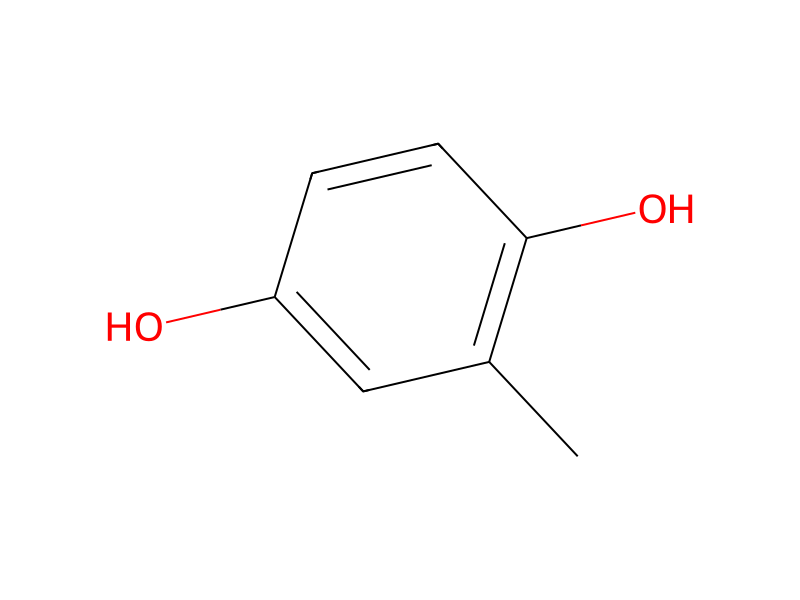



Product 1

Reagents, catalysts & solvents 1

Procedure
About 0.237 grams (2.15 millimoles) pyrocatechol and 0.288 grams (2.35 millimoles) methylhydroquinone are dissolved in 56 milliliters of distilled water in a 500 ml Erlenmeyer flask. Subsequent additions of 66 ml hydrazine hydrate (64% N2H4 by weight) and of 2.62 ml of an aqueous solution containing 20% CoCl2 · 6H2O (corresponding to 2.2× 10⁻³ g atom of Co++ion) give a clear, orange-red solution containing approximately 35% hydrazine and 0.6% of catalyst by weight (molar ratio pyrocatechol/cobalt of approximately 1.0).
Workup
- customgive a clear, orange-red solution
Sources & evidence
- ORD record
- ord-158d90b6ba6d4c40a5fd7f46f053b65d
- Source dataset
- uspto-grants-1977_05
- Patent number
- US04026664
Reaction notes
Loading…