Palmitoyl chloride → Diketene
Reaction equation

[CH2:1]=[C:2]1[O:6][C:4](=[O:5])[CH2:3]1.[C:7](Cl)(=[O:23])[CH2:8][CH2:9][CH2:10][CH2:11][CH2:12][CH2:13][CH2:14][CH2:15][CH2:16][CH2:17][CH2:18][CH2:19][CH2:20][CH2:21][CH3:22].C(N(CC)CC)C.Cl.C(N(CC)CC)C>C(OCC)(=O)C>[CH2:1]=[C:2]1[O:6][C:4](=[O:5])[CH2:3]1.[C:7]([CH:3]=[C:4]=[O:5])(=[O:23])[CH2:8][CH2:9][CH2:10][CH2:11][CH2:12][CH2:13][CH2:14][CH2:15][CH2:16][CH2:17][CH2:18][CH2:19][CH2:20][CH2:21][CH3:22]Participants
Reactant 4
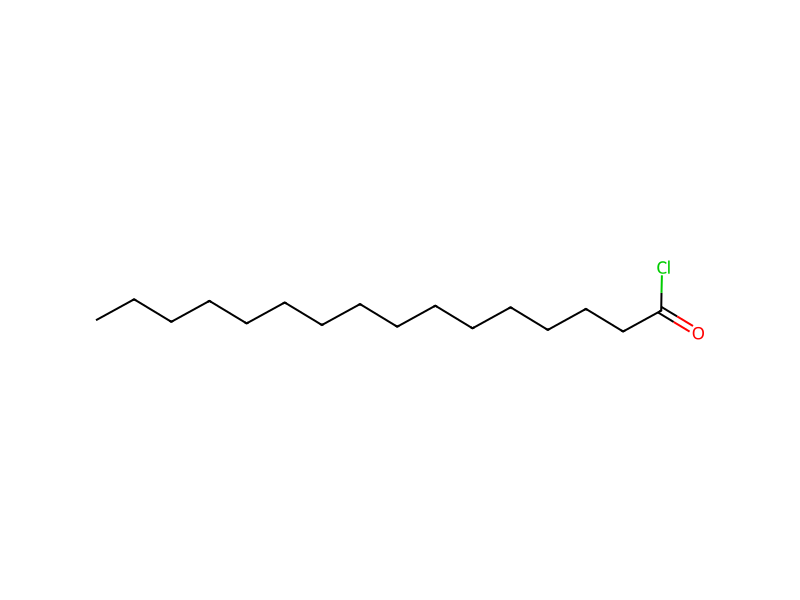

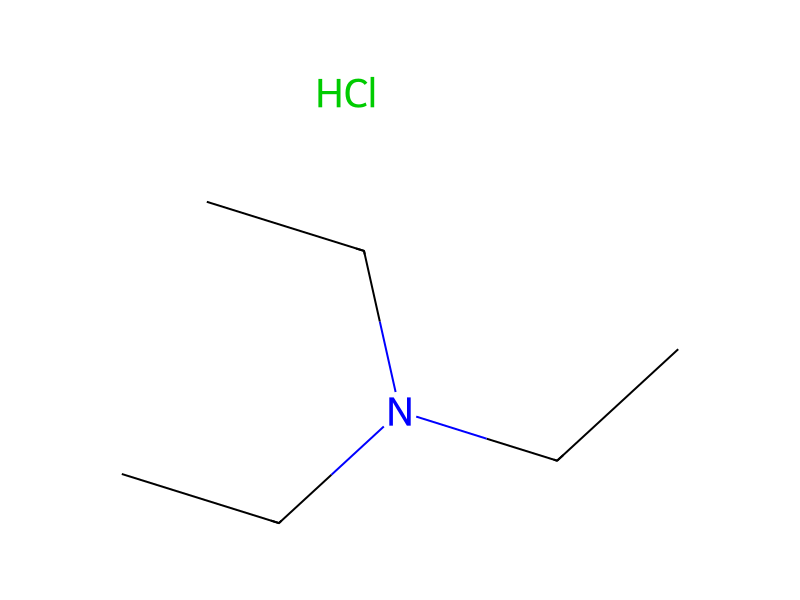

Product 2

Reagents, catalysts & solvents 1

Procedure
For this example, the alkyl ketene dimer used was palmitoyl (C16) ketene dimer, a typical fatty acid ketene dimer. The ketene dimer was prepared by dissolving 27.5 grams palmitoyl chloride in 200 mL ethyl acetate in a 500 mL Erlenmeyer flask. Then, 10.1 grams triethylamine was dissolved in 50 mL ethyl acetate and placed into an addition funnel. The solution of triethylamine was dripped slowly into the stirring acid chloride solution. A white precipitate began to form almost immediately; this white precipitate was triethylamine hydrochloride. The solution was stirred for one hour after all of the triethylamine was added. The triethylamine hydrochloride was filtered out of the solution, and the filtrate, a clear, golden-yellow solution, was evaporated under reduced pressure to yield a light yellow, waxy solid, palmitoyl ketene dimer. The yield was virtually quantitative.
Workup
- customplaced into an addition funnel
- customto form almost immediately
- additionwas added
- filtrationThe triethylamine hydrochloride was filtered out of the solution
- customthe filtrate, a clear, golden-yellow solution, was evaporated under reduced pressure
Sources & evidence
- ORD record
- ord-bbb87c473d634bf08f3ad4f5ada4cc09
- Source dataset
- uspto-grants-1995_09
- Patent number
- US05447689
Reaction notes
Loading…