Triphenylphosphine → HCID 67027580, compound
Reaction equation

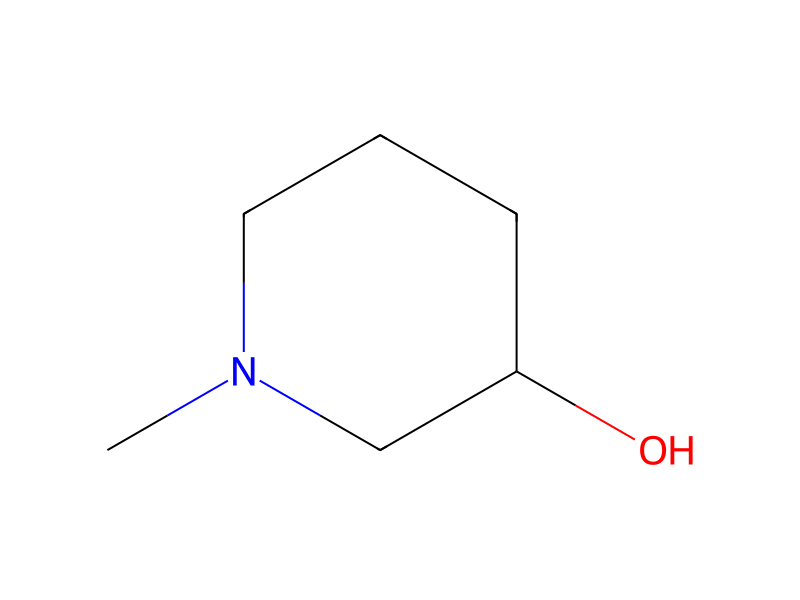
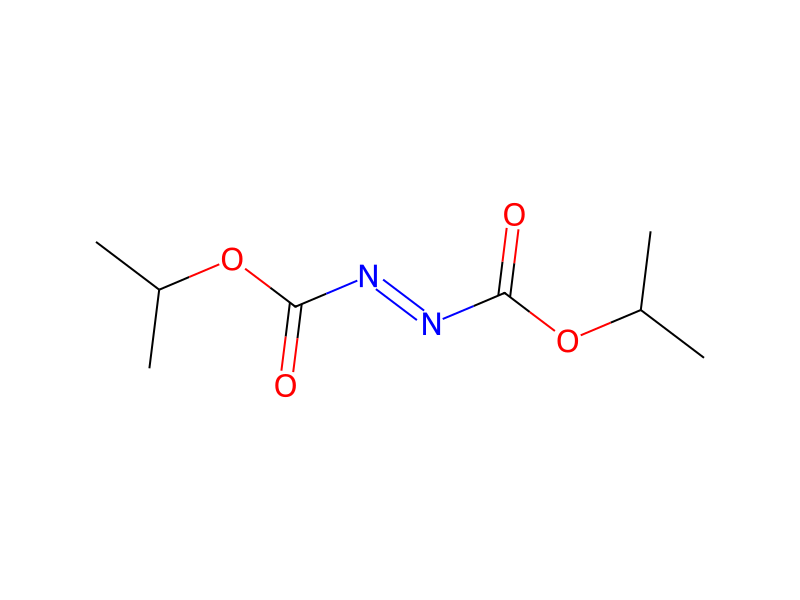
CC(OC(/N=N/C(OC(C)C)=O)=O)C.[Br:15][C:16]1[CH:17]=[N:18][NH:19][CH:20]=1.O[CH:22]1[CH2:27][CH2:26][CH2:25][N:24]([CH3:28])[CH2:23]1.C1(P(C2C=CC=CC=2)C2C=CC=CC=2)C=CC=CC=1>C1COCC1>[Br:15][C:16]1[CH:17]=[N:18][N:19]([CH:22]2[CH2:27][CH2:26][CH2:25][N:24]([CH3:28])[CH2:23]2)[CH:20]=1Participants
6
Reactant 4


Product 1

Reagents, catalysts & solvents 1

Procedure
DIAD (3.21 ml, 16.3 ml) was added dropwise to a solution of 4-bromopyrazole (2.0 g, 13.6 mmol), 3-hydroxy-1-methylpiperidine (1.57 ml, 13.6 ml) and triphenylphosphine (4.3 g, 16.3 mmol) in THF (50 ml) at 0° C. The mixture was allowed to warm to room temperature and stirred overnight. The reaction was partitioned between water and ethyl acetate and the organic layers were extracted into 2N HCl. The aqueous fraction was basified with sodium bicarbonate and extracted into ethyl acetate. The organic fractions were dried (MgSO4), filtered and concentrated under reduced pressure to give the product (1.64 g), which was used without purification. MS: [M+H]+=244.
Workup
- customThe reaction was partitioned between water and ethyl acetate
- extractionthe organic layers were extracted into 2N HCl
- extractionextracted into ethyl acetate
- dry with materialThe organic fractions were dried (MgSO4)
- filtrationfiltered
- concentrationconcentrated under reduced pressure
Sources & evidence
- ORD record
- ord-4f3734f0a6b5475b8a72e54de247c395
- Source dataset
- uspto-grants-2014_08
- Patent number
- US08796244B2
Reaction notes
Loading…