Hydrogen Bromide → 2,4-Dibromo-1,3-thiazole-5-carbaldehyde
Reaction equation

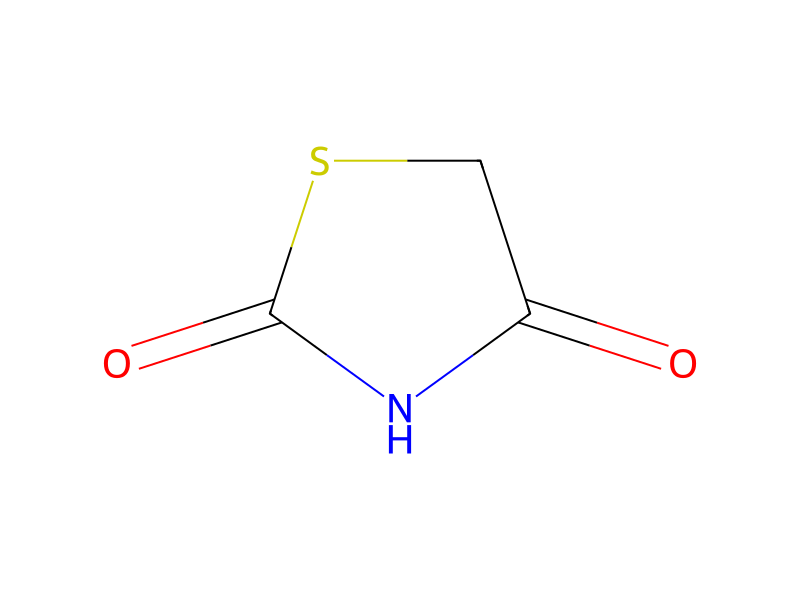
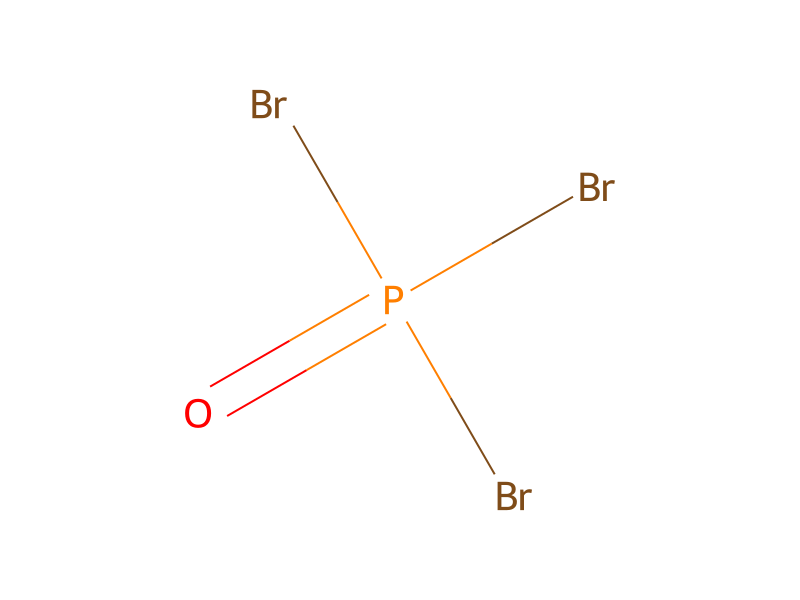
[S:1]1[CH2:5][C:4](=O)[NH:3][C:2]1=O.P(Br)(Br)([Br:10])=O.CN(C)[CH:15]=[O:16].[BrH:18]>C(Cl)Cl>[Br:18][C:2]1[S:1][C:5]([CH:15]=[O:16])=[C:4]([Br:10])[N:3]=1Participants
Reactant 4


Product 1

Reagents, catalysts & solvents 1

Procedure
2,4-Thiazolidinedione (3.50 g, 0.0299 mol) and phosphorus oxybromide (42.76 g, 0.1491 mol) were placed into a two-neck round bottomed flask and the solid mixture was well mixed. The flask was evacuated and filled with argon. N,N-dimethylformamide (2.54 mL, 0.0329 mol) was added via syringe with hand shaking of the flask at the same time. The mixture was stirred at rt for 2 hours and then heated slowly to 105° C., until the evolution of hydrogen bromide had ceased, (approximately 4 h). The reaction was cooled to rt then the mixture was transferred to a beaker containing 200 g of ice. The aqueous mixture was stirred with DCM then filtered. The DCM phase was separated and the aqueous phase was extracted with DCM twice. The DCM layers were combined and washed with saturated sodium bicarbonate solution, then brine, dried over anhydrous sodium sulfate, filtered and concentrated. The mixture was dry loaded on silica gel and purified by chromatography to afford 2,4-dibromo-thiazole-5-carbaldehyde (2.50 g, 30.9%). LCMS (FA) ES+ 272, 274.
Workup
- additionthe solid mixture was well mixed
- customThe flask was evacuated
- additionfilled with argon
- stirringThe mixture was stirred at rt for 2 hours
- custom(approximately 4 h)
- filtrationthen filtered
- customThe DCM phase was separated
- extractionthe aqueous phase was extracted with DCM twice
- washwashed with saturated sodium bicarbonate solution
- dry with materialbrine, dried over anhydrous sodium sulfate
- filtrationfiltered
- concentrationconcentrated
- customThe mixture was dry
- custompurified by chromatography
Sources & evidence
- ORD record
- ord-2624852c18b24a8b9e7d8b5bd465ee47
- Source dataset
- uspto-grants-2014_08
- Patent number
- US08796271B2
Reaction notes
Loading…