Potassium Carbonate → 5-{[(3S)-1-(cyclopropylcarbonyl)-3-pyrrolidinyl]methyl}-4-[2-fluoro-4-(6-fluoro-2-naphthalenyl)phenyl]-2,4-dihydro-3H-1,2,4-triazol-3-one
Reaction equation

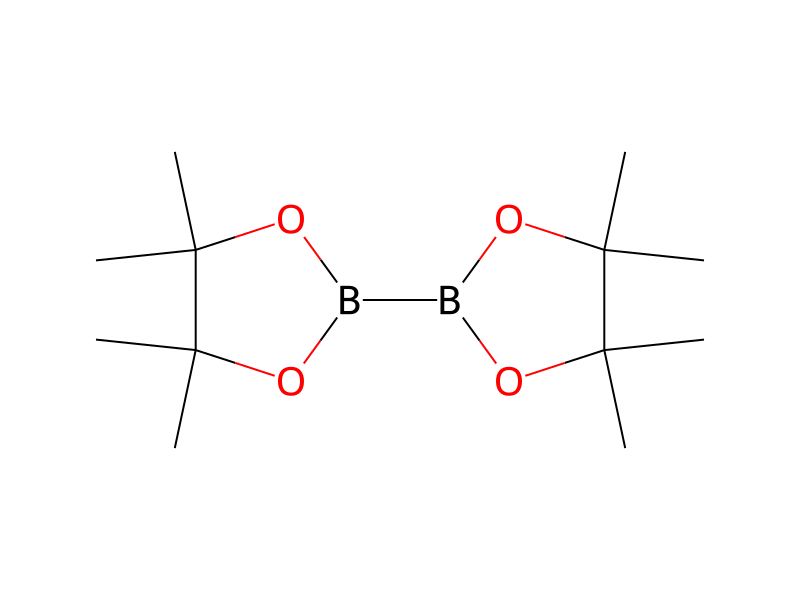
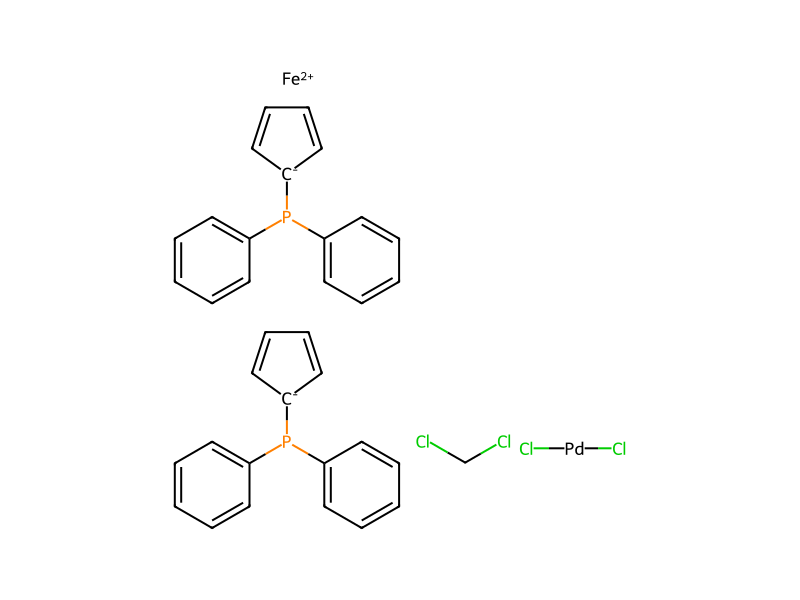
Br[C:2]1[CH:7]=[CH:6][C:5]([N:8]2[C:12]([CH2:13][C@@H:14]3[CH2:18][CH2:17][N:16]([C:19]([CH:21]4[CH2:23][CH2:22]4)=[O:20])[CH2:15]3)=[N:11][NH:10][C:9]2=[O:24])=[C:4]([F:25])[CH:3]=1.B1(B2OC(C)(C)C(C)(C)O2)OC(C)(C)C(C)(C)O1.C([O-])(=O)C.[K+].Br[C:50]1[CH:59]=[CH:58][C:57]2[C:52](=[CH:53][CH:54]=[C:55]([F:60])[CH:56]=2)[CH:51]=1.C(=O)([O-])[O-].[K+].[K+]>C1C=CC(P(C2C=CC=CC=2)[C-]2C=CC=C2)=CC=1.C1C=CC(P(C2C=CC=CC=2)[C-]2C=CC=C2)=CC=1.Cl[Pd]Cl.[Fe+2].ClCCl.O1CCOCC1>[CH:21]1([C:19]([N:16]2[CH2:17][CH2:18][C@@H:14]([CH2:13][C:12]3[N:8]([C:5]4[CH:6]=[CH:7][C:2]([C:50]5[CH:59]=[CH:58][C:57]6[C:52](=[CH:53][CH:54]=[C:55]([F:60])[CH:56]=6)[CH:51]=5)=[CH:3][C:4]=4[F:25])[C:9](=[O:24])[NH:10][N:11]=3)[CH2:15]2)=[O:20])[CH2:23][CH2:22]1Participants
Reactant 5




Product 1

Reagents, catalysts & solvents 2

Conditions
- Temperature
- 100 °C
Procedure
Into a 5 mL microwaveable vial was placed 4-(4-bromo-2-fluorophenyl)-5-{[(3S)-1-(cyclopropylcarbonyl)-3-pyrrolidinyl]methyl}-2,4-dihydro-3H-1,2,4-triazol-3-one (0.244 mmol), bis(pinacolato)diboron (0.244 mmol), potassium acetate (0.977 mmol), dichloro[1,1′-bis(diphenylphosphino)ferrocene]palladium(II)-dichloromethane adduct (0.024 mmol), and 1,4-dioxane (2 mL). The vial was capped and the contents were purged with nitrogen. The solution stirred at 100° C. for 16 h. LCMS analysis displayed boronic ester intermediate present (boronic ester cleavage to acid also observed on LCMS) as well as a small amount of bromide starting material. The reaction was cooled to room temperature. Added to the vial was 2-bromo-6-fluoronaphthalene (0.244 mmol) and 2M aq potassium carbonate (1 mL). The vial was capped, purged with nitrogen, and stirred at 100° C. for 1 h. The solution was cooled to room temperature, whereby the dioxane layer separated from the aqueous layer. The dioxane layer was removed via pipette and was passed through a plug of celite and sodium sulfate. The plug was washed with dioxane (2 mL). All dioxane filtrates were combined and concentrated in vacuo. Reverse phase HPLC (30-80% acetonitrile/water+0.1% NH4OH) was utilized in purifying the title compound (21 mg, 17%). MS(ES)+ m/e 475.1 [M+H]+.
Workup
- customThe vial was capped
- customthe contents were purged with nitrogen
- temperatureThe reaction was cooled to room temperature
- additionAdded to the vial
- customThe vial was capped
- custompurged with nitrogen
- stirringstirred at 100° C. for 1 h
- temperatureThe solution was cooled to room temperature
- customwhereby the dioxane layer separated from the aqueous layer
- customThe dioxane layer was removed via pipette
- washThe plug was washed with dioxane (2 mL)
- concentrationconcentrated in vacuo
- customin purifying the title compound (21 mg, 17%)
Sources & evidence
- ORD record
- ord-839f64f72c5e4b59b93149554a90f90e
- Source dataset
- uspto-grants-2014_08
- Patent number
- US08802864B2
Reaction notes
Loading…