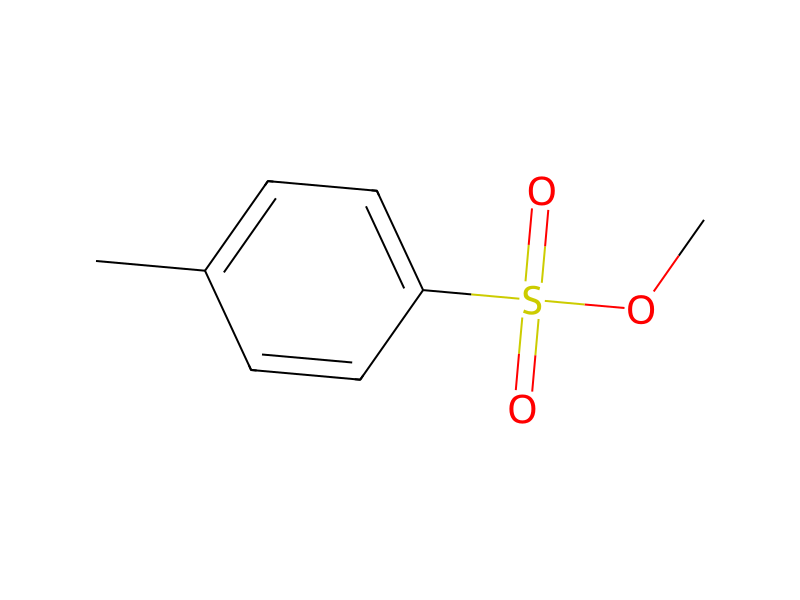
Methyl p-toluenesulfonate → Methyltriphenylphosphonium p-toluenesulfonate
Reaction equation

[C:1]1([P:7]([C:14]2[CH:19]=[CH:18][CH:17]=[CH:16][CH:15]=2)[C:8]2[CH:13]=[CH:12][CH:11]=[CH:10][CH:9]=2)[CH:6]=[CH:5][CH:4]=[CH:3][CH:2]=1.[C:20]1([CH3:31])[CH:25]=[CH:24][C:23]([S:26]([O:29]C)(=[O:28])=[O:27])=[CH:22][CH:21]=1>>[C:20]1([CH3:31])[CH:21]=[CH:22][C:23]([S:26]([O-:29])(=[O:27])=[O:28])=[CH:24][CH:25]=1.[CH3:20][P+:7]([C:1]1[CH:2]=[CH:3][CH:4]=[CH:5][CH:6]=1)([C:8]1[CH:13]=[CH:12][CH:11]=[CH:10][CH:9]=1)[C:14]1[CH:15]=[CH:16][CH:17]=[CH:18][CH:19]=1Participants
3


Procedure
A mixture of 65.57 g (0.25 mol) of triphenylphosphine and 46.56 g (0.25 mol) of methyl p-toluenesulfonate was heated under nitrogen with stirring in a 130°-C. bath for 1 hr. On cooling, a clear, colorless amorphous glass resulted.
Workup
- temperaturewas heated under nitrogen
- temperatureOn cooling
- customa clear, colorless amorphous glass resulted
Sources & evidence
- ORD record
- ord-852edb4c93d54ba4b46bd6fb35143fe0
- Source dataset
- uspto-grants-1985_01
- Patent number
- US04496643
Reaction notes
Loading…