Butyl bromide → 2-(Butylsulfanyl)-5-methyl-1,3,4-thiadiazole
Reaction equation

[SH:1][C:2]1[S:6][C:5]([CH3:7])=[N:4][N:3]=1.[CH2:8](Br)[CH2:9][CH2:10][CH3:11]>C[Si](C)(C)N[Si](C)(C)C.C1(C)C=CC=CC=1.CN(C)P(=O)(N(C)C)N(C)C.S1(C2C(=CC=CC=2)C(=O)N1)(=O)=O>[CH2:8]([S:1][C:2]1[S:6][C:5]([CH3:7])=[N:4][N:3]=1)[CH2:9][CH2:10][CH3:11]Participants
Reactant 2


Product 1

Reagents, catalysts & solvents 4



Procedure
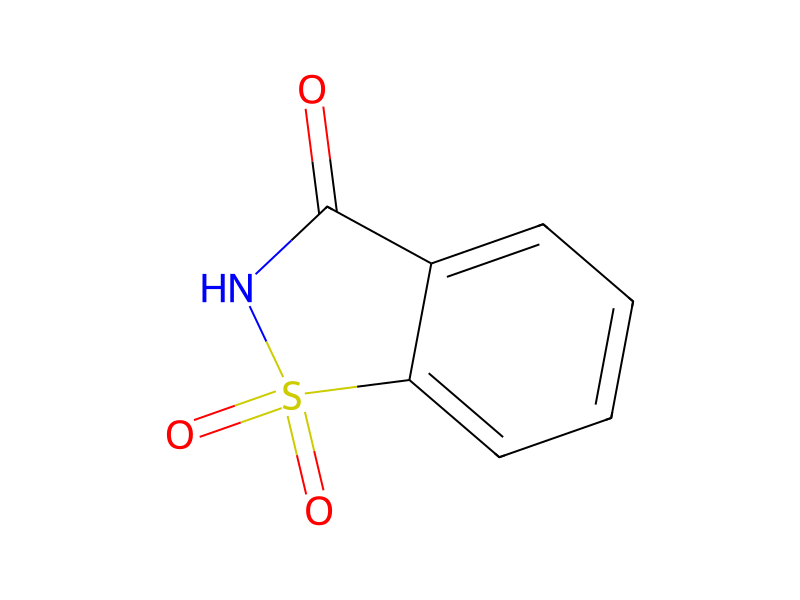
Using the procedure of Example 19, 1.32 g (10 mmoles) of 5-mercapto-2-methyl-1,3,4-thiadiazole were silylated with 2.6 ml (15 mmoles) of hexamethyldisilazane in 10 ml of toluene and 2.6 ml of hexamethylphosphoric triamide using 5 mg (0.027 mmole) of saccharin as a catalyst by refluxing for 1.5 hour. After concentration by evaporation, 5 ml of acetonitrile were added thereto and the solution obtained was heated at 50° C. while 2.1 ml (20 mmoles) of butyl bromide were added. The conversion was complete after stirring for 3 hours at this temperature and according to quantitative HPLC analysis, there had been formed 8.91 mmoles (89.1%) of 5-butylthio-2-methyl-1,3,4-thiadiazole, while 5.3% of 3-butyl-5-methyl-Δ4 -1,3,4-thiadiazoline-2-thione was found as a by-product.
Workup
- temperatureby refluxing for 1.5 hour
- concentrationAfter concentration
- customby evaporation, 5 ml of acetonitrile
- additionwere added
- customthe solution obtained
- additionwere added
Sources & evidence
- ORD record
- ord-114f39c72e9243f9bf1d0dd3e2badbc8
- Source dataset
- uspto-grants-1985_01
- Patent number
- US04496720
Reaction notes
Loading…