Propanal → 1-Fluoro-3-propylbenzene
Reaction equation

[Mg].Br[C:3]1[CH:8]=[CH:7][CH:6]=[C:5]([F:9])[CH:4]=1.II.[CH:12](=O)[CH2:13][CH3:14].C1(C)C=CC(S(O)(=O)=O)=CC=1>O.C1(C)C=CC=CC=1.O1CCCC1>[F:9][C:5]1[CH:6]=[CH:7][CH:8]=[C:3]([CH2:12][CH2:13][CH3:14])[CH:4]=1Participants
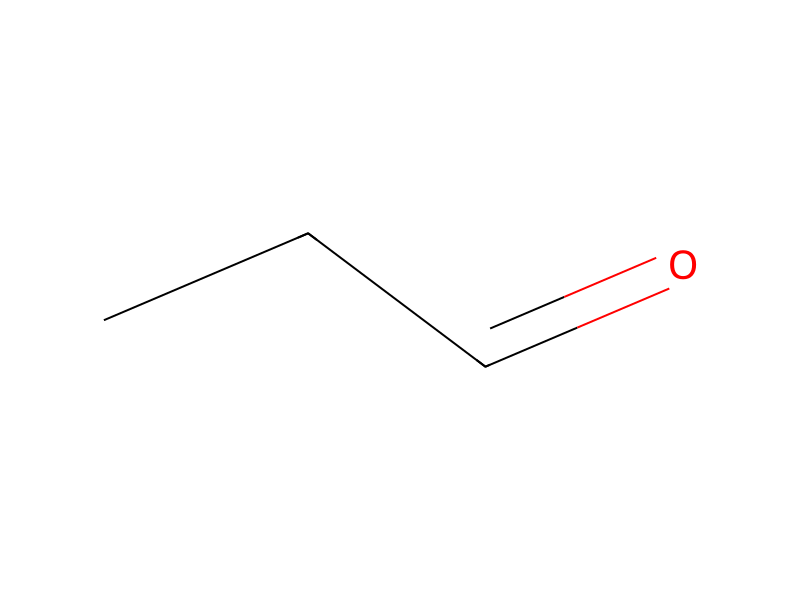








Conditions
- Temperature
- -78 °C
Procedure
Magnesium chips (13.2 g) were placed into a 1 L flask equipped with mechanical stirrer, nitrogen inlet, 500 ml pressure-equilibrated dropping funnel, thermometer and reflux condenser connected to the inert gas outlet. The flask was flushed with nitrogen and minor flow was held during whole reaction time. 1-Bromo-3-fluorobenzene (95 g, 0.542 mol) and dry tetrahydrofurane (300 ml) was placed in dropping funnel. Magnesium was moistened with few milliliters of the solution from dropping funnel and an iodine crystal was added. When exothermic reaction starts 1-bromo-3-fluorobenzene solution was added dropwise to keep the boiling temperature of the mixture. After dropping all of the solution, the mixture was refluxed for 2 hours. Then the mixture was cooled down to −78° C. in a dry ice/acetone bath and propionaldehyde was added dropwise while mixture temperature was kept below −70° C. After adding all of the aldehyde, the mixture was left overnight at room temperature. Then the tetrahydrofurane was evaporated and the residue was acidified with hydrochloric acid. The organic phase was separated, washed twice with water and dried over magnesium sulfate. The raw 1-(3-fluorophenyl)propanol was distilled under reduced pressure of 20 mbar at 117° C. Alcohol 60 g, 66% of theor. yield was obtained. The alcohol and toluene (250 ml) and p-toluenesulfonic acid (0.2 g) were placed in (500 ml) round-bottom flask equipped with Dean-Stark trap. The mixture was refluxed. After the water stopped appearing, toluene was evaporated at reduced pressure. The obtained 1-(3-fluorophenyl)propene was placed in a three-necked flask and acetic acid (30 ml), ethyl acetate (50 ml) and catalyst—palladium on active carbon (2 g) were added. The flask was filled with hydrogen from gas burette at room temperature and the mixture was stirred. Reaction temperature increased spontaneously to 30° C. When the absorption of hydrogen was stopped, the catalyst was filtered off, the solution was washed off with water, dried over MgSO4 and the solvent was evaporated. The 1-fluoro-3-propylbenzene was distilled under atmospheric pressure, collecting the fraction boiling at 160° C. 32 g of 1-fluoro-3-propylbenzene were obtained, 42% of theor. yield.
Workup
- customequipped with mechanical stirrer, nitrogen inlet
- temperaturethermometer and reflux condenser
- customThe flask was flushed with nitrogen and minor flow
- customWhen exothermic reaction
- additionwas added dropwise
- temperaturethe mixture was refluxed for 2 hours
- customwas kept below −70° C
- customThen the tetrahydrofurane was evaporated
- customThe organic phase was separated
- washwashed twice with water
- dry with materialdried over magnesium sulfate
- distillationThe raw 1-(3-fluorophenyl)propanol was distilled under reduced pressure of 20 mbar at 117° C
- customyield
- customwas obtained
- customequipped with Dean-Stark trap
- temperatureThe mixture was refluxed
- customtoluene was evaporated at reduced pressure
- customThe obtained 1-(3-fluorophenyl)propene was placed in a three-necked flask
- additionacetic acid (30 ml), ethyl acetate (50 ml) and catalyst—palladium on active carbon (2 g) were added
- additionThe flask was filled with hydrogen from gas burette at room temperature
- customReaction temperature
- temperatureincreased spontaneously to 30° C
- customWhen the absorption of hydrogen
- filtrationthe catalyst was filtered off
- washthe solution was washed off with water
- dry with materialdried over MgSO4
- customthe solvent was evaporated
- distillationThe 1-fluoro-3-propylbenzene was distilled under atmospheric pressure
- customcollecting the fraction boiling at 160° C
Sources & evidence
- ORD record
- ord-9b963a6f99b4496ba7ca40e12fd4565f
- Source dataset
- uspto-grants-2014_02
- Patent number
- US08652353B2
Reaction notes
Loading…