Triethylamine → N-(5-Cyano-1,3-dimethyl-1H-pyrazol-4-yl)-2-methylpropanamide
Reaction equation

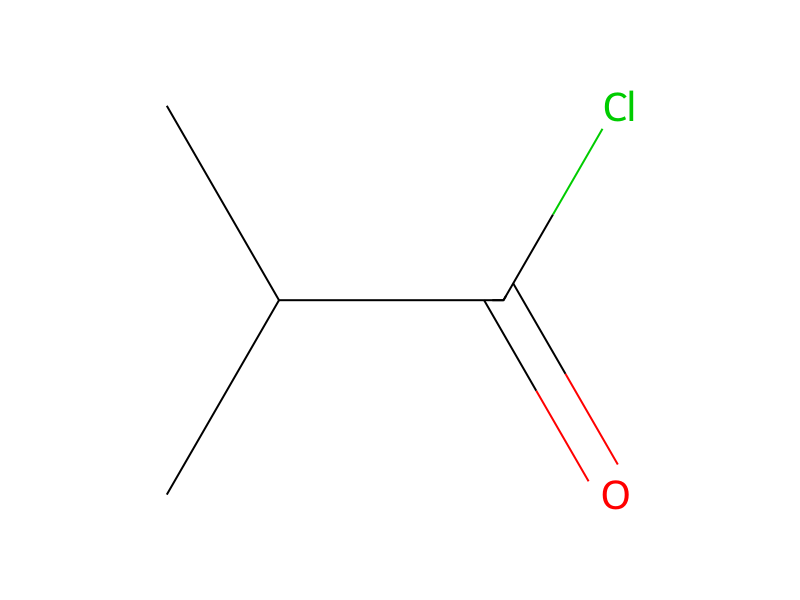
[NH2:1][C:2]1[C:3]([CH3:10])=[N:4][N:5]([CH3:9])[C:6]=1[C:7]#[N:8].C(N(CC)CC)C.[C:18](Cl)(=[O:22])[CH:19]([CH3:21])[CH3:20].C(=O)(O)[O-].[Na+]>C(Cl)(Cl)Cl>[C:7]([C:6]1[N:5]([CH3:9])[N:4]=[C:3]([CH3:10])[C:2]=1[NH:1][C:18](=[O:22])[CH:19]([CH3:21])[CH3:20])#[N:8]Participants





Procedure
A solution of 24 g (0.176 mol) of 4-amino-5-cyano-1,3-dimethylpyrazole and 28 ml of triethylamine in 200 ml of chloroform is treated dropwise with 19.3 g (0.18 mol) of isobutyryl chloride and stirred overnight. The mixture is stirred with 100 ml of saturated sodium bicarbonate solution, the organic layer is separated and evaporated in vacuo. The residue is crystallized from ethyl acetate to give 30 g (83%) of N-(5-cyano-1,3-dimethylpyrazol-4-yl)isobutyramide. This amide (30 g, 0.0146, mol) is added in portions to a solution of 7.1 g (0.017 mol) sodium hydroxide in 250 ml of water containing 36 ml of 30% hydrogen peroxide at 80° C. After stirring at 80° C. overnight, the solution is cooled and acidified with glacial acetic acid to give 23 g (74%) of 1,3-dimethyl-5-isopropyl-1H-pyrazolo[4,3-d]pyrimidin-7-ol, mp 264°-266° C.
Workup
- customthe organic layer is separated
- customevaporated in vacuo
- customThe residue is crystallized from ethyl acetate
Sources & evidence
- ORD record
- ord-99d58d4ea13144868b2fb35020ec6de9
- Source dataset
- uspto-grants-1984_09
- Patent number
- US04469868
Reaction notes
Loading…