Hydrochloric Acid → HCID 178441521, compound
Reaction equation

[OH:1][C:2]1[C:11]2[C:6](=[C:7]([C:12]([F:15])([F:14])[F:13])[CH:8]=[CH:9][CH:10]=2)[N:5]=[C:4]([CH2:16][CH2:17][CH2:18][CH3:19])[C:3]=1[C:20](O)=[O:21].[NH2:23][C:24]1[S:25][CH:26]=[CH:27][N:28]=1.C1(N=C=NC2CCCCC2)CCCCC1.Cl>CN(C)C=O.[OH-].[Na+]>[S:25]1[CH:26]=[CH:27][N:28]=[C:24]1[NH:23][C:20]([C:3]1[C:4]([CH2:16][CH2:17][CH2:18][CH3:19])=[N:5][C:6]2[C:11]([C:2]=1[OH:1])=[CH:10][CH:9]=[CH:8][C:7]=2[C:12]([F:14])([F:13])[F:15])=[O:21]Participants
7






Procedure
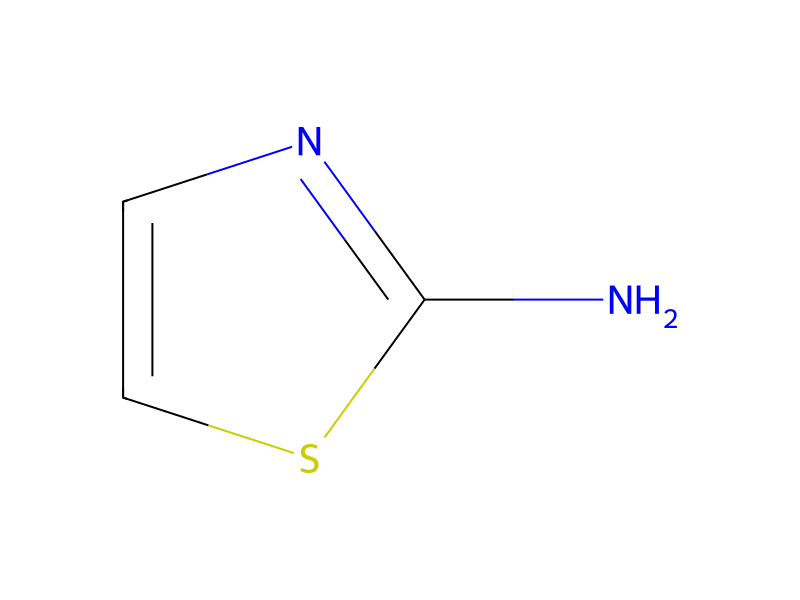
Using the procedure of Step F of Example 6, 6.8 g of the product of Step E and 2.17 g of 2-aminothiazole were reacted in the presence of dicyclohexylcarbodiimide in dimethylformamide to form a raw product which was dissolved in aqueous N sodium hydroxide solution. Hydrochloric acid was added to the solution to obtain 4.15 g of N-(2thiazolyl)-4-hydroxy-2-butyl-8-trifluoromethyl-quinoline-3-carboxamide in the form of colorless crystals melting at 181° C after crystallization from isopropanol.
Workup
- customto form a raw product which
Sources & evidence
- ORD record
- ord-d7808f0549f0425291596a381edf1e9e
- Source dataset
- uspto-grants-1978_08
- Patent number
- US04107310
Reaction notes
Loading…