Potassium Carbonate → 2-[(4-Methoxybenzyl)oxy]-1-chloro-4-iodobenzene
Reaction equation

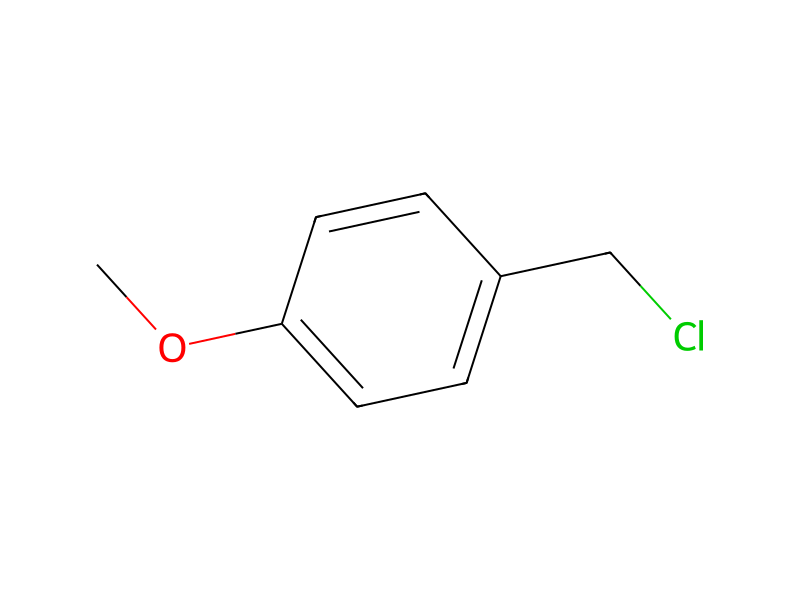
[Cl:1][C:2]1[CH:7]=[CH:6][C:5]([I:8])=[CH:4][C:3]=1[OH:9].[CH3:10][O:11][C:12]1[CH:19]=[CH:18][C:15]([CH2:16]Cl)=[CH:14][CH:13]=1.C([O-])([O-])=O.[K+].[K+].CCOCC.O>CN(C=O)C.CCCCC>[CH3:10][O:11][C:12]1[CH:19]=[CH:18][C:15]([CH2:16][O:9][C:3]2[CH:4]=[C:5]([I:8])[CH:6]=[CH:7][C:2]=2[Cl:1])=[CH:14][CH:13]=1Participants
7
Reactant 4



Product 1

Reagents, catalysts & solvents 2


Conditions
- Temperature
- 70 °C
Procedure
A suspension of 300 g (1179 mmol) of 2-chloro-5-iodophenol, 184 g (1179 mmol) of 4-methoxybenzyl chloride and 195.5 g (1415 mmol) of anhydrous K2CO3 in 1.2 L of anhydrous DMF is stirred for 5 hours at 70° C. and then cooled to room temperature. The reaction medium is then poured into 3 L of a 2/1 ether/water mixture. The organic phase is washed with 2×1 L of water, dried over Na2SO4 and concentrated under reduced pressure, and the residue obtained is solidified in pentane. 406 g of 2-[(4-methoxybenzyl)oxy]-1-chloro-4-iodobenzene are thus obtained in the form of a beige-colored powder.
Workup
- temperaturecooled to room temperature
- washThe organic phase is washed with 2×1 L of water
- dry with materialdried over Na2SO4
- concentrationconcentrated under reduced pressure
- customthe residue obtained
Sources & evidence
- ORD record
- ord-2079583943704990b6d37d0ea337b4ef
- Source dataset
- uspto-grants-2014_02
- Patent number
- US08653276B2
Reaction notes
Loading…