Acetic Acid → 3,5-Dioxohexanoic acid
Reaction equation

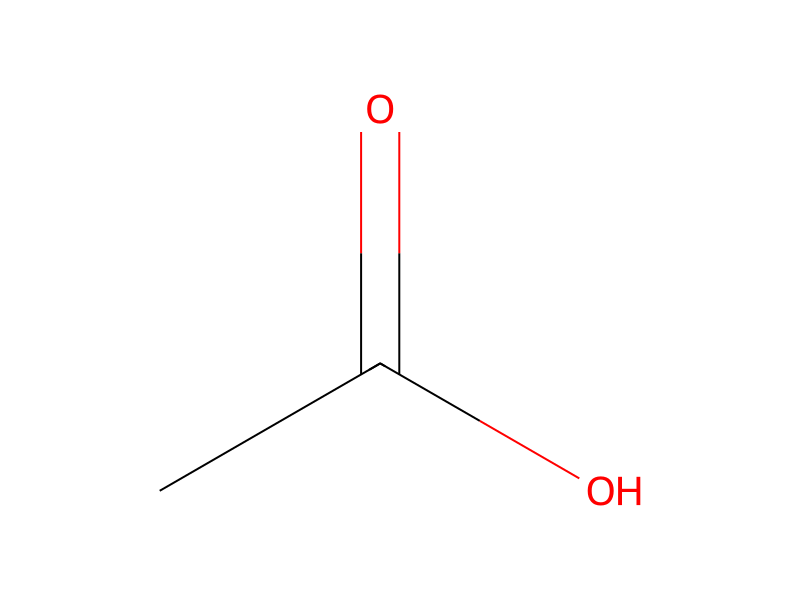
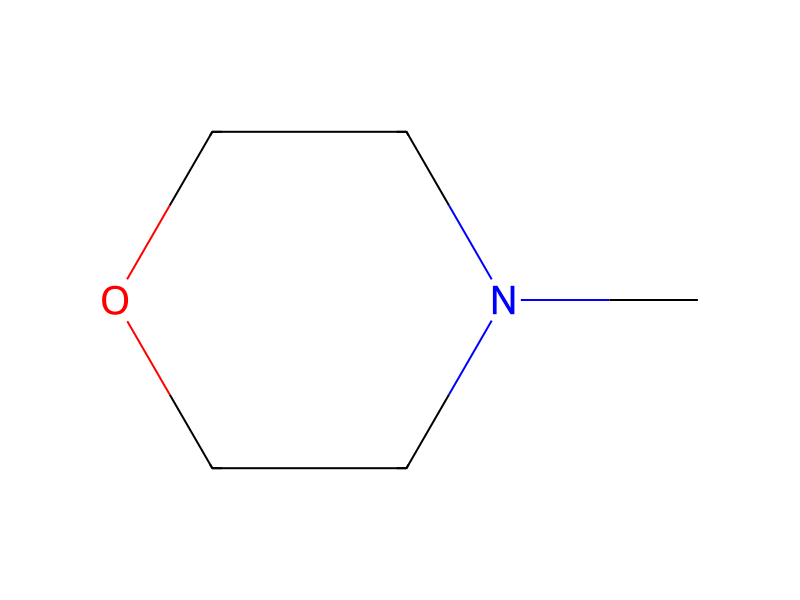
[CH2:1]([O:8]C(NCC(O)=O)=O)[C:2]1C=CC=[CH:4][CH:3]=1.CN1CC[O:20]CC1.ClC(OCC(C)C)=O.[H][H].[C:33]([OH:36])(=[O:35])[CH3:34]>O1CCCC1.[Pd]>[CH3:4][C:3]([CH2:2][C:1]([CH2:34][C:33]([OH:36])=[O:35])=[O:8])=[O:20]Participants



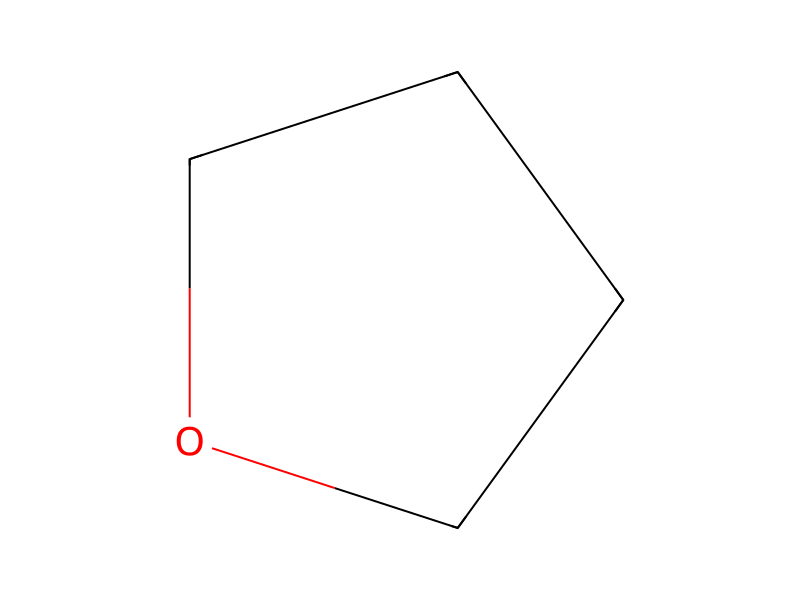
Procedure
N(ε)-benzyloxycarbonyl-L-lysine, n-stearyl alcohol, p-toluenesulfonic acid monohydrate, and benzene are refluxed together using a Dean-Stark trap to azeotropically remove the evolved water. After cooling to room temperature and then adding dry ethyl ether, n-stearyl N(ε)-benzyloxycarbonyl-L-lysinate p-toluenesulfonate salt is collected by filtration, treated with 2M aqueous potassium bicarbonate solution, and extracted into dichloromethane. Evaporation give the free amine, which is redisolved in dry tetrahydrofuran (THF) and added to a stirring solution of N(α)-t-butyloxycarbonyl-N(im)-benzyloxy-carbonyl-L-histidine, N-methylmorpholine, and isobutyl chloroformate in dry THF at -15° C. The resulting fully protected dipeptide ester is treated with 1/1 trifluoroacetic acid/dichloromethane at room temperature, neutralized with saturated aqueous sodium bicarbonate solution, and extracted into ethyl acetate. Evaporation gives the partially deblocked dipeptide, which is redissolved in dry THF and added to a stirring solution of benzyloxycarbonylglycine, N-methylmorpholine and isobutyl chloroformate in dry THF at -15° C. The formed, fully protected tripeptide ester is totally deblocked by treatment with hydrogen gas in glacial acetic acid at room temperature in the presence of Pd-C catalyst. Filtration, evaporation and purification on a microcrystalline cellulose column followed by lyophilization give the desired tripeptide ester as its triacetate salt.
Workup
- filtrationFiltration, evaporation and purification on a microcrystalline cellulose column
Sources & evidence
- ORD record
- ord-eecd0877d9e14339ba996a7cd2e3e598
- Source dataset
- uspto-grants-1993_05
- Patent number
- US05214032
Reaction notes
Loading…