4-Methylmorpholine → HCID 67272395, compound
Reaction equation

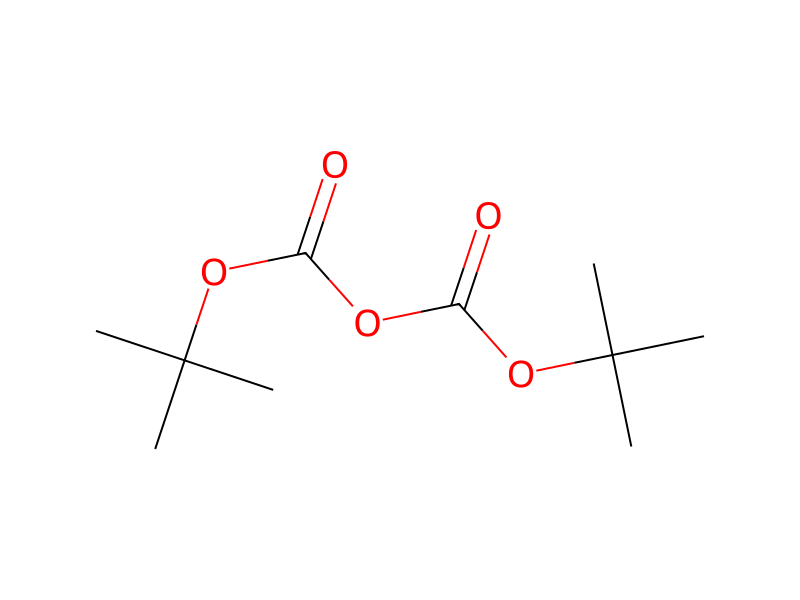
[H][H].[CH3:3][N:4]1[CH:11]([CH3:12])[CH2:10][CH2:9][C@H:5]1[C:6]([OH:8])=[O:7].[CH3:13]C1(C)N[C@H](C(O)=O)CC1.S(Cl)(Cl)=O.CN1CCOCC1.C(OC(OC(OC(C)(C)C)=O)=O)(C)(C)C>Cl.CO.O.[Pd].CO.ClCCl>[CH3:3][N:4]1[CH:11]([CH3:12])[CH2:10][CH2:9][C@H:5]1[C:6]([O:8][CH3:13])=[O:7]Participants
Reactant 6





Product 1

Reagents, catalysts & solvents 5





Conditions
- Temperature
- 50 °C
Procedure
(Magaard et al. Tetrahedron Lett 1993, 34, 381) Nitrile 44 (Magaard et al. Tetrahedron Lett 1993, 34, 381; Bonnet et al. J. Chem. Soc. 1959, 34, 381) (2 g, 14.3 mmol) was dissolved in 32% hydrochloric acid (6 cm3) and heated to 50° C. for 5 h. Evaporation of the solvent afforded a residue that was dissolved in methanol:water (1:1, 30 cm3) and hydrogenated over 10% palladium on activated carbon (0.3 g) under 44 p.s.i of hydrogen for 20 h. The catalyst was removed by filtration through Celite™ and the solvent removed in vacuo to yield a 6:4 mixture of N-methyl-5-methylproline* 45, and the desired 5,5-dimethylproline 46: δH (300 MHz; D2O) 1.34-1.40 (8.6H, m, 4×CH3), 1.67-1.74 (1.3H, m) 1.91 (1.6H, t, J 12.2), 2.07-2.32 (3.5H, m), 2.40-2.54 (2H, m), 2.90* (3.6H, s, N—CH3), 3.45-3.53 (1.3H, m), 4.23* (1.3H, dd, J 9.7 and 7.5, Proα-H) and 4.47 (1H, d, J 8.4, Proα-H); δC (75 MHz; D2O) 14.6* (CH3), 24.5 (CH3), 24.7 (CH3), 25.9* (CH2), 27.2 (CH2), 29.9* (CH2), 37.0 (CH2), 39.1* (CH3, N—CH3), 58.9* (CH, Proδ-C), 67.1 (quat., Proδ-C), 67.6* (CH, Proα-C), 69.2 (CH, Proα-C), 171.5* (quat., Proα-CO) and 172.4 (quat., Proα-CO). The mixture was subsequently dissolved in dry methanol (60 cm3), cooled to 0° C. and thionyl chloride (4.2 cm3, 57.2 mmol) was added dropwise over 5 min. The reaction was allowed to warm to room temperature and stirred overnight. The solvent was removed, the residue was dissolved in saturated sodium hydrogen carbonate solution and the products extracted with chloroform to yield a mixture of inseparable methyl esters (1.53 g) which were dissolved in dry dichloromethane (20 cm3). N-Methylmorpholine (1.56 cm3, 14.2 mmol) and di-tert-butyldicarbonate (3.1 g, 14.2 mmol) were added and the reaction was heated at reflux under nitrogen for 48 h. After cooling to room temperature the reaction mixture was washed with water, 1 M aqueous hydrochloric acid (2×30 cm3), brine and dried (MgSO4). The aqueous layer was concentrated in vacuo to give methyl N-methyl-5-methylprolinate 47 (1.093 g, 42%, 4 steps) as its hydrochloride salt. This was neutralized with saturated sodium hydrogen carbonate and purified by chromatography (silica gel, 4:1, dichloromethane:ethyl acetate): 94 (200 MHz; CDCl3; Me4Si) 1.06 (3H, d, J 6.0, Proδ-CH3), 1.35-1.55 (1H, m), 1.70-2.01 (3H, m), 2.17-2.27 (1H, m), 2.24 (3H, s, N—CH3), 2.90 (1H, t, J 7.8, Proα-H) and 3.65 (3H, s, 2-CO2CH3); δC (75 MHz; CDCl3) 18.2 (CH3, Proδ-CH3), 26.4 (CH2), 31.3 (CH2), 38.9 (CH3, N—CH3), 51.3 (CH3, Proα-CO2CH3) 61.8 (CH, Proδ-C), 68.4 (CH, Proα-C) and 173.6 (quat., Proα-CO); m/z (CI+) 158.1176 (MH+.C8H16NO2 requires 158.1181); The organic layer was concentrated in vacuo and purified by chromatography (silica gel, dichloromethane then chloroform) to give methyl N-tert-butyloxycarbonyl-(D,L)-5,5-dimethylprolinate 43 (0.795 g, 22%, 4 steps) as a yellow oil. This compound existed as a mixture of epimers (55:45) almost exclusively as the cis conformer: δH (300 MHz; CDCl3) 1.26-1.53 [15H, m, C(CH3)2, C(CH3)3], 1.60-1.90 (4H, m, Proβ-H2 and Proγ-H2), 3.66 (3H, CO2CH3), 4.24 (0.55H, dd J 8.9 and 3.5, Proα-H) and 4.35 (0.45H, dd J 8.5 and 2.6, Proα-H); δC(75 MHz; CDCl3) 25.7 (CH3, Proδ-CH3), 25.9 (CH2, Proγ-C), 26.0 (CH3, Proδ-CH3), 26.5 (CH2, Proγ-C), 26.6 (CH3, Proδ-CH3), 27.2 (CH3, Proδ-CH3), 28.2 [CH3, C(CH3)3], 28.3 [CH3, C(CH3)3], 39.8 (CH2, Proβ-C), 40.7 (CH2, Proβ-C), 51.6 (CH3, Proδ-CO2CH3), 51.7 (CH3, Proα-CO2CH3), 60.5 (quat., Proδ-C), 61.16 (CH, Proα-C), 61.2 (CH, Proα-C), 61.3 (quat., Proδ-C), 79.1 [quat., C(CH3)3], 79.6 [quat., C(CH3)3], 152.4 (quat., NCO2), 154.0 (quat., NCO2), 173.4 (quat., Proδ-CO) and 173.8 (quat., Proα-CO); m/z (EI+) 257.1624 (M+.C13H23NO4 requires 257.1627).
Workup
- customEvaporation of the solvent
- customafforded a residue that
- customThe catalyst was removed by filtration through Celite™
- customthe solvent removed in vacuo
- customto yield
- temperaturecooled to 0° C.
- temperatureto warm to room temperature
- customThe solvent was removed
- dissolutionthe residue was dissolved in saturated sodium hydrogen carbonate solution
- extractionthe products extracted with chloroform
- customto yield
- temperaturethe reaction was heated
- temperatureat reflux under nitrogen for 48 h
- temperatureAfter cooling to room temperature the reaction mixture
- washwas washed with water, 1 M aqueous hydrochloric acid (2×30 cm3), brine
- dry with materialdried (MgSO4)
- concentrationThe aqueous layer was concentrated in vacuo
Sources & evidence
- ORD record
- ord-0d8cf2219a444c43aed564c4f0375693
- Source dataset
- uspto-grants-2011_01
- Patent number
- US07863304B2
Reaction notes
Loading…