Dimethylcarbamoyl Chloride → 4-Methoxypyridine-2-carbonitrile
Reaction equation

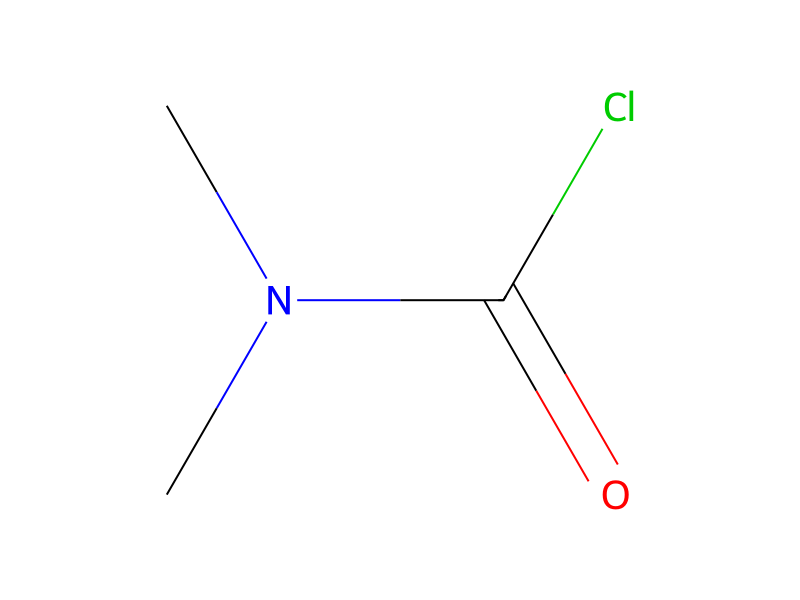
[CH3:1][O:2][C:3]1[CH:8]=[CH:7][N+:6]([O-])=[CH:5][CH:4]=1.C[Si]([C:14]#[N:15])(C)C.CN(C)C(Cl)=O.C(=O)([O-])[O-].[K+].[K+]>ClCCl>[C:14]([C:7]1[CH:8]=[C:3]([O:2][CH3:1])[CH:4]=[CH:5][N:6]=1)#[N:15]Participants
6




Procedure
Commercially available 4-methoxypyridine N-oxide (50 g, 0.4 mol) was dissolved in dichloromethane (200 mL), and to it was added trimethylsilylcyanide (67.4 mL, 0.506 mol) at room temperature. Dimethylcarbamyl chloride (46.5 mL, 0.506 mol) was added dropwise with stirring to the reaction mixture over a 30-min period. The reaction mixture was stirred at room temperature for 24 hours. A solution of 10% aqueous potassium Carbonate (100 mL) was added dropwise, and stirring was continued for 15 minutes. The organic layer was separated, dried, and concentrated to afford 2-cyano-4-methoxypyridine 1 (51.5 g, 96%) as an off-white solid.
Workup
- stirringThe reaction mixture was stirred at room temperature for 24 hours
- stirringstirring
- customThe organic layer was separated
- customdried
- concentrationconcentrated
Sources & evidence
- ORD record
- ord-ab8360f7192d4aa6b50ddc6eb69bd2c5
- Source dataset
- uspto-grants-1993_11
- Patent number
- US05260286
Reaction notes
Loading…