3-Hydroxybenzaldehyde → Methyl 2-(3-formylphenoxy)propanoate
Reaction equation

[OH:1][C:2]1[CH:3]=[C:4]([CH:7]=[CH:8][CH:9]=1)[CH:5]=[O:6].Br[CH:11]([CH3:16])[C:12]([O:14][CH3:15])=[O:13].C(=O)([O-])[O-].[K+].[K+]>CN(C)C=O>[CH:5]([C:4]1[CH:3]=[C:2]([CH:9]=[CH:8][CH:7]=1)[O:1][CH:11]([CH3:16])[C:12]([O:14][CH3:15])=[O:13])=[O:6]Participants
5
Reactant 3
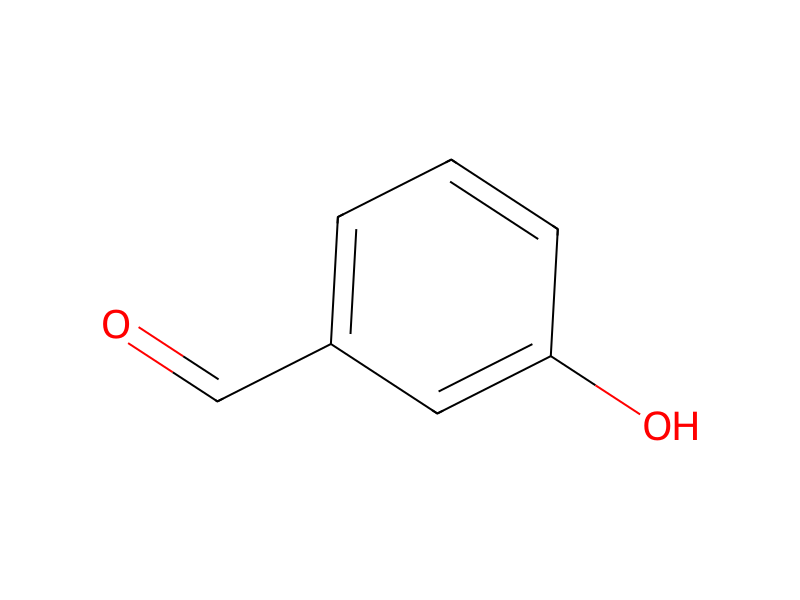


Product 1

Reagents, catalysts & solvents 1

Procedure
By the method of Example 1, Step H, 10.0 g (0.0819 mole) of 3-hydroxybenzaldehyde and 16.0 g (0.0982 mole) of methyl 2-bromopropionate were reacted in the presence of 13.6 g (0.0983 mole) of anhydrous potassium carbonate in 50 mL of N,N-dimethylformamide, yielding 16.1 g of methyl 2-(3-formylphenoxy)propionate as an orange liquid. The NMR and IR spectra were consistent with the proposed structure.
Sources & evidence
- ORD record
- ord-ff5303a0272f425e854e61185cea7074
- Source dataset
- uspto-grants-1993_11
- Patent number
- US05262390
Reaction notes
Loading…