Triethylamine → HCID 22404407, compound
Reaction equation

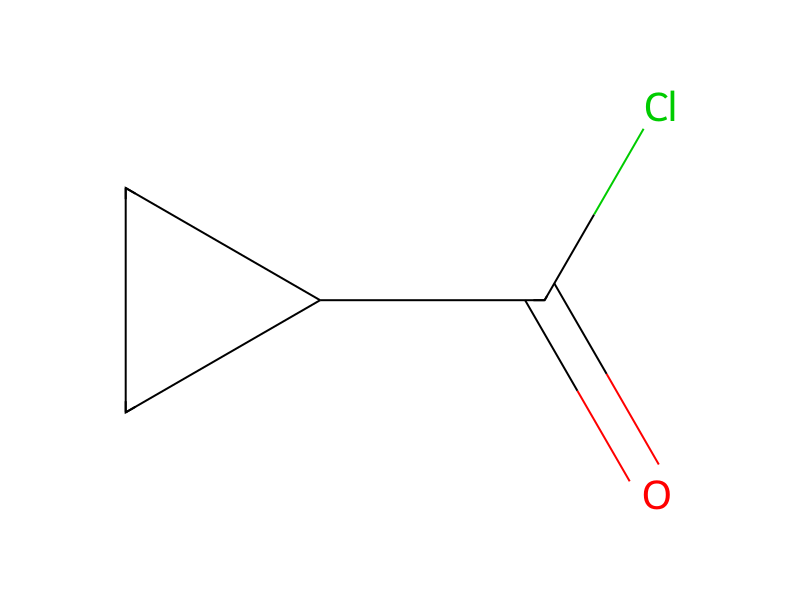
C(N(CC)CC)C.[C:8]([C:13]1([C:21]([O:23][CH2:24][CH3:25])=[O:22])[CH2:18][C:17](=[O:19])[CH2:16][C:15](=[O:20])[CH2:14]1)([O:10][CH2:11][CH3:12])=[O:9].[CH:26]1([C:29](Cl)=[O:30])[CH2:28][CH2:27]1>O1CCCC1>[CH:26]1([C:29]([O:20][C:15]2[CH2:14][C:13]([C:8]([O:10][CH2:11][CH3:12])=[O:9])([C:21]([O:23][CH2:24][CH3:25])=[O:22])[CH2:18][C:17](=[O:19])[CH:16]=2)=[O:30])[CH2:28][CH2:27]1Participants
Reactant 3


Product 1

Reagents, catalysts & solvents 1

Procedure
0.94 g (9.4 mmol) of triethylamine was added to a solution of 2.4 g (9.4 mmol) of 5,5-biscarbethoxy-cyclohexane-1,3-dione in 25 ml of anhydrous tetrahydrofuran. A solution of 0.98 g (9.4 mmol) of cyclopropanecarboxylic chloride in 5 ml of tetrahydrofuran was added dropwise to this mixture at 0° to 10° C. After the mixture had been stirred at 0° to 10° C. for about 1 hour, no more starting material could be detected by thin-layer chromatography. Subsequently, the solvent was removed and the residue was taken up in ethyl acetate. The organic phase was washed twice with 1% strength acetic acid and twice with water, dried and evaporated down. The tube [sic] product was purified chromatographically (developer: cyclohexane/ethyl acetate 8:2). Yield: 1.2 g.
Workup
- customSubsequently, the solvent was removed
- washThe organic phase was washed twice with 1% strength acetic acid and twice with water
- customdried
- customevaporated down
- customThe tube [sic] product was purified chromatographically (developer: cyclohexane/ethyl acetate 8:2)
Sources & evidence
- ORD record
- ord-2e321f58e3df43b0943e27a20315c28e
- Source dataset
- uspto-grants-1996_06
- Patent number
- US05523462
Reaction notes
Loading…