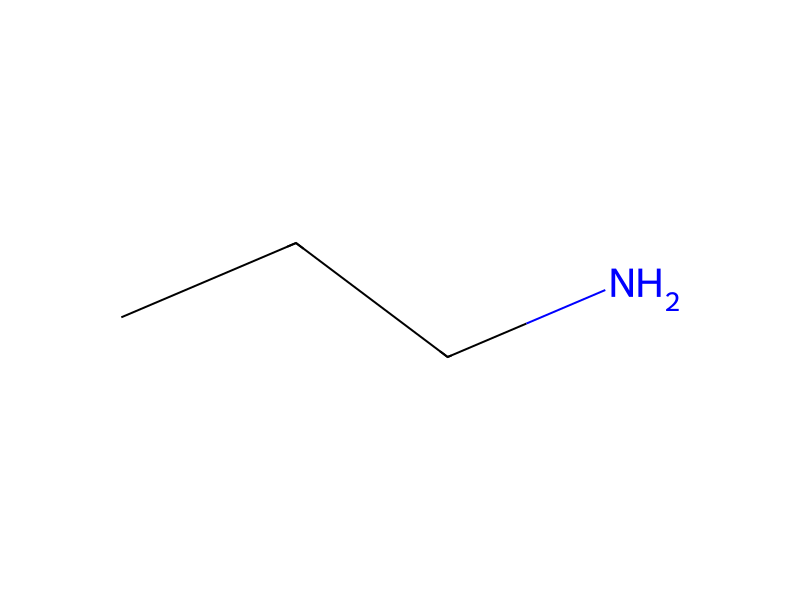
Propylamine → 5,6-Dimethyl-2-propylamino-4-(1-methyl-1,2,3,4-tetrahydroisoquinolin-2-yl)pyrimidine hydrochloride
Reaction equation

[CH2:1]([NH2:4])[CH2:2][CH3:3].C(N(CC)CC)C.[CH3:12][C:13]1[C:14]([N:21]2[CH2:30][CH2:29][C:28]3[C:23](=[CH:24][CH:25]=[CH:26][CH:27]=3)[CH:22]2[CH3:31])=[N:15][C:16]([Cl:20])=[N:17][C:18]=1[CH3:19]>CN(C)C=O>[ClH:20].[CH3:12][C:13]1[C:14]([N:21]2[CH2:30][CH2:29][C:28]3[C:23](=[CH:24][CH:25]=[CH:26][CH:27]=3)[CH:22]2[CH3:31])=[N:15][C:16]([NH:4][CH2:1][CH2:2][CH3:3])=[N:17][C:18]=1[CH3:19]Participants
5
Reactant 3


Product 1

Reagents, catalysts & solvents 1

Procedure
After propylamine(0.43 ml, 5.22 mmol) and triethylamine(0.36 ml, 2.59 mmol) were added to a solution of 5,6-dimethyl-4-(1-methyl-1,2,3,4-tetrahydroisoquinolin-2-yl)-2-chloropyrimidine (0.5 g, 1.74 mmol) in dimethylformamide, 530 mg of the titled compound was obtained in accordance with the same procedure as in Example 1.
Sources & evidence
- ORD record
- ord-84bac16deaa6453a916a34e3e179e158
- Source dataset
- uspto-grants-2002_03
- Patent number
- US06352993B1
Reaction notes
Loading…