Anthranilic Acid → Diphenylamine-2,2'-dicarboxylic acid
Reaction equation

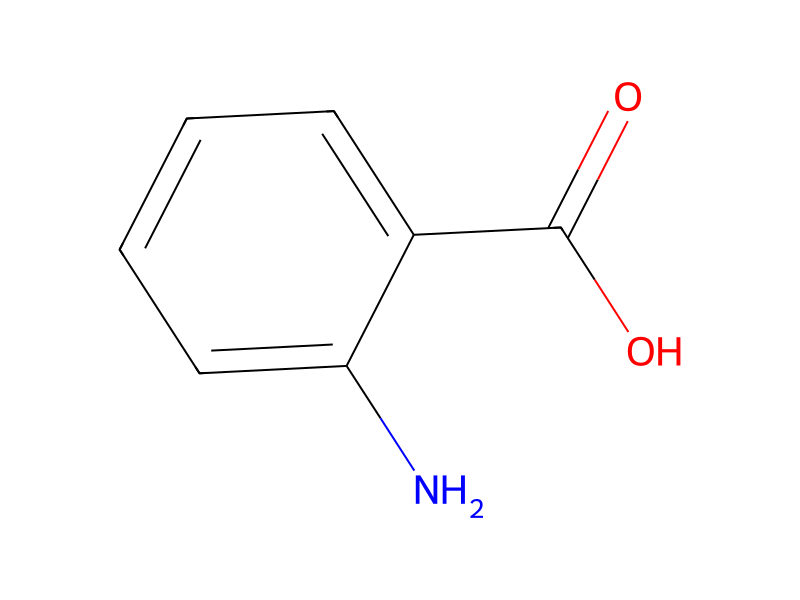
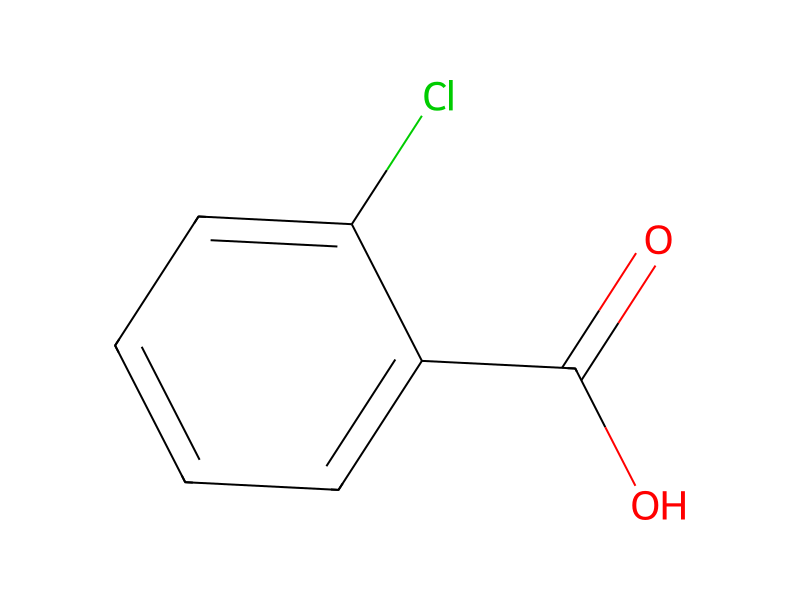
Cl[C:2]1[CH:10]=[CH:9][CH:8]=[CH:7][C:3]=1[C:4]([OH:6])=[O:5].[C:11]([OH:20])(=[O:19])[C:12]1[C:13](=[CH:15][CH:16]=[CH:17][CH:18]=1)[NH2:14].C([O-])([O-])=O.[K+].[K+].C(OCCO)C.Cl>O>[C:4]([C:3]1[CH:7]=[CH:8][CH:9]=[CH:10][C:2]=1[NH:14][C:13]1[C:12](=[CH:18][CH:17]=[CH:16][CH:15]=1)[C:11]([OH:20])=[O:19])([OH:6])=[O:5]Participants





Procedure
A mixture of 2-chlorobenzoic acid (100 g), anthranilic acid (90 g), anhydrous powered K2CO3 (135 g), Cu/CuO (2 g) and 2-ethoxyethanol (200 ml) was heated with swirling on the steam bath until gas evolution ceased and then stirred at 145° for a further 21/2 hours. The thick reaction mixture was diluted with water, acidified (HCl) and then the crude product was collected and washed well with hot water. This was dissolved in hot dilute aqueous Na2CO3 treated liberally with charcoal-celite and filtered through a celite pad. The hot filtrate was diluted with half the volume of EtOH and then slowly acidified (HCl). The pale yellow product which separated was collected when still warm, washed well with hot water, benzene and dried, providing material (84% yield) of sufficient purity for use in the next step (lit, m.p. 295° dec.).
Workup
- temperaturewas heated
- customthe crude product was collected
- washwashed well with hot water
- dissolutionThis was dissolved in hot dilute aqueous Na2CO3
- additiontreated liberally with charcoal-celite
- filtrationfiltered through a celite pad
- additionThe hot filtrate was diluted with half the volume of EtOH
- customThe pale yellow product which separated
- customwas collected when
- temperaturestill warm
- washwashed well with hot water, benzene
- customdried
Sources & evidence
- ORD record
- ord-67717673b7ea41708eaac0b354a893dc
- Source dataset
- uspto-grants-1986_05
- Patent number
- US04590277
Reaction notes
Loading…