Hydrochloric Acid → Hydrochloric Acid
Reaction equation

[Cl-:1].[Cl-:2].[CH2:3]([Al+2:5])[CH3:4].Cl>CCl.FC(F)(F)CF.CCCCCC.ClC(Cl)C>[Cl-:1].[Cl-:1].[CH2:3]([Al+2:5])[CH3:4].[ClH:1].[Cl:1][C:3]([Cl:2])=[CH2:4]Participants
Reactant 2

Product 3

Reagents, catalysts & solvents 4

Procedure
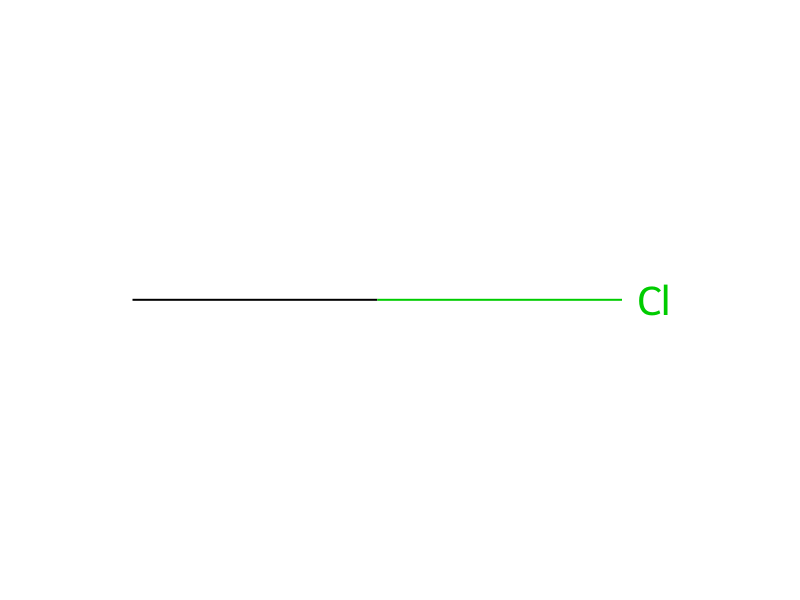
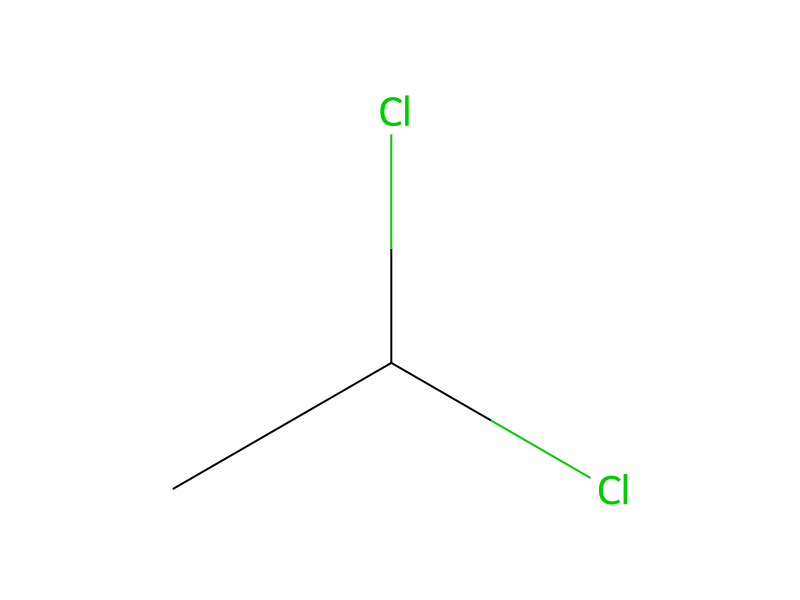
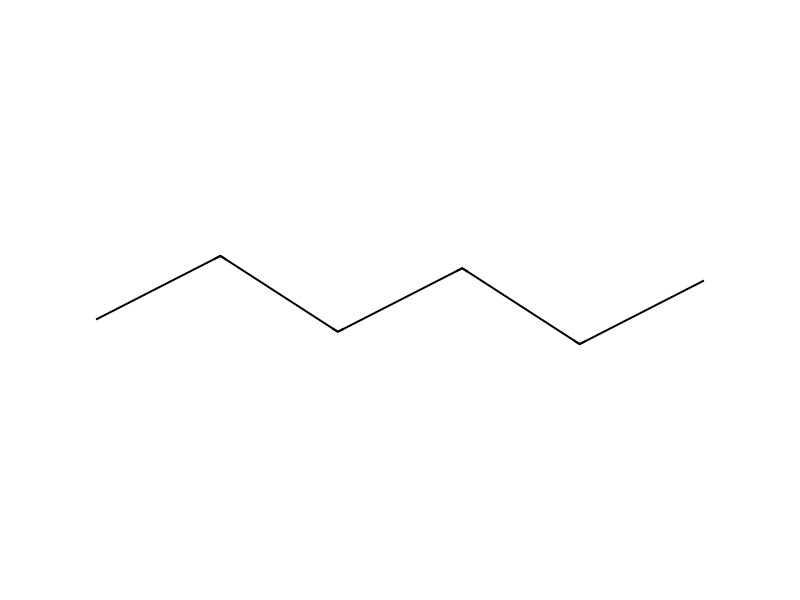
Polymerizations were run by the dropwise addition of this stock of ethylaluminum dichloride (EADC)/hydrogen chloride (HCl) solution to the stirred monomer solutions. A stock solution of EADC and HCl was prepared in methyl chloride by adding 0.320 ml of a 1.0 mol/L HCl solution in 1,1,1,2-tetrafluoroethane and 0.960 ml of a 1.0 mol/L ethylaluminum dichloride solution in hexane to 100 ml of methyl chloride. The total volume of the stock solution added to the polymerization for each example is listed in Table 15. A separate stock solution of ethylaluminum dichloride and hydrogen chloride was used for Examples 125 and 126. This solution was prepared from the addition of 2.0 ml of a 0.16 mol/L HCl solution in 1,1,1,2-tetrafluoroethane and 0.960 ml of a 1.0 mol/L ethylaluminum dichloride solution in hexane to 100 ml of methyl chloride. The final mol/L concentrations of ethylaluminum dichloride and hydrogen chloride in the stock solution is the same for both preparations. Polymerizations were terminated with the addition of 0.2 ml of methanol. Polymerization in 3,3,3-trifluoropropene resulted in rubber particles that did not adhere to the walls of the reactor or to the stirring bar. The particles floated to the surface of the liquid when stirring stopped. The particles were hard as evidenced by pressing on them with a chilled spatula when tested near reaction temperature. Polymerization in methyl chloride resulted in rubber particles that adhered to both the reactor walls and the stirring shaft. Polymerization in 1,1-dichloroethane or 1,1-dichloroethene resulted in solvent swollen polymer particles that adhered to the reactor walls and the stirring bar.
Workup
- customPolymerizations were terminated with the addition of 0.2 ml of methanol
- customPolymerization in 3,3,3-trifluoropropene
- customresulted in rubber particles that
- customtested near reaction temperature
- customresulted in rubber particles that
Sources & evidence
- ORD record
- ord-b46501b463fd4cdab01d1282d535a052
- Source dataset
- uspto-grants-2008_09
- Patent number
- US07425601B2
Reaction notes
Loading…