Hydrogen Bromide → Methyl 2-bromo-3-(2-methoxy-5-pyridyl)propionate
Reaction equation

N[C:2]1[CH:3]=[CH:4][C:5]([O:8][CH3:9])=[N:6][CH:7]=1.[BrH:10].N([O-])=O.[Na+].[C:15]([O:19][CH3:20])(=[O:18])[CH:16]=[CH2:17]>O.CC(C)=O>[Br:10][CH:16]([CH2:17][C:2]1[CH:3]=[CH:4][C:5]([O:8][CH3:9])=[N:6][CH:7]=1)[C:15]([O:19][CH3:20])=[O:18]Participants






Procedure
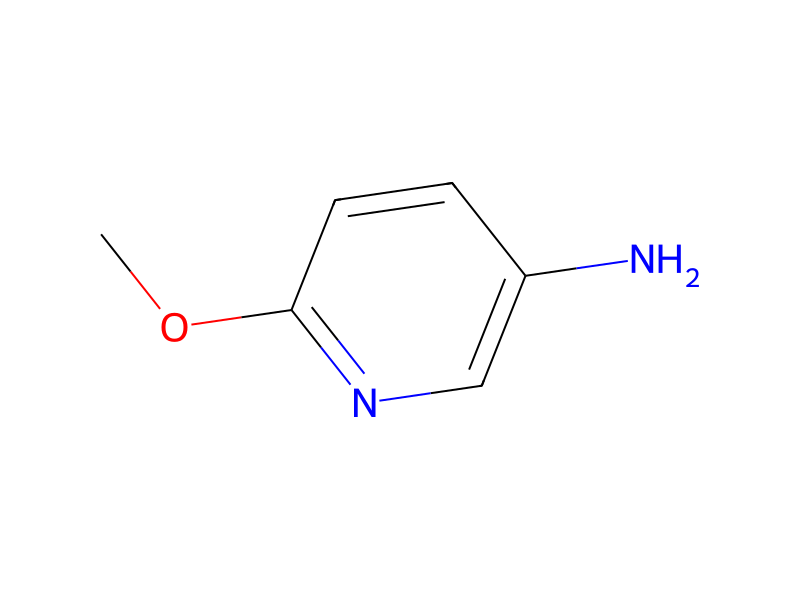
To a mixture of 5-amino-2-methoxypyridine (5.00 g), 47% hydrobromic acid (8.75 g) and acetone (50 ml) was added dropwise a solution of sodium nitrite (3.06 g) in water (5 ml) at 5-10° C. After stirring for 30 minutes, methyl acrylate (20.8 g) was added, to which cuprous oxide (50 mg) was added while stirring vigorously at 15° C. After stirring for one hour at room temperature, the reaction mixture was concentrated, concentrated aqueous ammonia was added, and extracted with ethyl acetate. The ethyl acetate layer was washed with water, dried (MgSO4), and concentrated under reduce pressure. The residue was subjected to a silica gel chromatography. From the fraction eluted with ethyl acetate-hexane (1:9, v/v), methyl 2-bromo-3-(2-methoxy-5-pyridyl)propionate (6.40 g, 58%) was obtained. Oily substance.
Workup
- additionwas added
- stirringwhile stirring vigorously at 15° C
- stirringAfter stirring for one hour at room temperature
- concentrationthe reaction mixture was concentrated
- additionconcentrated aqueous ammonia was added
- extractionextracted with ethyl acetate
- washThe ethyl acetate layer was washed with water
- dry with materialdried (MgSO4)
- concentrationconcentrated
- washFrom the fraction eluted with ethyl acetate-hexane (1:9, v/v)
Sources & evidence
- ORD record
- ord-cd043009112c44eba1f9e553cb9a58dc
- Source dataset
- uspto-grants-2001_04
- Patent number
- US06211215B1
Reaction notes
Loading…