Triethylamine → N-(3-bromopropyl)-2-(4-tetradecenylamino)benzamide
Reaction equation

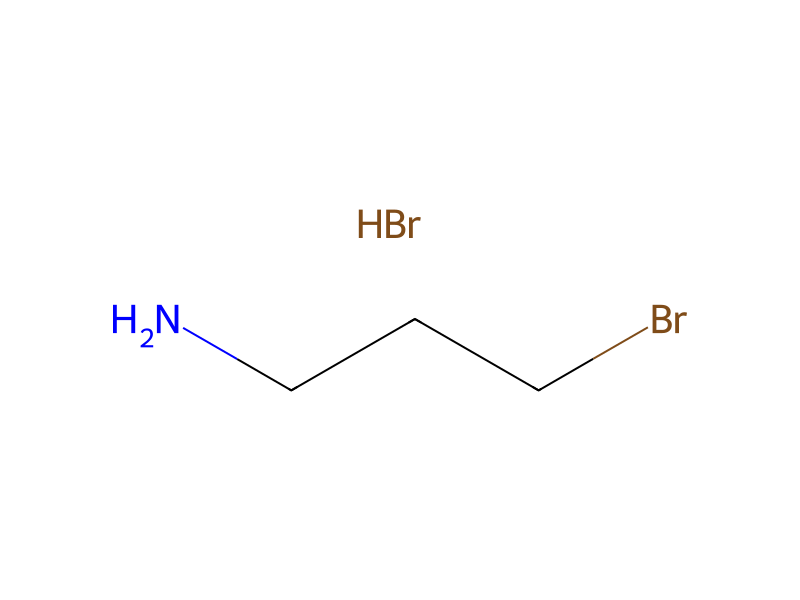
Br.[Br:2][CH2:3][CH2:4][CH2:5][NH2:6].Cl.[CH2:8]([NH:22][C:23]1[CH:31]=[CH:30][CH:29]=[CH:28][C:24]=1[C:25](Cl)=[O:26])[CH2:9][CH2:10][CH:11]=[CH:12][CH2:13][CH2:14][CH2:15][CH2:16][CH2:17][CH2:18][CH2:19][CH2:20][CH3:21].C(N(CC)CC)C>CN(C)C1C=CN=CC=1.COCCOC>[Br:2][CH2:3][CH2:4][CH2:5][NH:6][C:25](=[O:26])[C:24]1[CH:28]=[CH:29][CH:30]=[CH:31][C:23]=1[NH:22][CH2:8][CH2:9][CH2:10][CH:11]=[CH:12][CH2:13][CH2:14][CH2:15][CH2:16][CH2:17][CH2:18][CH2:19][CH2:20][CH3:21]Participants
6
Reactant 3


Product 1

Reagents, catalysts & solvents 2


Procedure
To a slurry of 21.80 g. of 3-bromopropylamine hydrobromide in 200 ml. of glyme at 3° C. is added a solution of 23.9 g. of 2-(4-tetradecenylamino)benzoyl chloride hydrochloride in 65 ml. of glyme, concurrently with 26 ml. of triethylamine diluted to 39 ml. with 1,2-dimethoxyethane. The solution is warmed to reflux and 0.2 g. of 4-dimethylaminopyridine is added. The solution is heated for four hours and cooled overnight. The solid is removed and the mother liquor diluted with 200 ml. of water to yield a solid which is crystallized from cyclohexane and recrystallized from acetonitrile to yield the product.
Workup
- temperatureThe solution is warmed
- temperatureto reflux
- temperatureThe solution is heated for four hours
- temperaturecooled overnight
- customThe solid is removed
- additionthe mother liquor diluted with 200 ml
- customof water to yield a solid which
- customis crystallized from cyclohexane
- customrecrystallized from acetonitrile
- customto yield the product
Sources & evidence
- ORD record
- ord-edc8f3b061ed4b3995aa791cd60751cd
- Source dataset
- uspto-grants-1984_04
- Patent number
- US04440940
Reaction notes
Loading…