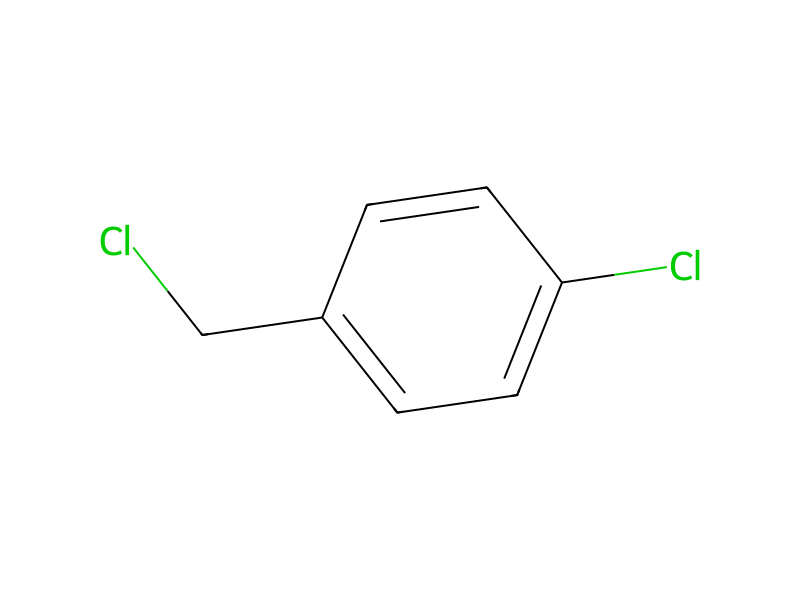
1-Chloro-4-(chloromethyl)benzene → 1-(p-Chlorobenzyl)-1-[4-(quinolin-2-ylmethoxy)phenyl]hydrazine
Reaction equation

[N:1]1[C:10]2[C:5](=[CH:6][CH:7]=[CH:8][CH:9]=2)[CH:4]=[CH:3][C:2]=1[CH2:11][O:12][C:13]1[CH:18]=[CH:17][C:16]([NH:19][NH2:20])=[CH:15][CH:14]=1.[Cl:21][C:22]1[CH:29]=[CH:28][C:25]([CH2:26]Cl)=[CH:24][CH:23]=1.C(N(C(C)C)CC)(C)C>[Br-].C([N+](CCCC)(CCCC)CCCC)CCC>[Cl:21][C:22]1[CH:29]=[CH:28][C:25]([CH2:26][N:19]([C:16]2[CH:15]=[CH:14][C:13]([O:12][CH2:11][C:2]3[CH:3]=[CH:4][C:5]4[C:10](=[CH:9][CH:8]=[CH:7][CH:6]=4)[N:1]=3)=[CH:18][CH:17]=2)[NH2:20])=[CH:24][CH:23]=1Participants
5




Procedure
reacting the 4-(quinolin-2-ylmethoxy)phenylhydrazine product of step (4) with p-chlorobenzyl chloride, tetrabutylammonium bromide and diisopropylethylamine to yield 1-(p-chlorobenzyl)-1-[4-(quinolin-2-ylmethoxy)phenyl]hydrazine.
Sources & evidence
- ORD record
- ord-101dfec2cd4143ee99ca5b6374c7cd9f
- Source dataset
- uspto-grants-1993_12
- Patent number
- US05274096
Reaction notes
Loading…