Benzene → Tetralin
Reaction equation
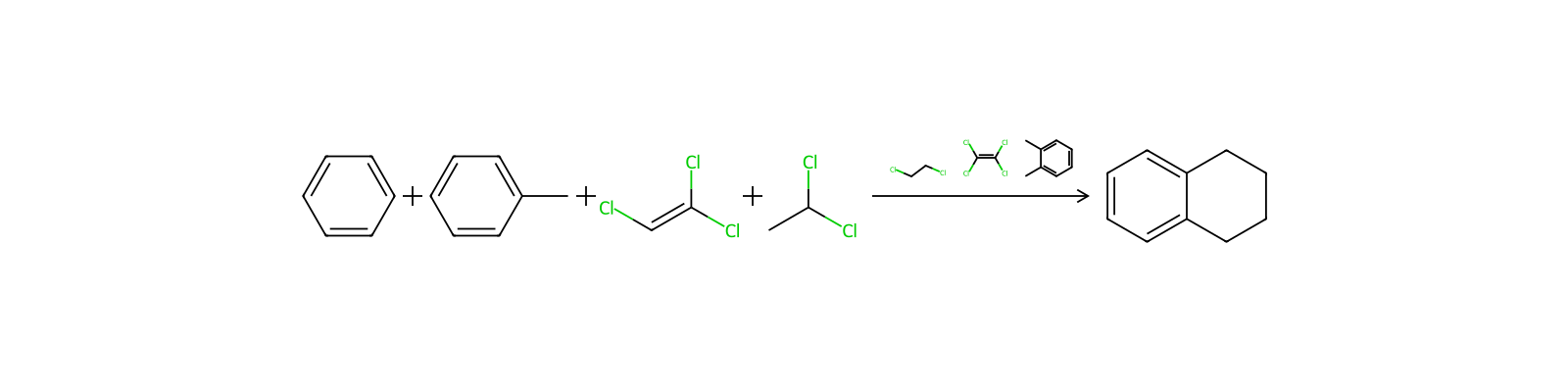
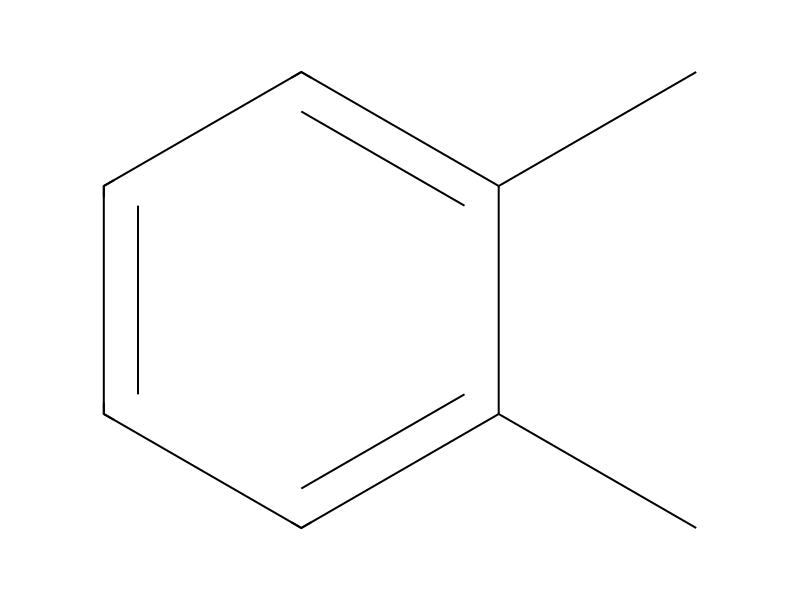
[CH:1]1[CH:6]=[CH:5][CH:4]=[CH:3][CH:2]=1.[C:7]1(C)[CH:12]=CC=[CH:9][CH:8]=1.ClC=C(Cl)Cl.ClC(Cl)C>C(Cl)CCl.ClC(Cl)=C(Cl)Cl.C1(C)C(C)=CC=CC=1>[CH2:1]1[C:6]2[C:5](=[CH:12][CH:7]=[CH:8][CH:9]=2)[CH2:4][CH2:3][CH2:2]1Participants

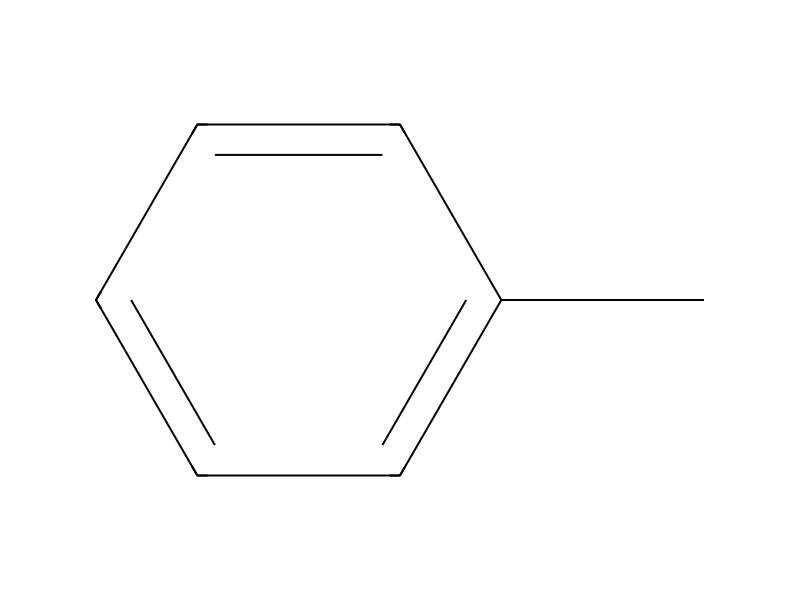
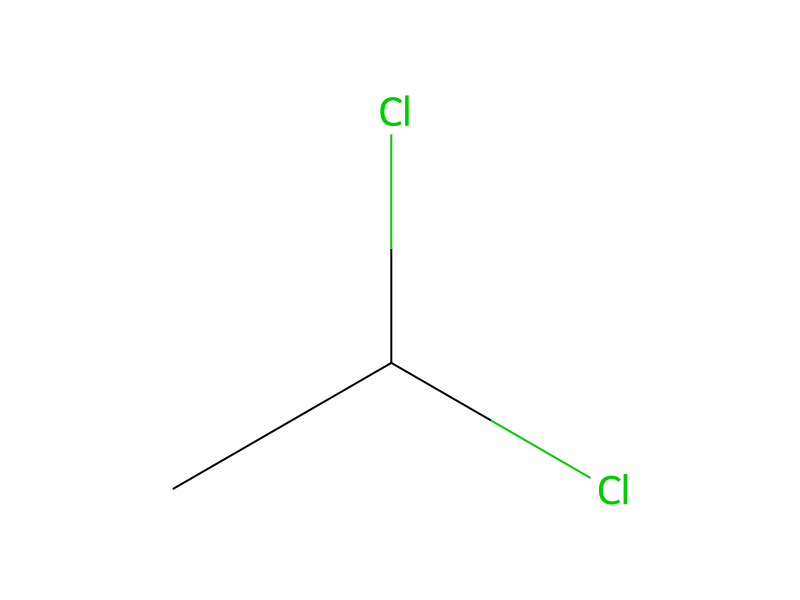


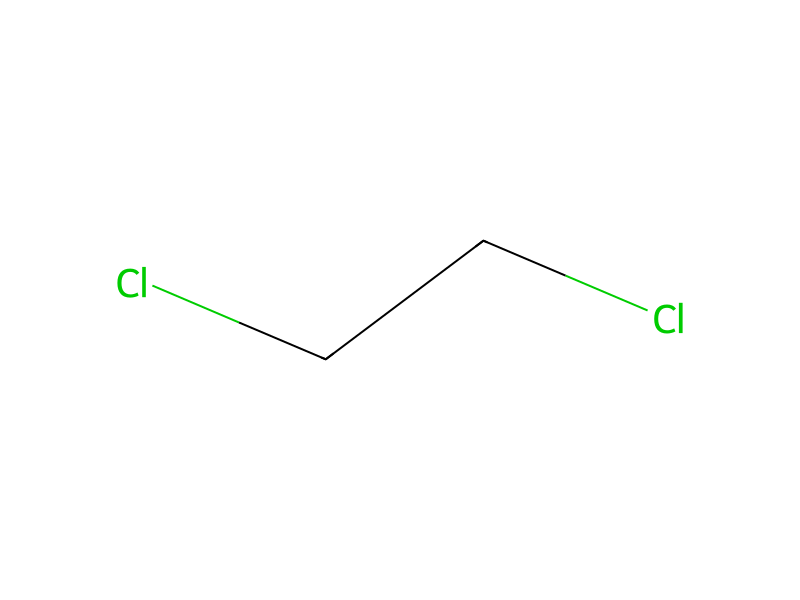

Procedure
The solutions useful in the method of the present invention include those obtained by a combination of a polyolefin and a petroleum hydrocarbon such as benzene, toluene, xylene, solvent naphtha or the like or a chlorinated hydrocarbon such as trichloroethylene, tetrachloroethylene, dichloroethane, dichloroethylene or the like. Low density polyethylene, medium density polyethylene, high density polyethylene, atactic (amorphous) polypropylene, isotactic (crystalline) polypropylene, ethylene-propylene copolymer, propylene-butylene copolymer can be mentioned as useful polyolefins. It is preferable to use a solution having a gelation point of 40°-60° C at a concentration in the range of 1-5% by weight. However, among the above-mentioned, a combination of benzene (b.p. 80.1° C), cyclohexane (b.p. 80.7° C), dichloroethylene (b.p. 83.5° C) with a resin other than atactic polypropylene is not of practical value because of poor solubility. Though tetraline (b.p. 210.5° C) or kerosene (b.p. 150°-320° C) provides nice gel-forming property, they are the examples which are not useful on account of too high boiling point. For the foregoing reason, toluene, xylene and tetrachloroethylene are preferable as a solvent for polyolefins and inflammable tetrachloroethylene is most suitable if safety is also taken into consideration.
Workup
- customa gelation point of 40°-60° C
- concentrationat a concentration in the range of 1-5% by weight
Sources & evidence
- ORD record
- ord-33aebaf6027d403684e8b6ed4cc0c8c5
- Source dataset
- uspto-grants-1977_04
- Patent number
- US04019890
Reaction notes
Loading…