Bromobenzene → 7-Chloro-3-hydroxy-3-phenyl-2-indolinone
Reaction equation

[Mg].Br[C:3]1[CH:8]=[CH:7][CH:6]=[CH:5][CH:4]=1.[Cl:9][C:10]1[CH:11]=[CH:12][CH:13]=[C:14]2[C:18]=1[NH:17][C:16](=[O:19])[C:15]2=[O:20]>O1CCCC1.[OH-].[Na+]>[Cl:9][C:10]1[CH:11]=[CH:12][CH:13]=[C:14]2[C:18]=1[NH:17][C:16](=[O:19])[C:15]2([OH:20])[C:3]1[CH:8]=[CH:7][CH:6]=[CH:5][CH:4]=1Participants
6
Reactant 3
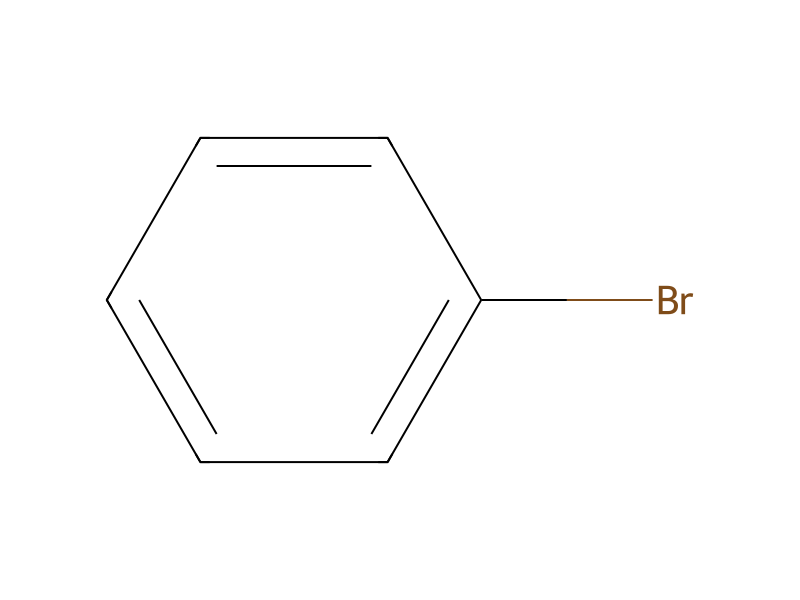


Product 1

Reagents, catalysts & solvents 2


Procedure
A Grignard reagent prepared from 62 g. magnesium, 400 g. bromobenzene in two liters tetrahydrofuran (THF) is added to 181 g. (1.0 mole) 7-chloroisatin (1a) in two liters THF at a rate to keep a gentle reflux. After three hours of reflux, the reaction is cooled and decomposed with 350 ml. saturated ammonium chloride, filtered, and the THF stripped to give a dark oil. The oil is dissolved in aqueous sodium hydroxide and precipitated with hydrochloric acid. Recrystallization from aqueous ethanol gives 7-chloro-3-hydroxy-3-phenyl-2-indolinone, m.p. 154°-156°.
Workup
- temperatureAfter three hours of reflux
- temperaturethe reaction is cooled
- filtrationsaturated ammonium chloride, filtered
- customto give a dark oil
- customprecipitated with hydrochloric acid
- customRecrystallization from aqueous ethanol
Sources & evidence
- ORD record
- ord-98ca840e9e704ec283dd9b749a35a7e9
- Source dataset
- uspto-grants-1977_04
- Patent number
- US04020179
Reaction notes
Loading…