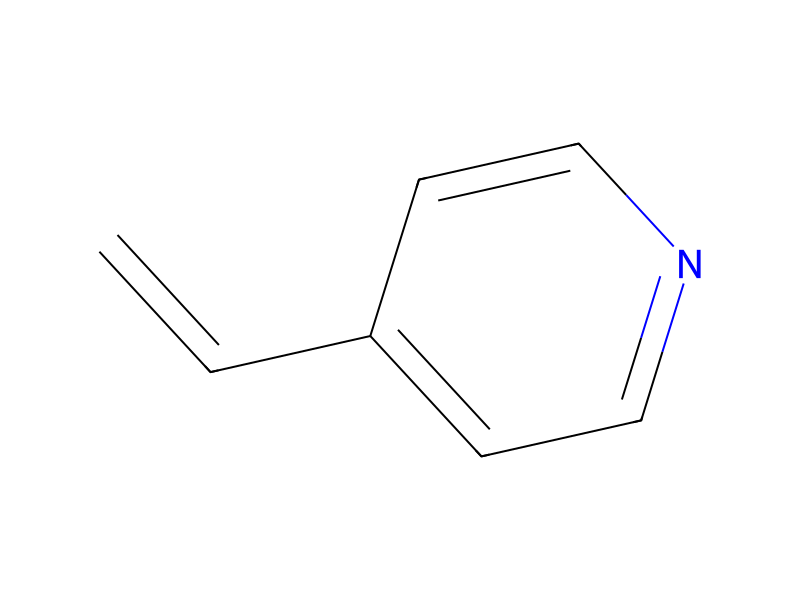
4-Vinylpyridine → 4-(2-Phenylvinyl)pyridine, trans-
Reaction equation

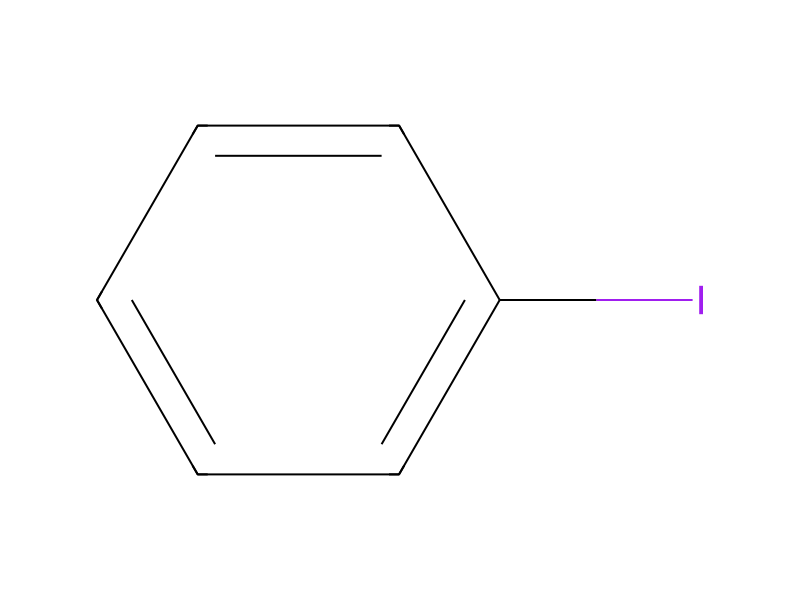
[C:1]1(I)[CH:6]=[CH:5][CH:4]=[CH:3][CH:2]=1.[CH:8]([C:10]1[CH:15]=[CH:14][N:13]=[CH:12][CH:11]=1)=[CH2:9].C(N(CC)CC)C>ClCCl.C([O-])(=O)C.[Pd+2].C([O-])(=O)C.C1(C)C=CC=CC=1P(C1C=CC=CC=1C)C1C=CC=CC=1C>[C:1]1(/[CH:9]=[CH:8]/[C:10]2[CH:15]=[CH:14][N:13]=[CH:12][CH:11]=2)[CH:6]=[CH:5][CH:4]=[CH:3][CH:2]=1Participants





Procedure
A mixture of phenyl iodide (100 ml, 0.89mol), 4-vinylpyridine (115 ml, 1.07 mol), palladium acetate (2.4 g, 0.01 mol), tri-o-tolylphosphine (6.08 g, 0.02 mol) and triethylamine (150 ml, 1.07 mol) was refluxed for 3 hours. The reaction was cooled to room temperature, the resulting solid dissolved in dichloromethane (2 l) and washed with saturated aqueous sodium carbonate solution (2 l). The aqueous phase was further extracted with dichloromethane (3×1.5 l) and the combined organic phases dried (MgSO4) and evaporated. The resulting solid was washed with ethyl acetate (1.5 l), filtered and dried in vacuo to give (E)-4-(2-phenylethenyl)pyridine (90 g, 56%); δH (CDCl3) 7.01 (1H, d, J 16.3 Hz, ArCH=CH), 7.25-7.41 (6H, m, PhH, ArCH=CH), 7.53 (2H, d, J 5.3 Hz, 3-H, 5-H), and 8.58 (2H, d, J 5.2 Hz, 2-H, 6-H).
Workup
- temperaturewas refluxed for 3 hours
- washwashed with saturated aqueous sodium carbonate solution (2 l)
- extractionThe aqueous phase was further extracted with dichloromethane (3×1.5 l)
- dry with materialthe combined organic phases dried (MgSO4)
- customevaporated
- washThe resulting solid was washed with ethyl acetate (1.5 l)
- filtrationfiltered
- customdried in vacuo
Sources & evidence
- ORD record
- ord-b5ab125244474181a30093893a9c3571
- Source dataset
- uspto-grants-1999_01
- Patent number
- US05861407
Reaction notes
Loading…