Formaldehyde → 4-Dimethylamino-6-methoxy-2-(4-tolylsulfonyl)methylamino-1,3,5-triazine
Reaction equation

[NH2:1][C:2]1[N:7]=[C:6]([N:8]([CH3:10])[CH3:9])[N:5]=[C:4]([O:11][CH3:12])[N:3]=1.[C:13]1([CH3:22])[CH:18]=[C:17](S(O)=O)C=[CH:15][CH:14]=1.[Na].[CH3:24][S:25]([OH:28])(=O)=[O:26].[CH2:29]=O>CO.O>[CH3:10][N:8]([CH3:9])[C:6]1[N:5]=[C:4]([O:11][CH3:12])[N:3]=[C:2]([NH:1][CH2:29][S:25]([C:24]2[CH:17]=[CH:18][C:13]([CH3:22])=[CH:14][CH:15]=2)(=[O:28])=[O:26])[N:7]=1Participants
8
Reactant 5

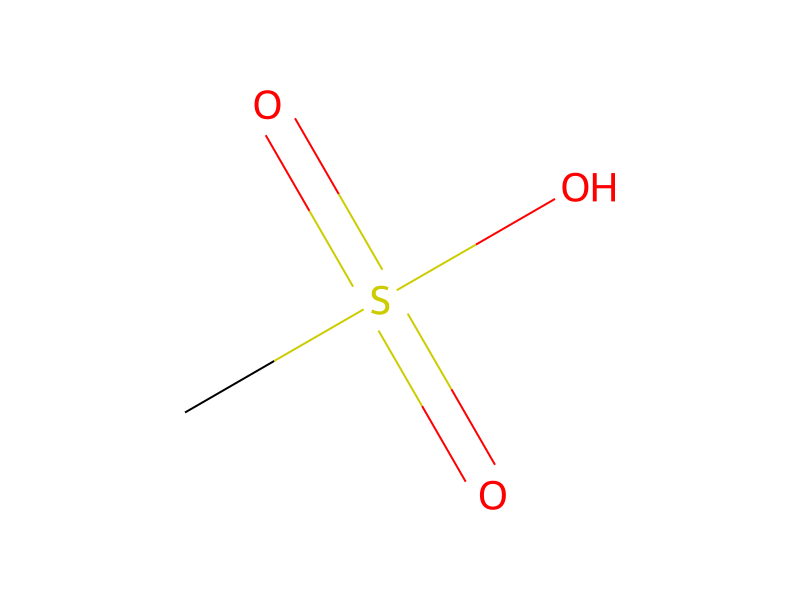



Product 1

Reagents, catalysts & solvents 2


Procedure
8.5 g (0.05 mole) of 2-amino-4-dimethylamino-6-methoxy-1,3,5-triazine and 9.1 g (0.05 mole) of toluene-5-sulfinic acid, sodium salt, are suspended in 100 ml of methanol and to the stirred suspension are added, in succession, 4.8 g (0.05 mole) of methanesulfonic acid and 4.7 g (0.055 mole) of aqueous 35% formaldehyde. The batch is then stirred for 30 minutes at room temperature and then for another 90 minutes under reflux. After cooling, the mixture is diluted with 1 liter of water and the crystalline precipitate is filtered with suction and dried. Melting point: 188°-190° C. Yield: 10 g (59% of theory).
Workup
- temperaturefor another 90 minutes under reflux
- temperatureAfter cooling
- filtrationthe crystalline precipitate is filtered with suction
- customdried
Sources & evidence
- ORD record
- ord-ace731a5e685484499b5db0356780d80
- Source dataset
- uspto-grants-1988_08
- Patent number
- US04764203
Reaction notes
Loading…