Hydrochloric Acid → HCID 57236764, compound
Reaction equation

[H-].[Na+].[CH:3]1([OH:8])[CH2:7][CH2:6][CH2:5][CH2:4]1.[NH2:9][C:10]1[N:18]=[C:17]2[C:13]([N:14]=[CH:15][N:16]2[C@H:19]2[CH2:23][C@H:22]([OH:24])[C@@H:21]([CH2:25][OH:26])[CH2:20]2)=[C:12](Cl)[N:11]=1.Cl>>[NH2:9][C:10]1[N:18]=[C:17]2[C:13]([N:14]=[CH:15][N:16]2[C@H:19]2[CH2:23][C@H:22]([OH:24])[C@@H:21]([CH2:25][OH:26])[CH2:20]2)=[C:12]([O:8][CH:3]2[CH2:7][CH2:6][CH2:5][CH2:4]2)[N:11]=1Participants

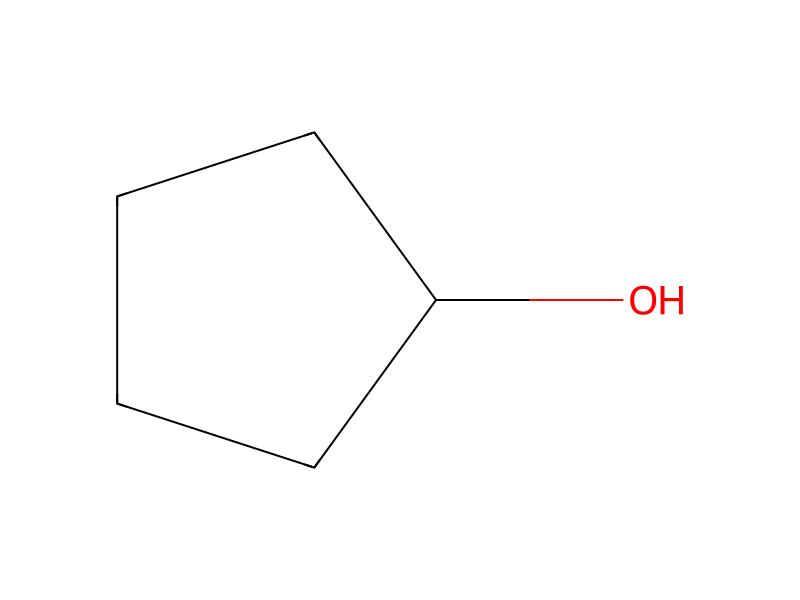



Procedure
Sodium hydride (60% oil dispersion, 113 mg)was added to cydopentanol (7mL). To the resulting solution, after effervescence had ceased, was added (+)-(1S-2R4R)-4-(2-amino-6-chloro-9H-purin-yl)-2-(hydroxymethyl)cyclopentanol (400 mg, 1.4 mmol). The solution was maintained at 8° for 40 minutes, cooled to room temperature, and neutralized with 1N hydrochloric acid. Volatiles were removed and the residue chromatographed on silica gel. Title compound was eluted with methanol: chloroform/15:85 as a white solid foam which solidified form acetonitrile: methanol/20:1 as a white powder (223 mg, 48%), m.p. 181°-182°; mass spectrum (Cl, CH4): 334(M+1); 1H-NMR(DMSO-d6)δ: 7.97 (s, 1, H8), 6.32 (brs, 2, NH2), 5.60 (m, 1, CHO of cydopentyl) 5.0-4.8 (m, 1, CHN), 4.78 (d. J=4.1 Hz, 1, OH), 4.66 (t,J=5.1 Hz, 1, CH2OH), 4.1 (m, 1, CHOH), 3.6-3.4 (m, 2, CH2O), 2.4-1.9 (m, 6 methylene), 1.9-1.5 (m, 7, methylene); [α]20589 +9.34°, [α]20578 +9.85°, [α]20546 +11.1°, [α]20430 +18.2°, [α]20365 +26.6° (c=0.782, methanol).
Workup
- temperatureThe solution was maintained at 8° for 40 minutes
- customVolatiles were removed
- customthe residue chromatographed on silica gel
- washTitle compound was eluted with methanol
- custom[α]20589 +9.34°, [α]20578 +9.85°, [α]20546 +11.1°, [α]20430 +18.2°, [α]20365 +26.6° (c=0.782, methanol)
Sources & evidence
- ORD record
- ord-87be15e41ecf4d2487dcabe50cc0f80a
- Source dataset
- uspto-grants-1998_11
- Patent number
- US05840990
Reaction notes
Loading…