Hydrochloric Acid → 4-hydroxy-N-(3-hydroxypropyl)benzamide
Reaction equation

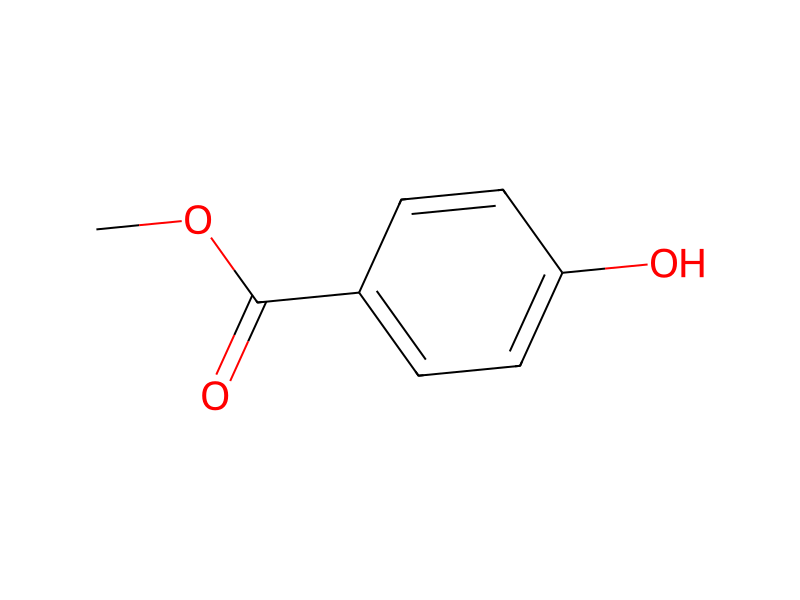
[OH:1][C:2]1[CH:11]=[CH:10][C:5]([C:6]([O:8]C)=O)=[CH:4][CH:3]=1.[NH2:12][CH2:13][CH2:14][CH2:15][OH:16].Cl>>[OH:16][CH2:15][CH2:14][CH2:13][NH:12][C:6](=[O:8])[C:5]1[CH:4]=[CH:3][C:2]([OH:1])=[CH:11][CH:10]=1Participants
4



Conditions
- Temperature
- 120 °C
Procedure
A mixture of 76 g of methyl 4-hydroxybenzoate and 112.5 g of 3-amino-1-propanol was heated and stirred at 120° C. for 8 hours. The reaction mixture was acidified with 2N hydrochloric acid and then extracted with ethyl acetate and butanol. The combined extracts were concentrated in vacuo and the residue was recrystallized from acetonitrile to give 37.8 g of N-(3-hydroxypropyl)-4-hydroxybenzamide, m.p. 118°-120° C.
Workup
- temperaturewas heated
- extractionextracted with ethyl acetate and butanol
- concentrationThe combined extracts were concentrated in vacuo
- customthe residue was recrystallized from acetonitrile
Sources & evidence
- ORD record
- ord-e9b518f6d9fa484a99b5cccf69bb95ed
- Source dataset
- uspto-grants-1991_03
- Patent number
- US05002960
Reaction notes
Loading…