Water → 1-[4-Benzyl-(1-piperazinyl)]isoquinoline
Reaction equation

Cl[C:2]1[C:11]2[C:6](=[CH:7][CH:8]=[CH:9][CH:10]=2)[CH:5]=[CH:4][N:3]=1.[CH2:12]([N:19]1[CH2:24][CH2:23][NH:22][CH2:21][CH2:20]1)[C:13]1[CH:18]=[CH:17][CH:16]=[CH:15][CH:14]=1.C(N(CC)C(C)C)(C)C.O>CN(C=O)C>[CH2:12]([N:19]1[CH2:24][CH2:23][N:22]([C:2]2[C:11]3[C:6](=[CH:7][CH:8]=[CH:9][CH:10]=3)[CH:5]=[CH:4][N:3]=2)[CH2:21][CH2:20]1)[C:13]1[CH:14]=[CH:15][CH:16]=[CH:17][CH:18]=1Participants
6

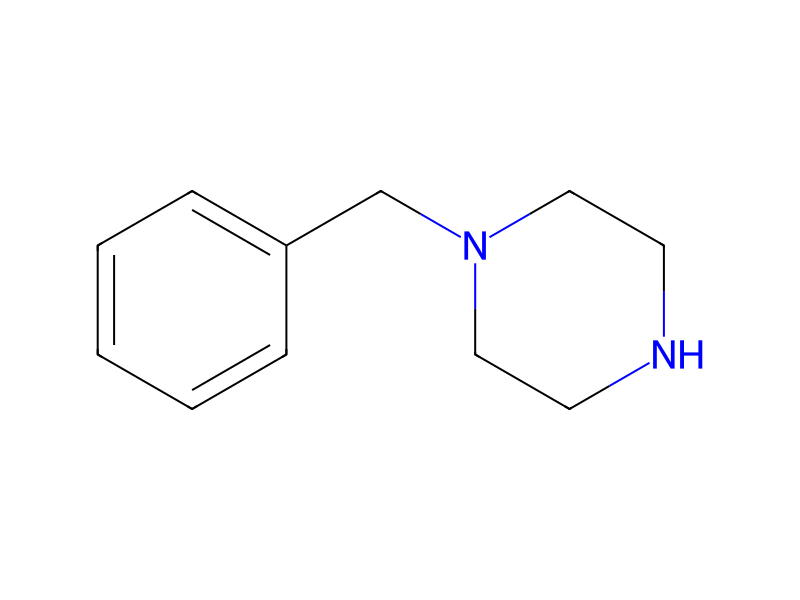




Procedure
A solution of 1-chloroisoquinoline (1.64 g 10 mmol) in dry DMF (5 ml) was added to a stirred solution of 1-benzylpiperazine (1.85 g, 10.5 mmol) and N,N-diisopropylethylamine (2 ml, 1.5 g, 11.5 mmol) in dry DMF (5 ml) under Ar at room temperature. The solution was stirred at room temperature for 17 h. The yellow solution was heated at 110° C. for 7 h, treated with water (100 ml) and extracted with ether (2×50 ml). The extracts were dried (Na2SO4) and concentrated in vacuo. The residue was chromatographed (SiO2 ; ethyl acetate) to give the product (1.233 g).
Workup
- temperatureThe yellow solution was heated at 110° C. for 7 h
- extractionextracted with ether (2×50 ml)
- dry with materialThe extracts were dried (Na2SO4)
- concentrationconcentrated in vacuo
- customThe residue was chromatographed (SiO2 ; ethyl acetate)
Sources & evidence
- ORD record
- ord-83cf8d208096407f9854c5332bf0ae09
- Source dataset
- uspto-grants-2000_10
- Patent number
- US06127357
Reaction notes
Loading…