O-Xylene → Isobornylmethacrylate
Reaction equation

[C:1](OOC(C)(C)C)(C)([CH3:3])[CH3:2].C(OOC([C:20]1C=CC=[CH:22][C:21]=1[C:26]([O:29]OC(C)(C)C)(C)C)(C)C)(C)(C)C.C([O:40]OC(CC)(C)C)(CC)(C)C.O=CCCCCCOC(=O)C.[C:58]1([CH3:65])[C:59](C)=[CH:60][CH:61]=[CH:62][CH:63]=1>>[CH3:22][C:21]([C:26]([O:29][CH:59]1[C@@:58]2([CH3:65])[C:1]([CH3:3])([CH3:2])[C@H:61]([CH2:62][CH2:63]2)[CH2:60]1)=[O:40])=[CH2:20]Participants
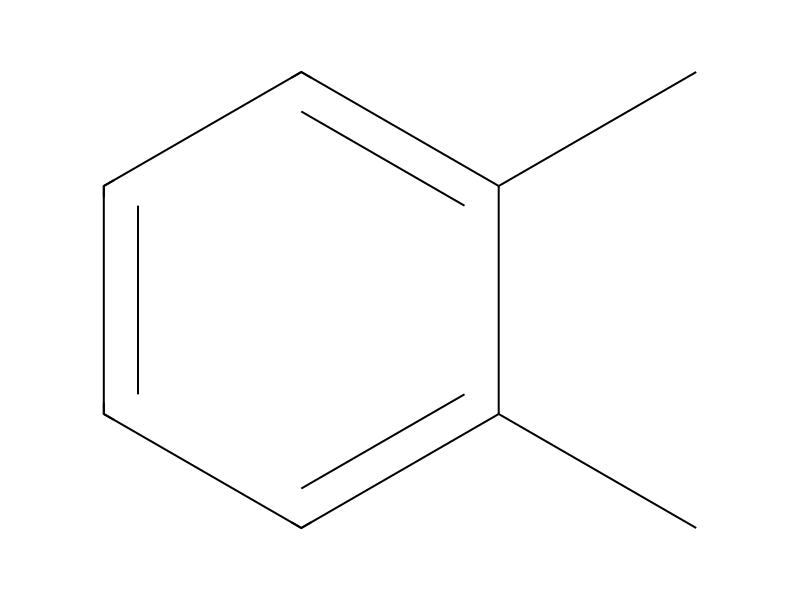
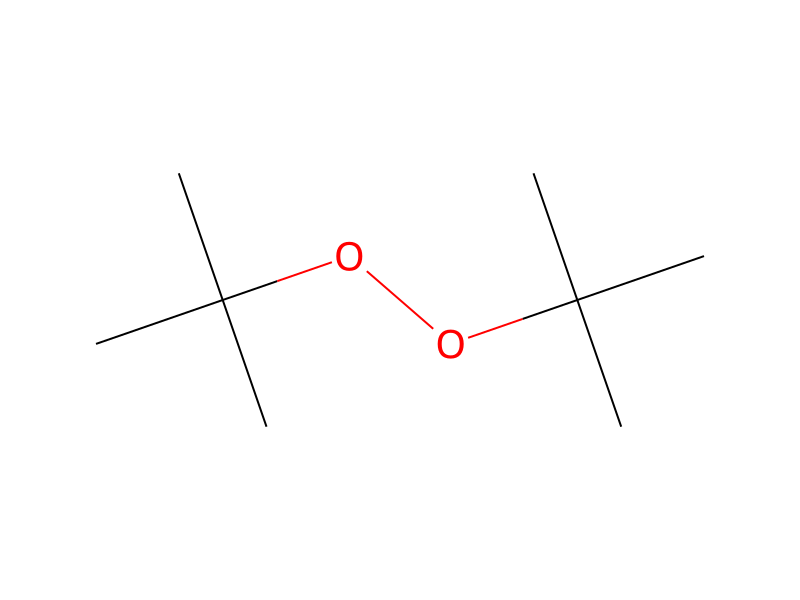
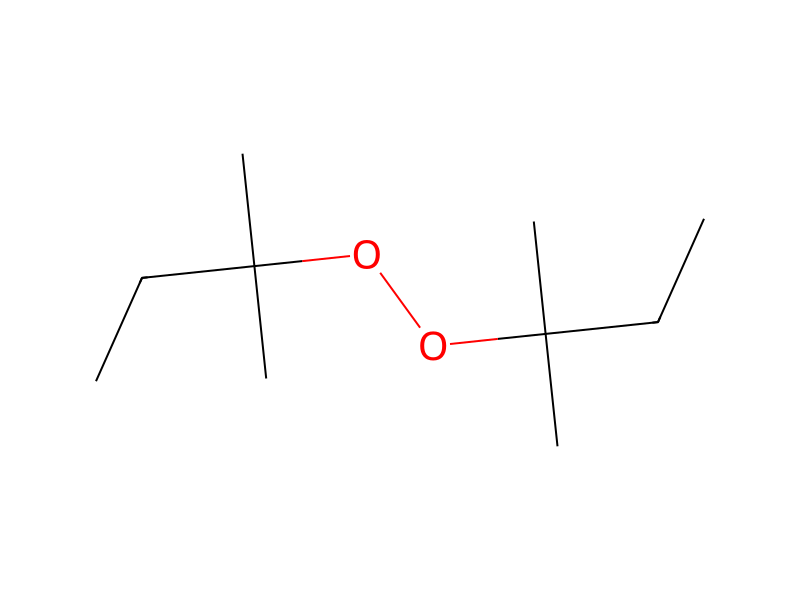


Procedure
The anhydride-functional polymers which are useful in the practice of this invention will have an average of at least two anhydride groups per molecule and are prepared by polymerizing a monomer mixture comprising the alkenyl succinic anhydride and at least one (meth)acrylic monomer under free radical addition polymerization conditions. Polymerizing under free radical addition polymerization conditions means that the monomers are reacted in the presence of a free radical source at a temperature sufficient for polymerization. Optionally, other copolymerizable monomers, such as vinyl compounds, can be included in the polymerization reaction. The monomers which are copolymerized with the alkenyl succinic anhydride should, of course, be free of any functionality which could react with the anhydride group during the polymerization. The anhydride-functional polymers can be conveniently prepared by free radical addition polymerization techniques, however, the effective incorporation of the alkenyl succinic anhydride monomers requires special considerations which are not typically involved in (meth)acrylic free radical polymerization. For example, it is preferred to conduct the polymerization at relatively high temperatures, normally in excess of 110° C., and preferably at temperatures ranging from 135° C. to about 170° C. Additionally, relatively higher amounts of initiator are generally preferred than the levels normally used for conventional free radical polymerization of (meth)acrylic monomers and initiator concentrations will typically be within a range of 0.2 to 15, and preferably 2 to 8 weight percent of the total monomer charge. Peroxide initiators, and especially those having a relatively long half-life, e.g. greater than about 15 minutes, at these reaction temperatures are generally preferred over the azo type initiators. Di-tertiary butyl peroxide, di-(tertiary-butyl peroxyisopropyl)benzene and, especially, di-tertiary-amyl peroxide are particularly useful initiators. Additionally, aromatic hydrocarbons are generally preferred as the inert solvent rather than oxygenated inert solvents when minimal color development during the polymerization if preferred. Exxate 600 (trade name for oxohexylacetate from Exxon Chemical Company) and xylene are representative useful solvents for the polymerization. Furthermore, monomers having acrylic, rather than methacrylic, unsaturation, or monomers having allylic hydrogen atoms, such as isobornyl methacrylate, generally provide higher degrees of incorporation of the alkenyl succinic anhydride into the polymer and it is especially preferred that the monomer mixture comprise at least one such monomer. Preferrably, at least 5% by weight of the monomer mixture will be monomers having such functionality. Although it is not our intent to be bound by theory, experimental evidence indicates that under these reaction conditions, the alkenyl succinic anhydride copolymerizes as alternating and/or block copolymers and also, to at least some extent, by grafting, free radical rearrangement or other mechanism to produce quaternary carbon atoms. The acrylic monomers, or monomers having allylic hydrogen, provide a preferred site for grafting or free radical rearrangement not present in the other monomers. In order to provide the lowest possible viscosity, the anhydride-functional polymers preferably are ungelled. By "ungelled" is meant that the polymer itself is substantially free of any gel structures, insoluble fractions or internal crosslinking, and that the monomer mixture used to prepare the polymer was substantially free of any monomers having multiple polymerizable unsaturated sites.
Workup
- customare prepared by polymerizing a monomer mixture
- additionat least one (meth)acrylic monomer under free radical addition polymerization conditions
- customPolymerizing
- additionunder free radical addition polymerization conditions
- customare reacted in the presence of a free radical source at a temperature sufficient for polymerization
- customcould react with the anhydride group during the polymerization
- customare not typically involved in (meth)acrylic free radical polymerization
- customthe polymerization at relatively high temperatures
- customexcess of 110° C.
- customranging from 135° C. to about 170° C
- customnormally used for conventional free radical polymerization of (meth)acrylic monomers and initiator concentrations
- additioncharge
- customthan oxygenated inert solvents when minimal color development
- customduring the polymerization
- customfor the polymerization
Sources & evidence
- ORD record
- ord-054dd11c876b430985801a046ae60857
- Source dataset
- uspto-grants-1996_01
- Patent number
- US05480951
Reaction notes
Loading…