Hydrochloric Acid → 2,6-Difluorobenzoyl isocyanate
Reaction equation

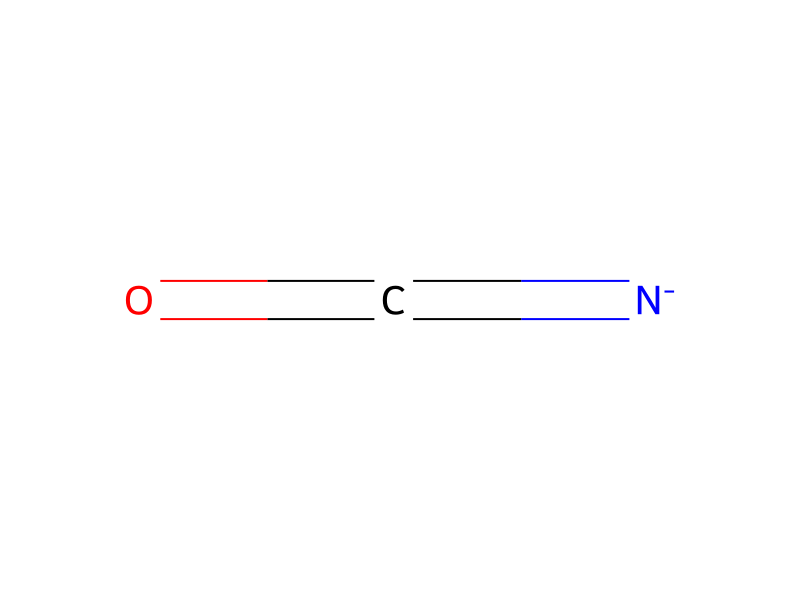
[N-]=[C:2]=[O:3].[F:4][C:5]1[CH:13]=[CH:12][CH:11]=[C:10]([F:14])[C:6]=1[C:7]([NH2:9])=[O:8].C(Cl)(=O)C(Cl)=O.Cl>ClCCCl>[F:4][C:5]1[CH:13]=[CH:12][CH:11]=[C:10]([F:14])[C:6]=1[C:7]([N:9]=[C:2]=[O:3])=[O:8]Participants
Reactant 4



Product 1

Reagents, catalysts & solvents 1

Procedure
In order to synthesize the isocyanate, 1.57 g (10 mmol) of 2,6-difluorobenzamide and 15 ml of dry 1,2-dichloroethane were introduced into a 100 ml flask and then 0.92 g (10.5 mmol) of oxalyl chloride was slowly added thereto at normal temperature by means of a syringe, during which an exothermic reaction occurred that generated hydrochloride gas. The resulting reaction mixture was refluxed for 5 hours and cooled to normal temperature. The reaction solvent and the excess oxalyl chloride were removed therefrom under vacuo to obtain 2,6-difluorobenzoyl isocyanate in an oily state. Thus obtained 2,6-difluorobenzoyl isocyanate was then dissolved in 20 ml of dry 1,2-dichloroethane. Then, 2.63 g of 2-chloro-3,5-bis(trifluoromethyl)aniline was added thereto, reacted for 3 hours, and filtered to obtain 4.15 g (Yield from benzamide, 93%) of the title compound as a solid.
Workup
- additionwere introduced into a 100 ml flask
- customat normal temperature by means of a syringe, during which an exothermic reaction
- customThe resulting reaction mixture
- temperaturewas refluxed for 5 hours
- temperaturecooled to normal temperature
- customThe reaction solvent and the excess oxalyl chloride were removed
Sources & evidence
- ORD record
- ord-c94d970e9a6e47519ec71e9a98559b60
- Source dataset
- uspto-grants-2000_02
- Patent number
- US06022882
Reaction notes
Loading…