Chlorosuccinimide → 4-Bromo-3-fluorobenzaldehyde
Reaction equation

[Br:1][C:2]1[CH:9]=[CH:8][C:5]([CH2:6][OH:7])=[CH:4][C:3]=1[F:10].CC1(C)N([O])C(C)(C)CCC1.[F-].C([N+](CCCC)(CCCC)CCCC)CCC.C([O-])(O)=O.[Na+].ClN1C(=O)CCC1=O>C(Cl)Cl>[Br:1][C:2]1[CH:9]=[CH:8][C:5]([CH:6]=[O:7])=[CH:4][C:3]=1[F:10]Participants
7





Procedure
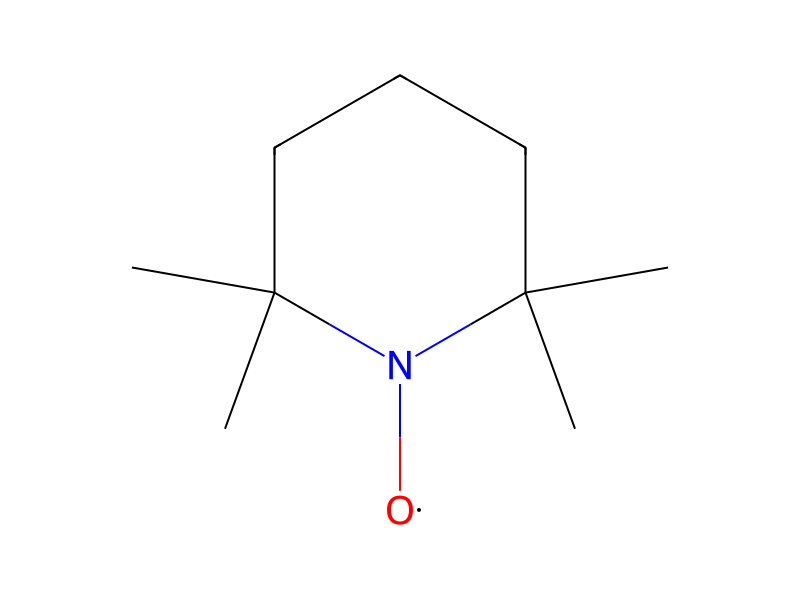
To a well-stirred mixture of 4-bromo-3-fluorobenzyl alcohol (as described in Example 9, Step B) (10.25 g, 0.05 mol), TEMPO (0.781 g, 0.005 mol) and tetrabutylammonium fluoride (1.39 g, 0.005 mol) in CH2Cl2 (200 mL) and a solution of 0.5M NaHCO3/0.05M K2CO3 (200 mL) was added N-chlorosuccinimide (9.35 g, 0.07 mol). After 6 hrs, the layers were separated, the aqueous layer back-washed with CH2Cl2 (2×50 mL), the organics combined and dried (Na2SO4). The solution was filtered, concentrated to half its volume, then chromatographed (silica gel, CH2Cl2) to give the title compound.
Workup
- customthe layers were separated
- washthe aqueous layer back-washed with CH2Cl2 (2×50 mL)
- dry with materialdried (Na2SO4)
- filtrationThe solution was filtered
- concentrationconcentrated to half its volume
- customchromatographed (silica gel, CH2Cl2)
Sources & evidence
- ORD record
- ord-e5c4ffd670f2468886f8ddba1895786e
- Source dataset
- uspto-grants-2001_10
- Patent number
- US06297239B1
Reaction notes
Loading…