Borohydride → Ethyl 4,4,4-trifluoro-3-hydroxybutanoate
Reaction equation

[BH4-].[F:2][C:3]([F:13])([F:12])[C:4](=[O:11])[CH2:5][C:6]([O:8][CH2:9][CH3:10])=[O:7]>[Ru].[Ni].[Pt].CO.O1CCCC1.[Zn].C(O)(=O)C>[F:2][C:3]([F:12])([F:13])[CH:4]([OH:11])[CH2:5][C:6]([O:8][CH2:9][CH3:10])=[O:7]Participants
Reactant 2

Product 1

Reagents, catalysts & solvents 6


Procedure
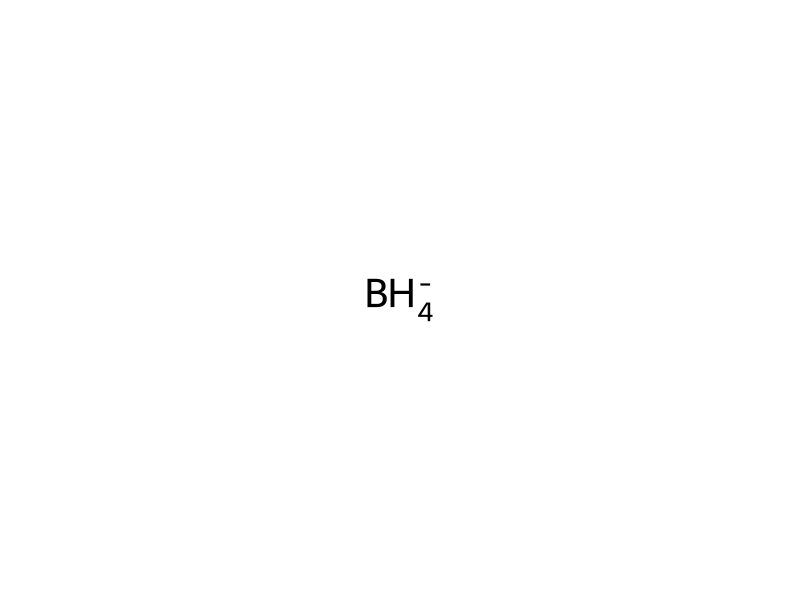
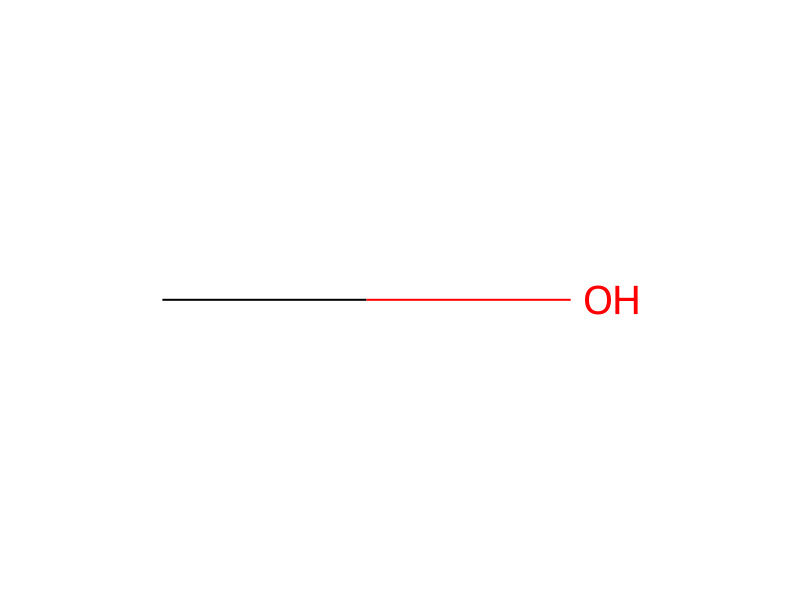
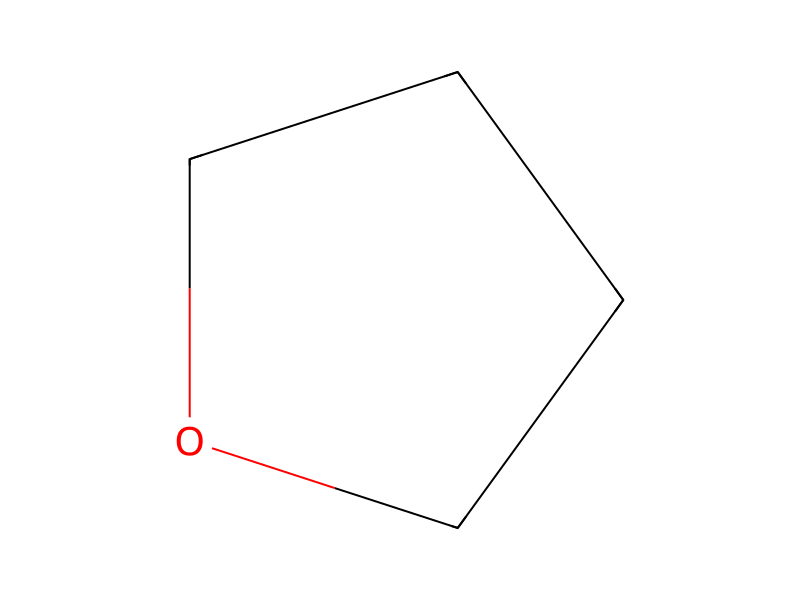
There are a number of ways of reducing β-ketoesters which have been disclosed. In addition to hydrogenation, reduction with zinc/acetic acid or with borohydride reagents are known. For the hydrogenation reactions reported in the literature, most use ruthenium, nickel, or baker's yeast as catalyst. All use a solvent. F. G. Kathawala et al. in Helvetica Chimica Acta, 69, 803-805 (1986) disclose an example in which 5% platinum on carbon is used as a catalyst for the reduction of various β-ketoesters using methanol as a solvent. T. Fujima et al. in JP 09268146 A2, Oct. 14, 1997 disclose the hydrogenation of ethyl trifluoroacetoacetate using a nickel catalyst in tetrahydrofuran solvent to provide ethyl 4,4,4-trifluoro-3-hydroxybutyrate in 78% yield. N. Sayo et al. in U.S. 4,933,482, Jun. 12, 1990 disclose the hydrogenation of ethyl trifluoroacetoacetate using a ruthenium catalyst in a polar solvent such as an alcohol or tetrahydrofuran to provide ethyl 4,4,4-trifluoro-3-hydroxybutyrate in 95% yield. None of these references disclose or suggest the process of the present invention in which we have discovered that no solvent is necessary for the catalytic hydrogenation.
Sources & evidence
- ORD record
- ord-afaf3dc7c4e54ba599c4a2c1f92ccf09
- Source dataset
- uspto-grants-2001_10
- Patent number
- US06307094B1
Reaction notes
Loading…