Pyrrole → HCID 44465602, compound
Reaction equation

Br[C:2]1[N:3]([C:13]2[CH:18]=[CH:17][C:16]([OH:19])=[CH:15][CH:14]=2)[C:4]2[C:9]([C:10]=1[C:11]#[N:12])=[CH:8][CH:7]=[CH:6][CH:5]=2.[NH:20]1[CH:24]=[CH:23][CH:22]=[CH:21]1.C(=O)([O-])[O-].[Cs+].[Cs+]>[Cu]I.CN(C=O)C>[OH:19][C:16]1[CH:17]=[CH:18][C:13]([N:3]2[C:4]3[C:9](=[CH:8][CH:7]=[CH:6][CH:5]=3)[C:10]([C:11]#[N:12])=[C:2]2[N:20]2[CH:24]=[CH:23][CH:22]=[CH:21]2)=[CH:14][CH:15]=1Participants
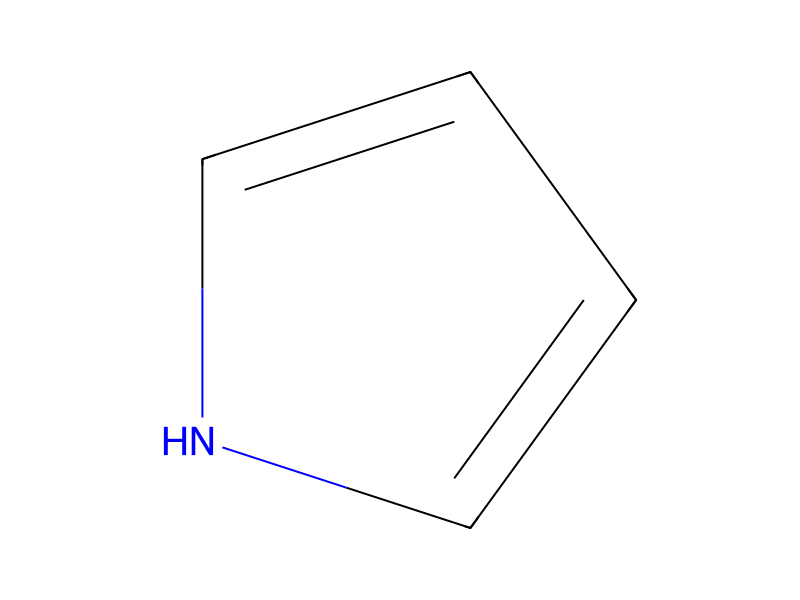





Conditions
- Temperature
- 120 °C
Procedure
2-Bromo-1-(4-hydroxy-phenyl)-1H-indole-3-carbonitrile (Example 1), 1.4 eq pyrrole, 2 eq cesium carbonate and 20 mol % copper(I) iodide was mixed in a oven-dried vial, DMF was added and the mixture was flushed with nitrogen. The vial was sealed and stirred at 120° C. for 48 hours. The reaction-mixture was cooled to rt, diluted with EtOAc and filtered through silica. The crude mixture was evaporated to dryness and subjected to reversed phase preparative HPLC. Appropriate fractions were combined and evaporated, and identified by 1H-NMR and LC/MS. Purity was determined by analytical HPLC. ES/MS m/z: 300.2 (M+H), 298.3 (M−H); 1H NMR (acetone-d6, 500 MHz): 7.74 (m, 1H), 7.41-7.35 (m, 2H), 7.27 (m, 214), 7.23 (m, 1H), 6.98 (m, 214), 6.95 (t, 2H, J=2.2 Hz) and 6.23 (t, 2H, J=2.2 Hz).
Workup
- additionwas added
- customthe mixture was flushed with nitrogen
- customThe vial was sealed
- temperatureThe reaction-mixture was cooled to rt
- additiondiluted with EtOAc
- filtrationfiltered through silica
- customThe crude mixture was evaporated to dryness
- customevaporated
Sources & evidence
- ORD record
- ord-013e9e6b9cc44569b3bf6d476674aff0
- Source dataset
- uspto-grants-2013_02
- Patent number
- US08367665B2
Reaction notes
Loading…