Furfural → HCID 67088637, compound
Reaction equation

[CH2:1]([Li])[CH2:2][CH2:3][CH3:4].C(NC(C)C)(C)C.[C:13](=[O:20])([O:17][CH2:18][CH3:19])OCC.[O:21]1C=CC=[C:22]1[CH:26]=[O:27].[O:28]1[CH2:32][CH2:31][CH2:30][CH2:29]1>CCCCCC>[O:21]1[CH2:22][CH2:26][O:27][CH:4]1[CH2:3][C:2](=[CH:1][C:29]1[O:28][CH:32]=[CH:31][CH:30]=1)[C:13]([O:17][CH2:18][CH3:19])=[O:20]Participants
Reactant 5

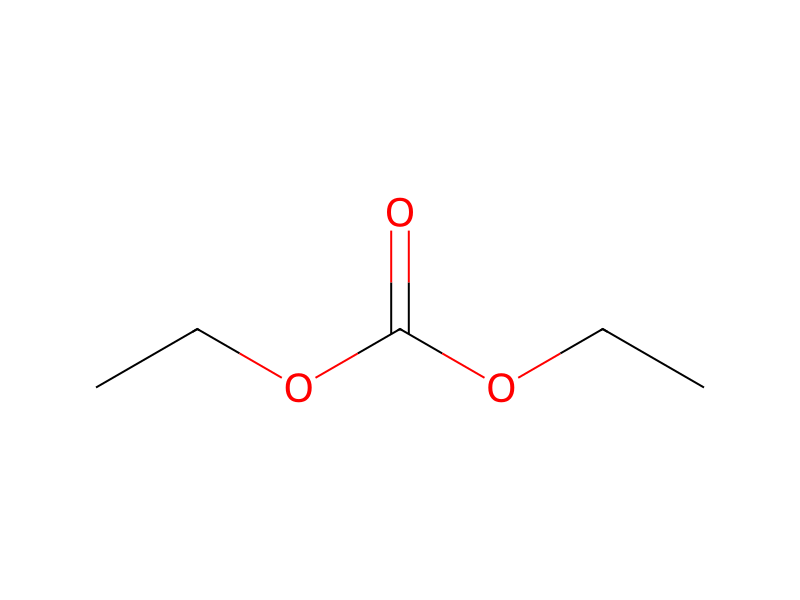



Product 1

Reagents, catalysts & solvents 1

Conditions
- Temperature
- -60 °C
Procedure
In the next step, n-butyllithium (2.15 equivalents) in hexane was cooled to −70° C. and diisopropylamine (2.25 equivalents) was added while keeping the temperature below −60° C. Compound 1″ (1 equivalent) dissolved in tetrahydrofuran (THF) was added over 30 min at −70° C. After 10 min, diethyl carbonate (1.05 equivalents) dissolved in THF was added over 30 min keeping the reaction temperature below −60° C. After stirring for one hour at −60° C., the reaction was allowed to warm to 15° C. and furan-2-carbaldehyde (1.3 equivalents) dissolved in THF was added. After stirring for 20 hrs at room temperature, the reaction was rotary evaporated to dryness to yield ethyl 2-(1,3-dioxolan2-yl)methyl-3-(furan-2-yl)acrylate, compound 5″. Crude compound 5″ was used directly in the next reaction.
Workup
- customthe temperature below −60° C
- additionwas added over 30 min at −70° C
- additionwas added over 30 min
- customthe reaction temperature below −60° C
- temperatureto warm to 15° C.
- additionwas added
- stirringAfter stirring for 20 hrs at room temperature
- customthe reaction was rotary evaporated to dryness
Sources & evidence
- ORD record
- ord-ce5d3fb5222a41f5b656b436dfc4ba27
- Source dataset
- uspto-grants-2013_02
- Patent number
- US08378105B2
Reaction notes
Loading…