m-Chloroperbenzoic acid → Pyrido[3,2-d]pyrimidin-2(1H)-one
Reaction equation

[CH3:1][N:2](C(OC)OC)C.[N:9]1[C:14]2[CH:15]=[CH:16]NC(=O)[C:13]=2[CH:12]=[N:11][CH:10]=1.C1C=C(Cl)C=C(C(OO)=[O:28])C=1.OO.C(O)(C(F)(F)F)=O>CN(C=O)C.C(O)(=O)C>[NH:9]1[C:14]2[CH:15]=[CH:16][CH:1]=[N:2][C:13]=2[CH:12]=[N:11][C:10]1=[O:28]Participants
Reactant 4

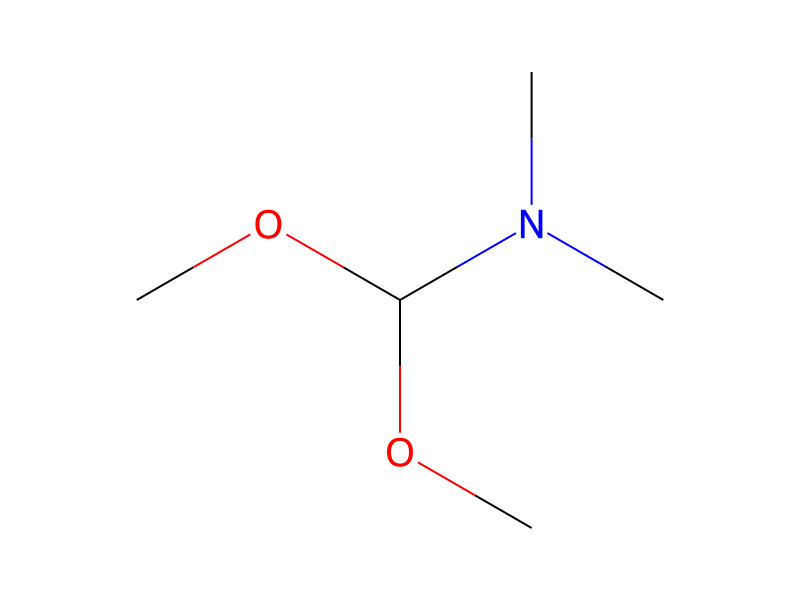


Product 1

Reagents, catalysts & solvents 2


Procedure
Substituted dialkyl methylenemalonate of general formula A can be reacted with S-methylisothiouronium sulfate in the presence of appropriate bases in ethanol at reflux to give B. Compounds B can be converted to phenols C by reaction with benzoyl peroxide in the presence of appropriate bases in refluxing carbon tetrachloride or other solvents (for example dioxane). Treatment of compounds C with POCl3 at reflux produces chloropyrimidines D, which are coupled with appropriate anilines in the presence of bases in DMF at a temperature between 50° C. and 120° C. Pyrimidine esters E are converted to amides using a two-step sequence (hydrolysis and amide formation). Reaction of amides G with lithiumhexamethyldisilazane in DMF at a temperature between 100° C. and 140° C. gives pyrido[4,3-d]pyrimidin-5(6H)-one derivatives H. Alternatively, compounds H can be prepared by reaction of compounds G with DMF-DMA in DMF at a temperature between 80° C. and 120° C. followed by refluxing the resulting enamine in acetic acid. Oxidation of the sulfide of compounds H with oxidation reagents (i.e. mCPBA, H2O2-TFA) followed by displacement of the sulfone with appropriate amines and deprotection produce desired pyrimidopyridone analogs I.
Sources & evidence
- ORD record
- ord-4053bf51ac7e4b37be6469cb160d92f5
- Source dataset
- uspto-grants-2013_02
- Patent number
- US08383635B2
Reaction notes
Loading…