N,N-Diethylaniline → 4-[(4-Fluorophenyl)ethynyl]pyridine
Reaction equation

CC[N:3]([C:6]1C=C[CH:9]=[CH:10][CH:11]=1)[CH2:4][CH3:5].P(Cl)(Cl)(Cl)=O.CC(C)([O-])C.[K+].[F:23][C:24]1[CH:31]=[CH:30][C:27]([CH:28]=O)=[CH:26][CH:25]=1>C1COCC1>[N:3]1[CH:6]=[CH:11][C:10]([C:9]#[C:28][C:27]2[CH:30]=[CH:31][C:24]([F:23])=[CH:25][CH:26]=2)=[CH:5][CH:4]=1Participants
Reactant 4


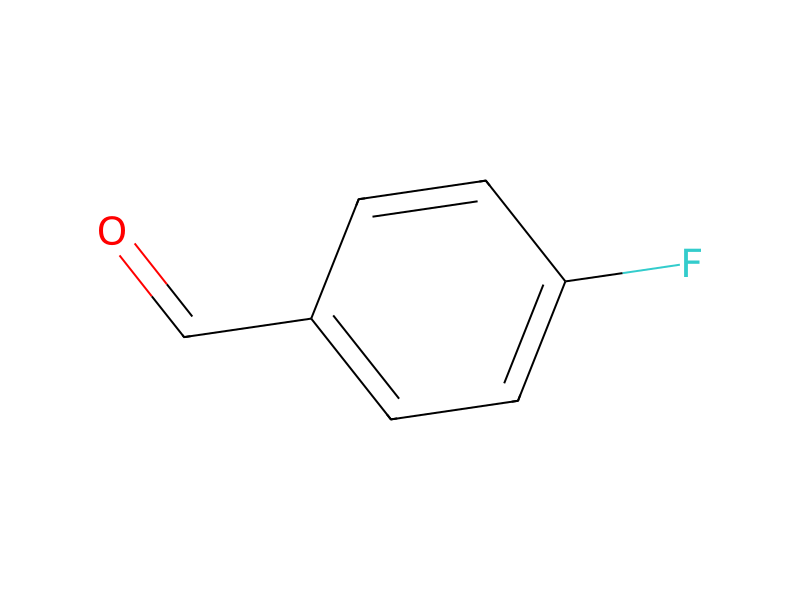

Product 1

Reagents, catalysts & solvents 1

Procedure
4-pyridyl-hydroxymethyldiphenylphosphonate (6) (15.3 g, 46 mmol), diethylaniline (4 mL), and phosphorous oxychloride (50 mL) were warmed to 90° C. for 16 h. The reaction was quenched by pouring the reaction mixture over ice (400 g). Potassium carbonate was added until a pH of 8 was obtained for the solution followed by extraction with methylene chloride (3×200 mL). After drying (MgSO4), the reaction was concentrated to afford crude 4-pyridyl-chloromethyldiphenylphosphonate (7) as a solid which was used in the next step without further purification: Mass Spectrum (CI) 360 (MH+). Potassium t-butoxide (3.30 g, 29.2 mmol) was added as a solid to 4-pyridyl-chloromethyldiphenylphosphonate (7) (5.00 g, 13.9 mmol), 4-fluorobenzaldehyde (8) (2.00 g, 15.3 mmol), and THF (70 mL) at 23° C. under argon. After 16 h, the reaction was quenched by adding to water (200 mL) over 3 mm. After adjusting the pH of the solution to 7 with 1 N HCl, the mixture was extracted with ethyl acetate (3×350 mL), and dried (MgSO4). After concentration in vacuo, the residue was purified by flash chromatography (ethyl acetate:methylene chloride 1:1) to afford 1-(4-pyridyl)-2-(4-fluorophenyl)ethyne (1) as a solid: Mass Spectrum (CI) 198 (MH+).
Workup
- customThe reaction was quenched
- additionby pouring the reaction mixture over ice (400 g)
- additionPotassium carbonate was added until a pH of 8
- customwas obtained for the solution
- extractionfollowed by extraction with methylene chloride (3×200 mL)
- dry with materialAfter drying (MgSO4)
- concentrationthe reaction was concentrated
- customto afford crude 4-pyridyl-chloromethyldiphenylphosphonate (7) as a solid which
- customwas used in the next step without further purification
- customthe reaction was quenched
- additionby adding to water (200 mL) over 3 mm
- extractionthe mixture was extracted with ethyl acetate (3×350 mL)
- dry with materialdried (MgSO4)
- concentrationAfter concentration in vacuo
- customthe residue was purified by flash chromatography (ethyl acetate:methylene chloride 1:1)
Sources & evidence
- ORD record
- ord-79059b7e57c447108fdc7a27b038ff46
- Source dataset
- uspto-grants-2003_08
- Patent number
- US06605634B2
Reaction notes
Loading…