Acetic Acid → N-[(4-Chlorophenyl)methyl]glycine ethyl ester
Reaction equation

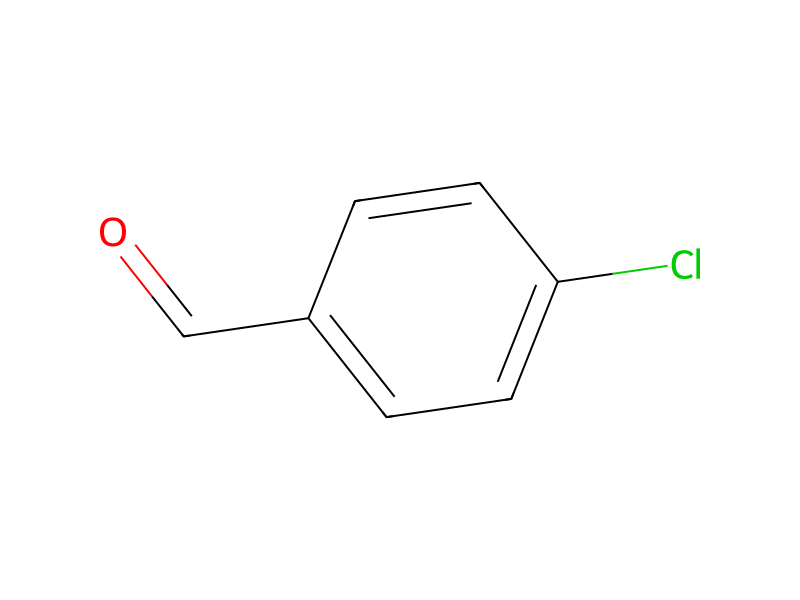
Cl.[CH2:2]([O:4][C:5](=[O:8])[CH2:6][NH2:7])[CH3:3].[Cl:9][C:10]1[CH:17]=[CH:16][C:13]([CH:14]=O)=[CH:12][CH:11]=1.C(O)(=O)C.C(O[BH-](OC(=O)C)OC(=O)C)(=O)C.[Na+]>ClCCCl>[CH2:2]([O:4][C:5](=[O:8])[CH2:6][NH:7][CH2:14][C:13]1[CH:16]=[CH:17][C:10]([Cl:9])=[CH:11][CH:12]=1)[CH3:3]Participants
6





Conditions
- Temperature
- 20 °C
Procedure
To a suspension of glycine ethyl ester hydrochloride (1.2 eq.) in DCE was added TEA (2 eq.) The reaction was stirred for 10 min at 20° C. then 4-chlorobenzaldehyde (1 eq.), acetic acid (4 eq.) and sodium triacetoxyborohydride (2 eq.) were added. The reaction was stirred for 15 h at 20° C. The crude was partitioned between DCM and a saturated aqueous solution of NaHCO3. The aqueous layer was then extracted twice with DCM. The organic layers were combined, washed with brine, dried on MgSO4, filtered and concentrated under reduced pressure to afford (4-chloro-benzylamino)-acetic acid ethyl ester.
Workup
- stirringThe reaction was stirred for 15 h at 20° C
- customThe crude was partitioned between DCM
- extractionThe aqueous layer was then extracted twice with DCM
- washwashed with brine
- customdried on MgSO4
- filtrationfiltered
- concentrationconcentrated under reduced pressure
Sources & evidence
- ORD record
- ord-1b5ca0f71b334663ae6555226dfdc5c2
- Source dataset
- uspto-grants-2014_06
- Patent number
- US08759334B2
Reaction notes
Loading…