Hydrochloric Acid → Acetic acid, ((1-((2S)-2-((4-((hydroxyamino)iminomethyl)benzoyl)amino)-1-oxopropyl)-4-piperidinyl)oxy)-, ethyl ester
Reaction equation

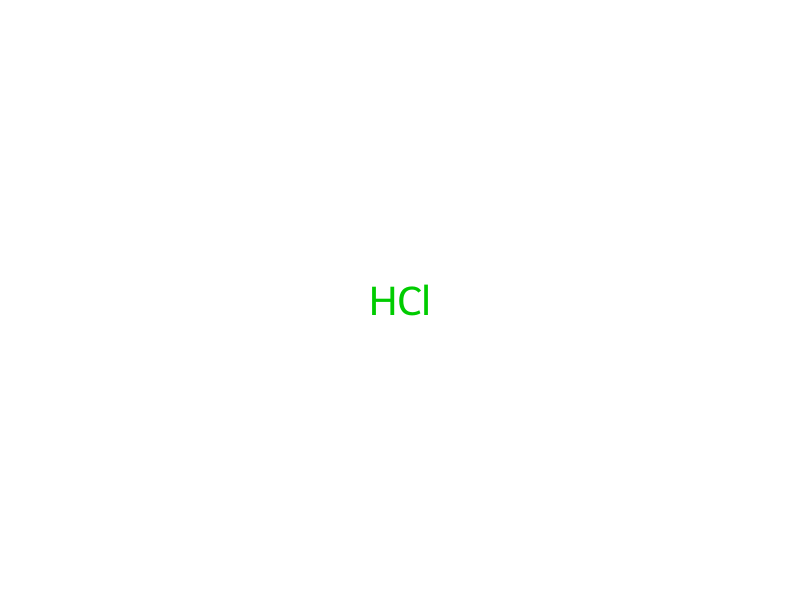
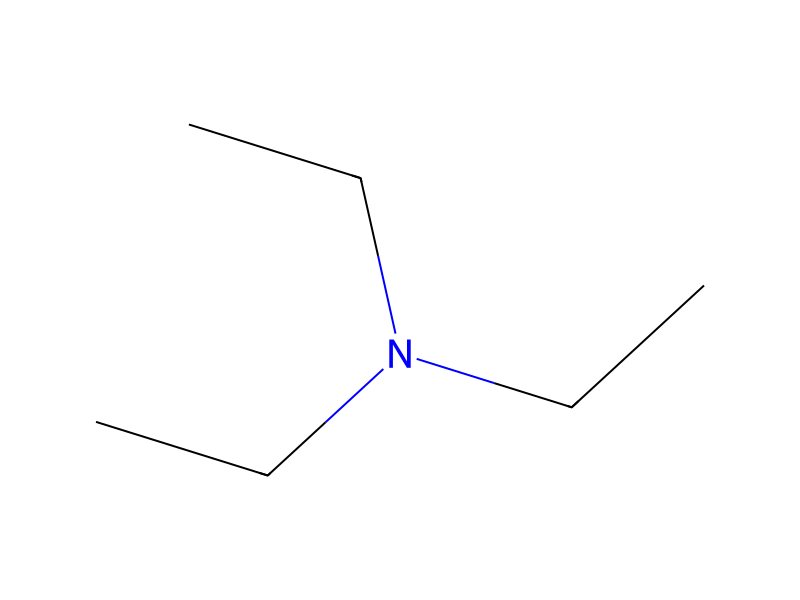
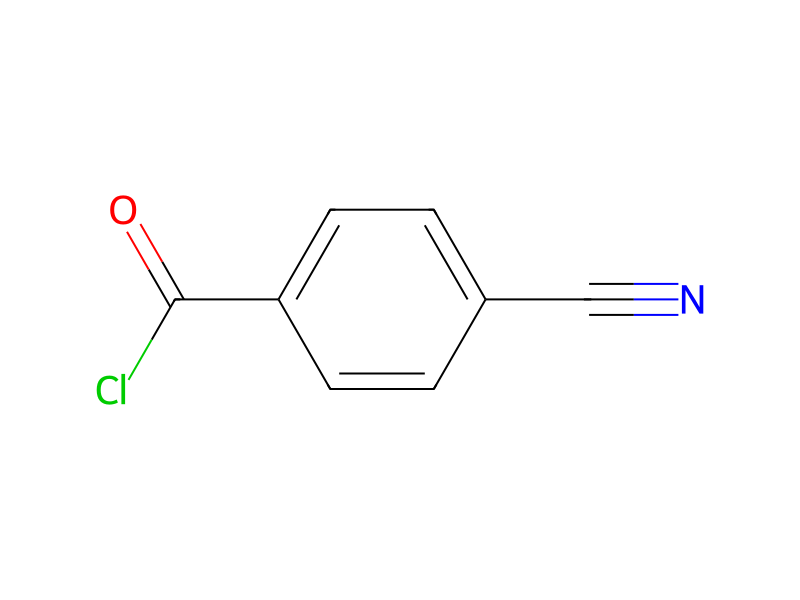
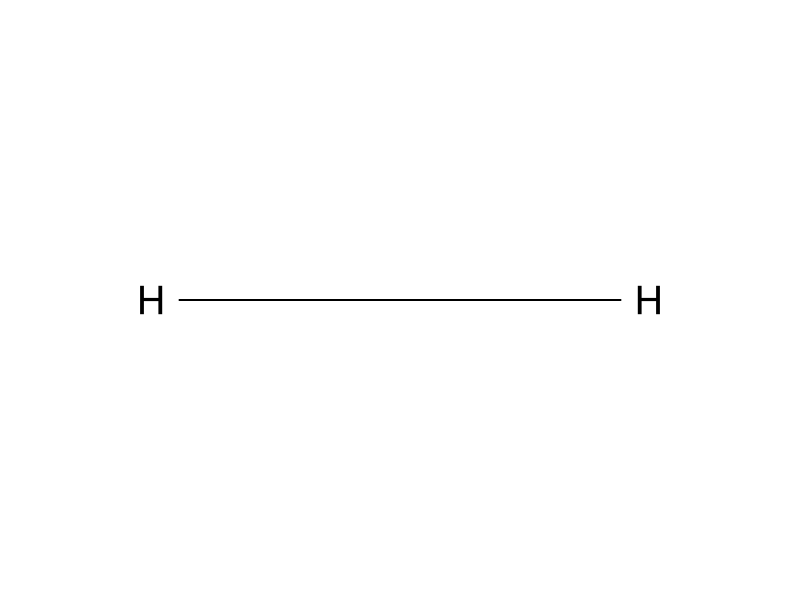
C(OC([NH:11][C@@H:12]([CH3:28])[C:13]([N:15]1[CH2:20][CH2:19][CH:18]([O:21][CH2:22][C:23]([O:25][CH2:26][CH3:27])=[O:24])[CH2:17][CH2:16]1)=[O:14])=O)C1C=CC=CC=1.[H][H].C(N(CC)CC)C.[C:38]([C:40]1[CH:48]=[CH:47][C:43]([C:44](Cl)=[O:45])=[CH:42][CH:41]=1)#[N:39].Cl.[NH2:50][OH:51].Cl>C(O)C.C1(C)C=CC=CC=1.[Pd]>[NH2:39]/[C:38](=[N:50]\[OH:51])/[C:40]1[CH:48]=[CH:47][C:43]([C:44]([NH:11][C@@H:12]([CH3:28])[C:13]([N:15]2[CH2:20][CH2:19][CH:18]([O:21][CH2:22][C:23]([O:25][CH2:26][CH3:27])=[O:24])[CH2:17][CH2:16]2)=[O:14])=[O:45])=[CH:42][CH:41]=1Participants
Reactant 6


Product 1

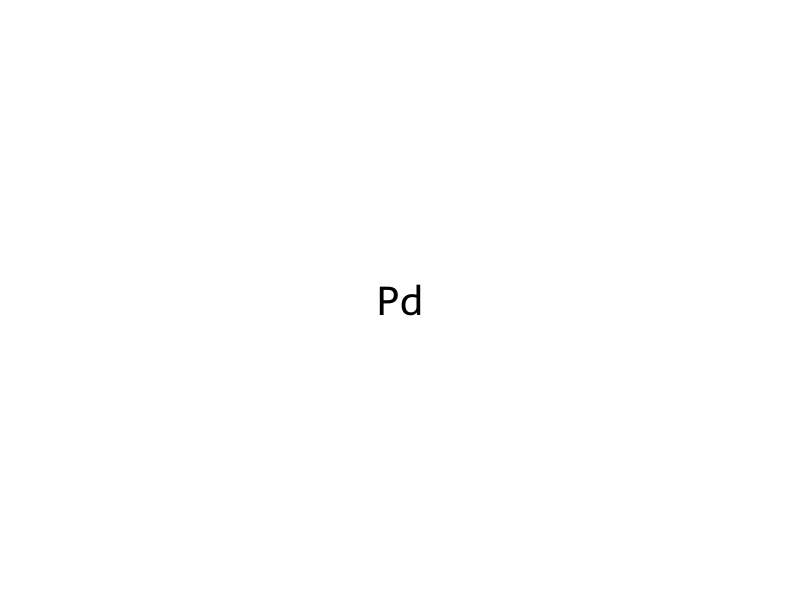
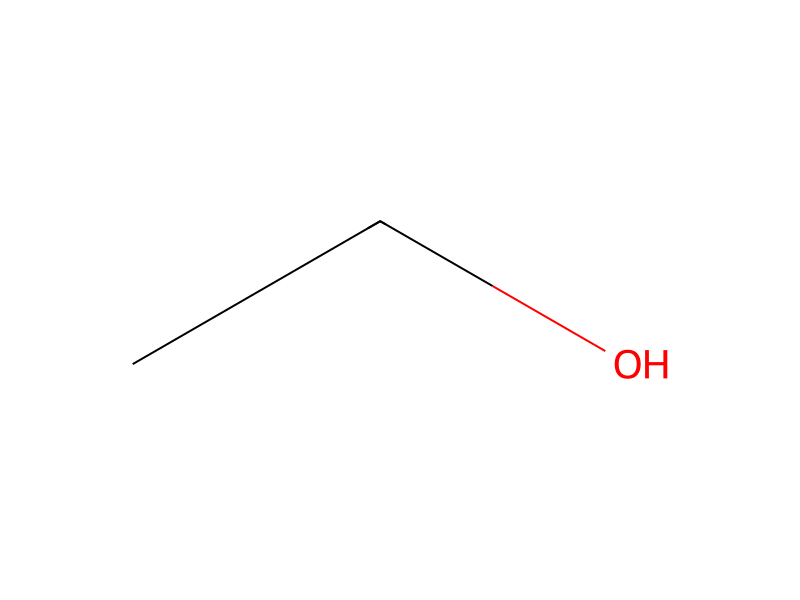
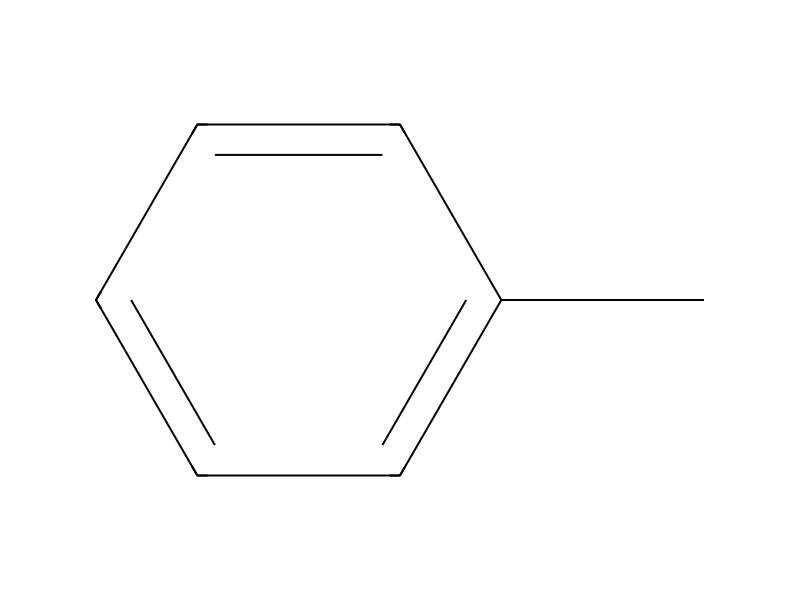
Reagents, catalysts & solvents 3
Conditions
- Temperature
- 2.5 °C
Procedure
For the manufacture of the aforementioned compound, 90.2 g (230 mmol) of ethyl (S)-[1-(2-benzyloxycarbonylamino-propionyl)-piperidin-4-yloxy]-acetate in 450 ml of ethanol were treated with 4.5 g of 10% palladium/charcoal and the resulting solution was hydrogenated while stirring intensively at a hydrogen pressure of 1.1 bar at 22 to 24° C. for 40 minutes. After evacuation the hydrogenation kettle was again filled and stirred for a further 30 minutes. The suspension was subsequently filtered over 30 g of Speedex (Dicalite Speedex), the filter cake obtained was washed with 450 ml of ethanol and the combined, clear filtrates were cooled to 0 to 5° C. and treated with 32 ml (230 mmol) of triethylamine (230 mmol). To this solution was added while stirring a light yellow solution of 38 g (230 mmol) of 4-cyanobenzoyl chloride in 80 ml of toluene, with the temperature being held at between 0 and 5° C. The light yellow solution was stirred at room temperature for one hour and then treated with 31.9 g (460 mmol) of hydroxylamine hydrochloride (Fluka) and with 64 ml (460 mmol) of triethylamine (Fluka), with the temperature rising to about 28° C. The white suspension was stirred at room temperature (20 to 25° C.) for 17 hours, with an almost clear suspension forming after one hour and a white precipitate forming thereafter. The white suspension was treated with 36 ml of 25% hydrochloric acid. The suspension was cooled to 0 to 5° C., stirred for one hour, filtered through a pre-cooled sintered glass filter (G3) and the filter cake was washed with 250 ml of cold ethanol. Subsequently, it was dried to constant weight, giving 70.6 g (73 wt. %) of ethyl [Z]-(S)-[[1-[2-[[4-(amino-hydroximino-methyl)-benzoyl]amino]-1-oxopropyl]-4-piperidinyl]oxy]acetate. The powder was dissolved in a mixture of 560 ml of ethanol and 140 ml of water under reflux and while stirring and subsequently the solution was cooled to room temperature within two hours and then stirred at a temperature of 0 to 5° C. for one hour. The solution was filtered through a pre-cooled glass filter (G3) and the filter cake was washed with a mixture of 140 ml of cold ethanol (0 to 5° C.) and 35 ml of cold water (0 to 5° C.); the product was subsequently dried to constant weight at 50° C./20 mbar. The resulting white crystals (65.6 g; 68 wt. %) were suspended in a mixture of 528 ml of ethanol and 132 ml of water and treated with 3.3 g of active charcoal (Norit SX-1). The dark suspension was heated under reflux for 15 minutes, cooled to 65 to 70° C. and added via a glass filter to a pre-warmed funnel. The filtrates were stirred, with a precipitate separating from 60° C. The white suspension was cooled to room temperature within three hours, then cooled to 0 to 5° C. and, after stirring for one hour, filtered through a correspondingly pre-cooled sintered glass filter (G3). The filter cake was washed with a mixture of 132 ml of cold ethanol and 33 ml of water (0 to 5° C.) and subsequently dried to constant weight at 50° C./20 mbar. Yield: 60.15 g (55%); m.p.: 212-213°; ee (HPLC)>99.9%; opt. rot. [α]365+223.5 (c =1.0; HCl).
Workup
- additionAfter evacuation the hydrogenation kettle was again filled
- filtrationThe suspension was subsequently filtered over 30 g of Speedex (Dicalite Speedex)
- customthe filter cake obtained
- washwas washed with 450 ml of ethanol
- additionTo this solution was added
- custombeing held at between 0 and 5° C
- stirringThe light yellow solution was stirred at room temperature for one hour
- customrising to about 28° C
- stirringThe white suspension was stirred at room temperature (20 to 25° C.) for 17 hours
- customwith an almost clear suspension forming after one hour
- customa white precipitate forming
- temperatureThe suspension was cooled to 0 to 5° C.
- stirringstirred for one hour
- filtrationfiltered through a pre-cooled sintered glass
- filtrationfilter (G3)
- washthe filter cake was washed with 250 ml of cold ethanol
- customSubsequently, it was dried to constant weight
Sources & evidence
- ORD record
- ord-9ecf7cacb4f04ca2aa7d34c7a21fa6e8
- Source dataset
- uspto-grants-2003_05
- Patent number
- US06562977B2
Reaction notes
Loading…