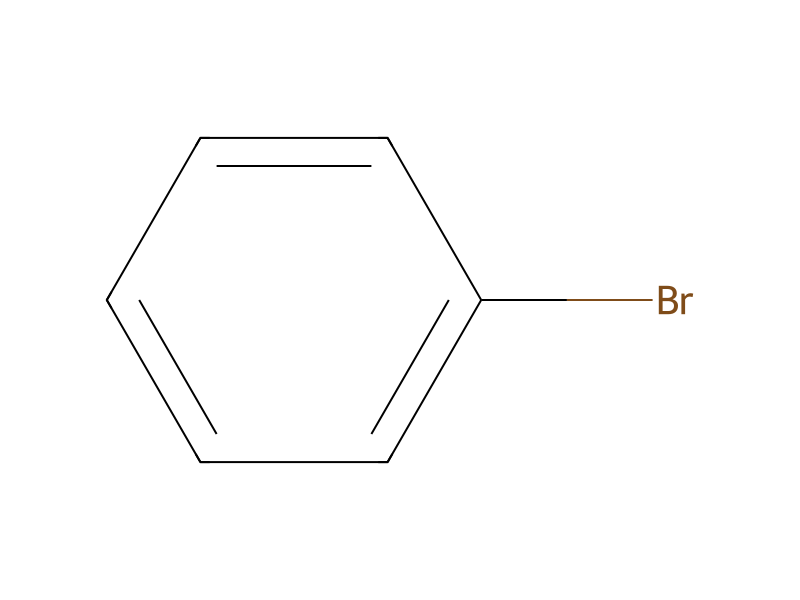
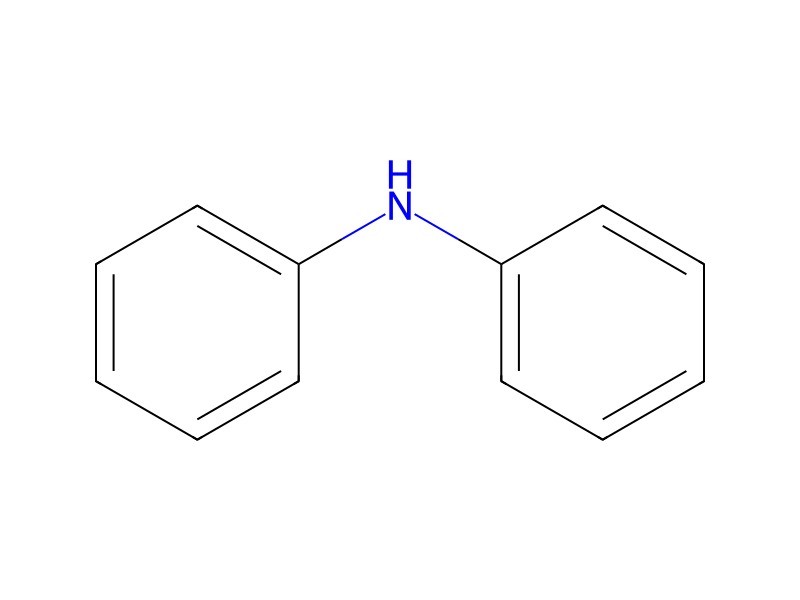
Bromobenzene → Triphenylamine
Reaction equation

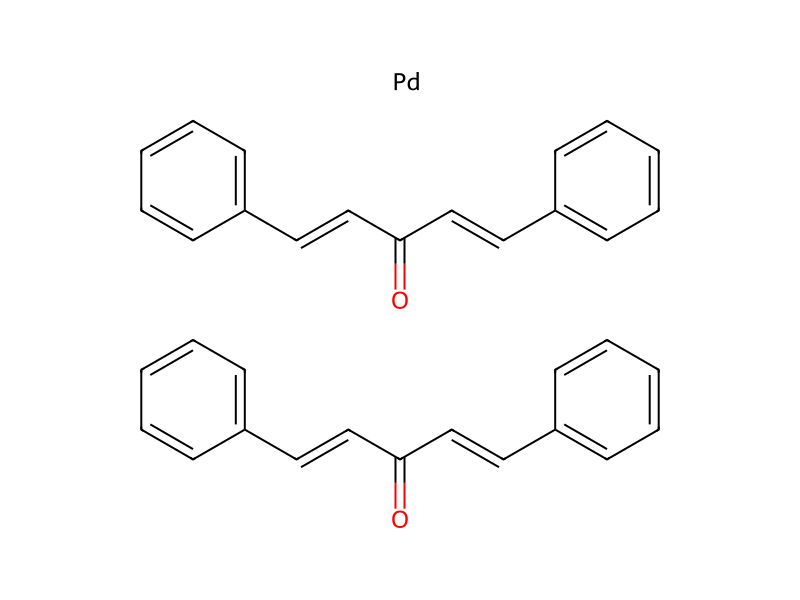
Br[C:2]1[CH:7]=[CH:6][CH:5]=[CH:4][CH:3]=1.[C:8]1([NH:14][C:15]2[CH:20]=[CH:19][CH:18]=[CH:17][CH:16]=2)[CH:13]=[CH:12][CH:11]=[CH:10][CH:9]=1.CC(C)([O-])C.[Na+]>C1C=CC(/C=C/C(/C=C/C2C=CC=CC=2)=O)=CC=1.C1C=CC(/C=C/C(/C=C/C2C=CC=CC=2)=O)=CC=1.[Pd].C1(C)C=CC=CC=1>[C:2]1([N:14]([C:15]2[CH:16]=[CH:17][CH:18]=[CH:19][CH:20]=2)[C:8]2[CH:13]=[CH:12][CH:11]=[CH:10][CH:9]=2)[CH:7]=[CH:6][CH:5]=[CH:4][CH:3]=1Participants
Reactant 3

Product 1

Reagents, catalysts & solvents 2

Procedure
A typical procedure is given for the reaction of Entry 1 in Table 2. A 4 ml vial was charged with bromobenzene (171 mg, 1.10 mmol), diphenylamine (169 mg, 1.00 mmol), Pd(dba)2 (5.9 mg, 1 mol %), Ph5FcP(t-Bu)2(7.1 mg, 2 mol %), and sodium tert-butoxide (144 mg, 1.50 mmol). Anhydrous toluene (1 ml) was added into the mixture, and the vial was then sealed with a cap containing PTFE septum. The reaction mixture was stirred at room temperature for 1 h. After the starting aryl halide was consumed detected, as determined by GC, the reaction solution was directly absorbed onto silica gel, and the product was isolated by eluting with hexane/ethyl acetate to give 244 mg (99%) of triphenylamine as a white solid. Reaction of chlorobenzene (62 mg, 0.55 mmol) with diphenylamine (85 mg, 0.50 mmol) proceeded at 80° C. over 21 h to give triphenylamine (121 mg, 98%).
Workup
- customA typical procedure is given for the reaction of Entry 1 in Table 2
- customthe vial was then sealed with a cap
- customAfter the starting aryl halide was consumed
- customthe reaction solution was directly absorbed onto silica gel
- customthe product was isolated
- washby eluting with hexane/ethyl acetate
Sources & evidence
- ORD record
- ord-19e28085d2c5407e8efa89b39e8e2971
- Source dataset
- uspto-grants-2003_05
- Patent number
- US06562989B2
Reaction notes
Loading…