Ethyl Acetate → Diethyl 1-(bromoacetyl)-2,2-pyrrolidinedicarboxylate
Reaction equation

[NH:1]1[CH2:5][CH2:4][CH2:3][C:2]1([C:11]([O:13][CH2:14][CH3:15])=[O:12])[C:6]([O:8][CH2:9][CH3:10])=[O:7].C(=O)([O-])[O-].[K+].[K+].[Br:22][CH2:23][C:24](Br)=[O:25].C(OCC)(=O)C>ClCCl.O>[Br:22][CH2:23][C:24]([N:1]1[CH2:5][CH2:4][CH2:3][C:2]1([C:11]([O:13][CH2:14][CH3:15])=[O:12])[C:6]([O:8][CH2:9][CH3:10])=[O:7])=[O:25]Participants
7


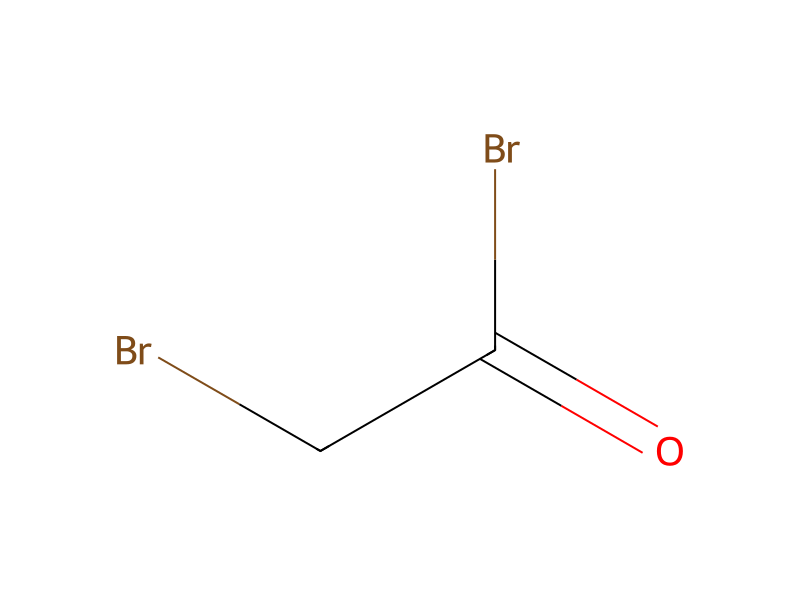




Conditions
- Temperature
- 0 °C
Procedure
To a solution of diethyl 2,2-pyrrolidinedicarboxylate (D63, 900 mg) in dichloromethane (9 mL) at 0° C., potassium carbonate (0.5M solution, 12.5 mL) and bromoacetyl bromide (0.55 mL) were added. The resulting mixture was stirred at 0° C. for 2 hours. The mixture was then diluted with water and then allowed to reach r.t. Ethyl acetate (15 mL) was added and phases were separated. The aqueous phase was then extracted with ethyl acetate (2×10 mL) and washed with brine (20 mL). The organic phase was dried and concentrated in vacuo to give the desired compound (1.06 g) as orange oil.
Workup
- customto reach r.t
- customphases were separated
- extractionThe aqueous phase was then extracted with ethyl acetate (2×10 mL)
- washwashed with brine (20 mL)
- customThe organic phase was dried
- concentrationconcentrated in vacuo
Sources & evidence
- ORD record
- ord-18773e2065f3476d8a70f05a272ab7d8
- Source dataset
- uspto-grants-2012_01
- Patent number
- US08097618B2
Reaction notes
Loading…