3,4-dihydro-2H-pyran → 6-Bromo-4-nitro-2-(tetrahydro-2H-pyran-2-yl)-2H-indazole
Reaction equation

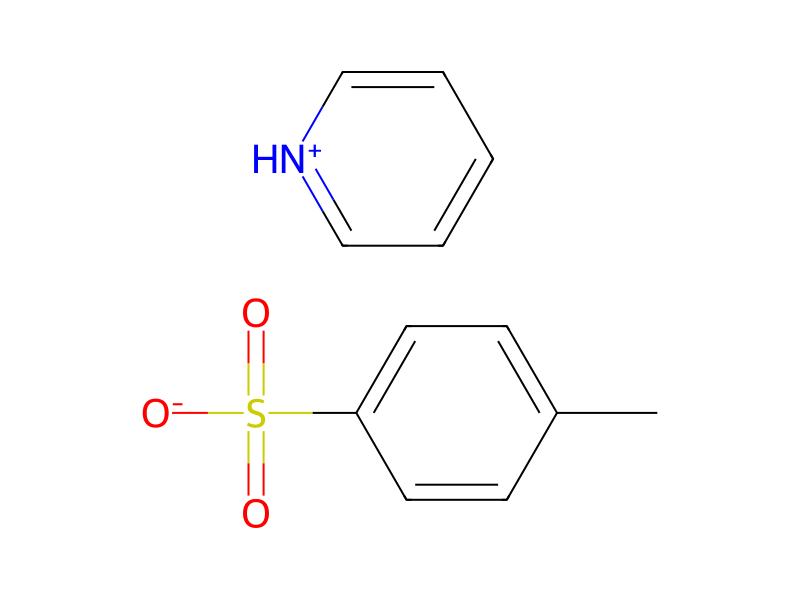
[Br:1][C:2]1[CH:10]=[C:9]2[C:5]([CH:6]=[N:7][NH:8]2)=[C:4]([N+:11]([O-:13])=[O:12])[CH:3]=1.[O:14]1[CH:19]=[CH:18][CH2:17][CH2:16][CH2:15]1.C1(C)C=CC(S([O-])(=O)=O)=CC=1.[NH+]1C=CC=CC=1.C(=O)(O)[O-].[Na+]>ClCCl>[Br:1][C:2]1[CH:3]=[C:4]([N+:11]([O-:13])=[O:12])[C:5]2[C:9]([CH:10]=1)=[N:8][N:7]([CH:15]1[CH2:16][CH2:17][CH2:18][CH2:19][O:14]1)[CH:6]=2Participants
6
Reactant 4



Product 1

Reagents, catalysts & solvents 1

Procedure
A mixture of 6-bromo-4-nitro-1H-indazole (10.0 g, 0.041 mol), 3,4-dihydropyran (8.52 ml, 0.09 mol) and pyridinium para-toluene sulfonate (125 mg, 0.50 mol) in dichloromethane (150 ml) was heated at reflux for 4.5 hours. The reaction was allowed to cool to room temperature and was poured onto saturated aqueous sodium bicarbonate (200 ml). The layers were separated and the aqueous layer extracted with dichloromethane (2×100 ml). The combined organic layers were washed with 5% aqueous citric acid (w/v, 100 ml) and brine (100 ml) then dried over magnesium sulphate. Solvent was removed in vacuo to give the title compound which was used in subsequent reactions without further purification (12.89 g).
Workup
- temperaturewas heated
- temperatureat reflux for 4.5 hours
- customThe layers were separated
- extractionthe aqueous layer extracted with dichloromethane (2×100 ml)
- washThe combined organic layers were washed with 5% aqueous citric acid (w/v, 100 ml) and brine (100 ml)
- dry with materialthen dried over magnesium sulphate
- customSolvent was removed in vacuo
Sources & evidence
- ORD record
- ord-97ec8250b6ce4c9e9eb79df6beba4bf8
- Source dataset
- uspto-grants-2013_09
- Patent number
- US08536169B2
Reaction notes
Loading…