Triethylamine → 1,1-Bis(trifluoromethyl)ethyl methacrylate
Reaction equation

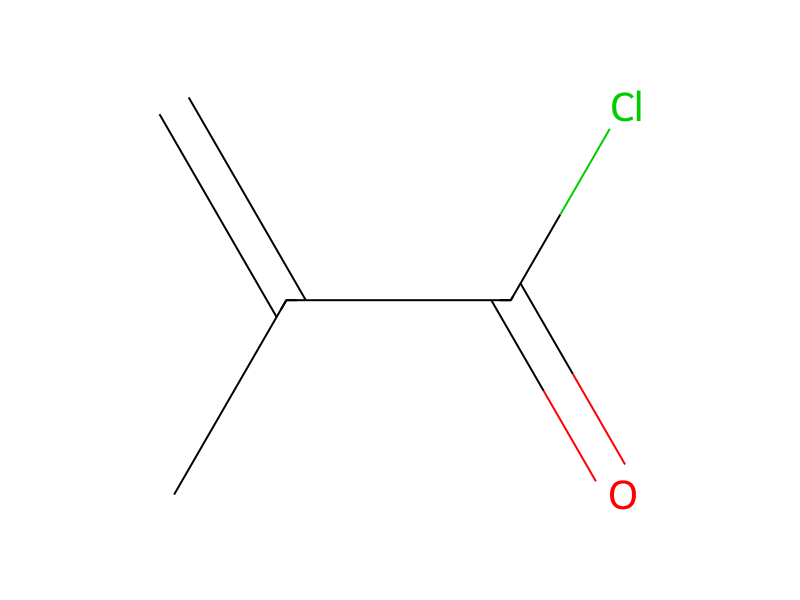
[F:1][C:2]([F:11])([F:10])[C:3]([CH3:9])([OH:8])[C:4]([F:7])([F:6])[F:5].C(N(CC)CC)C.[C:19](Cl)(=[O:23])[C:20]([CH3:22])=[CH2:21]>CN(C)C1C=CN=CC=1.CC(C)=O>[C:19]([O:8][C:3]([CH3:9])([C:4]([F:6])([F:5])[F:7])[C:2]([F:10])([F:11])[F:1])(=[O:23])[C:20]([CH3:22])=[CH2:21]Participants
6





Procedure
7.3 g of 1,1,1,3,3,3-hexafluoro-2-methyl-2-propanol, 0.2 g of 4-dimethylaminopyridine, 4.9 g of triethylamine and 20 g of acetone were charged into a four-necked flask equipped with a stirrer, a thermometer and a dropping funnel, and were dissolved by stirring. Then, 4.6 g of methacrylic acid chloride was dropwise added to the resulting solution at about 5° C. over 30 minutes, followed by stirring at the same temperature for 3 hours. Thereafter, the reaction solution was washed with water, thereby obtaining 7.5 g of 1,1,1,3,3,3-hexafluoro-2-methyl-2-propyl methacrylate. The 1H-NMR data of the obtained 1,1,1,3,3,3-hexafluoro-2-methyl-2-propyl methacrylate were as follows.
Workup
- customequipped with a stirrer
- dissolutiona thermometer and a dropping funnel, and were dissolved
- stirringby stirring at the same temperature for 3 hours
- washThereafter, the reaction solution was washed with water
Sources & evidence
- ORD record
- ord-733f9dac74ec432387137e111617b79d
- Source dataset
- uspto-grants-2012_01
- Patent number
- US08105747B2
Reaction notes
Loading…