1,2-Dichloroethane → 1-(2-Chloroacetyl)indoline
Reaction equation

[NH:1]1[C:9]2[C:4](=[CH:5][CH:6]=[CH:7][CH:8]=2)[CH2:3][CH2:2]1.C(Cl)(=[O:12])C.[Cl:14][CH2:15][CH2:16]Cl>C1(C)C=CC=CC=1.C(OCC)(=O)C>[Cl:14][CH2:15][C:16]([N:1]1[C:9]2[C:4](=[CH:5][CH:6]=[CH:7][CH:8]=2)[CH2:3][CH2:2]1)=[O:12]Participants
Reactant 3


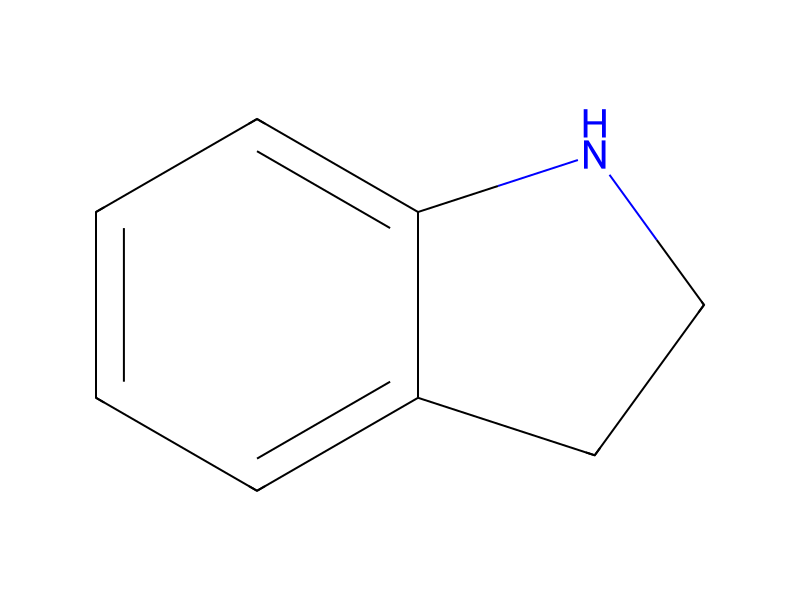
Product 1

Reagents, catalysts & solvents 2


Procedure
A quantity of 2,3-dihydro-1H-1-indole (also known as indoline, 2.1 g, 17.6 mmol) is dissolved in toluene (60 ml). To the solution of the amine in toluene is added acetyl chloride (2.0 g, 17.6 mmol) dissolved in 1,2-dichloroethane (20 ml). The reaction mixture turns brown upon addition of the acid chloride. The reaction is allowed to proceed at room temperature, with stirring, for about 3 hr, after which the reaction mixture is diluted with ethyl acetate and washed with 50:50 (v/v) water:saturated NaCl solution (2 times) . The organic phase is dried over anhydrous MgSO4 and concentrate to yield 2-Chloro-1-(2,3-dihydro-1H-1-indolyl)-1-ethanone (may also be named 2-chloro-1-indolinylethan-1-one) in 85% yield (2.92 g, 15 mmol) as a light brown solid.
Workup
- customto proceed at room temperature
- washwashed with 50:50 (v/v) water
- dry with materialThe organic phase is dried over anhydrous MgSO4
- concentrationconcentrate
Sources & evidence
- ORD record
- ord-7b962fa6b4f34e1da8faa6bd04f86ef7
- Source dataset
- uspto-grants-2001_11
- Patent number
- US06316470B1
Reaction notes
Loading…