Phosphorus oxybromide → HCID 21417208, compound
Reaction equation

[Cl:1][C:2]1[CH:7]=[CH:6][C:5]([N:8]2[C:12](O)=[C:11]3[CH2:14][S:15][CH2:16][CH2:17][C:10]3=[N:9]2)=[CH:4][CH:3]=1.P(Br)(Br)([Br:20])=O.C(=O)(O)[O-].[Na+]>C1(C)C(C)=CC=CC=1>[Br:20][C:12]1[N:8]([C:5]2[CH:6]=[CH:7][C:2]([Cl:1])=[CH:3][CH:4]=2)[N:9]=[C:10]2[CH2:17][CH2:16][S:15][CH2:14][C:11]=12Participants
Reactant 3
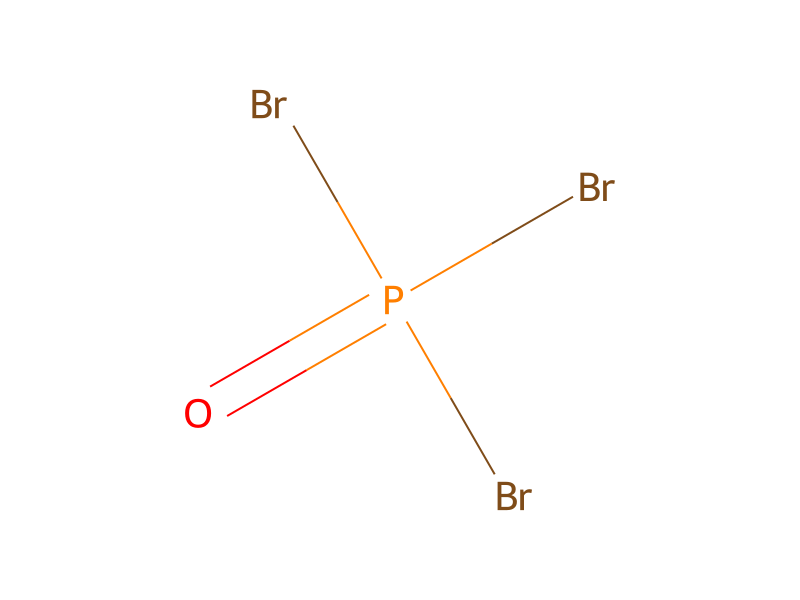


Product 1

Reagents, catalysts & solvents 1

Procedure
A mixture of 10.6 parts of 2-(4-chlorophenyl)-3-hydroxy-2,4,6,7-tetrahydro-thiopyrano[4,3-c]pyrazole, prepared according to the method of Example 1, and 12 parts of phosphorous oxybromide in 120 parts of xylene was refluxed for 7 hours and then stirred at room temperature for 12 hours. The suspension was neutralized with 5% sodium bicarbonate followed by extraction with chloroform (3 × 100 parts). The chloroform solution was washed with a saturated NaCl solution, dried over anhydrous magnesium sulfate and evaporated at a reduced pressure of 50 to 300 mm Hg, yielding a brown oil. This oil crystallized from acetone yielding 4.3 parts of the desired product, m.p. 138°-145° C.; a second recrystallization from acetone/methylene chloride gave 3.4 parts of pure 3-bromo-2-(4-chlorophenyl)-2,4,6,7-tetrahydrothiopyrano[4,3-c]pyrazole, m.p. 143.5°-145° C.
Workup
- customprepared
- temperaturewas refluxed for 7 hours
- extractionfollowed by extraction with chloroform (3 × 100 parts)
- washThe chloroform solution was washed with a saturated NaCl solution
- dry with materialdried over anhydrous magnesium sulfate
- customevaporated at a reduced pressure of 50 to 300 mm Hg
- customyielding a brown oil
- customThis oil crystallized from acetone yielding 4.3 parts of the desired product, m.p. 138°-145° C.
- customa second recrystallization from acetone/methylene chloride
Sources & evidence
- ORD record
- ord-65bf379c2b80483fbd95a9fb85cd8b7a
- Source dataset
- uspto-grants-1977_08
- Patent number
- US04042373
Reaction notes
Loading…