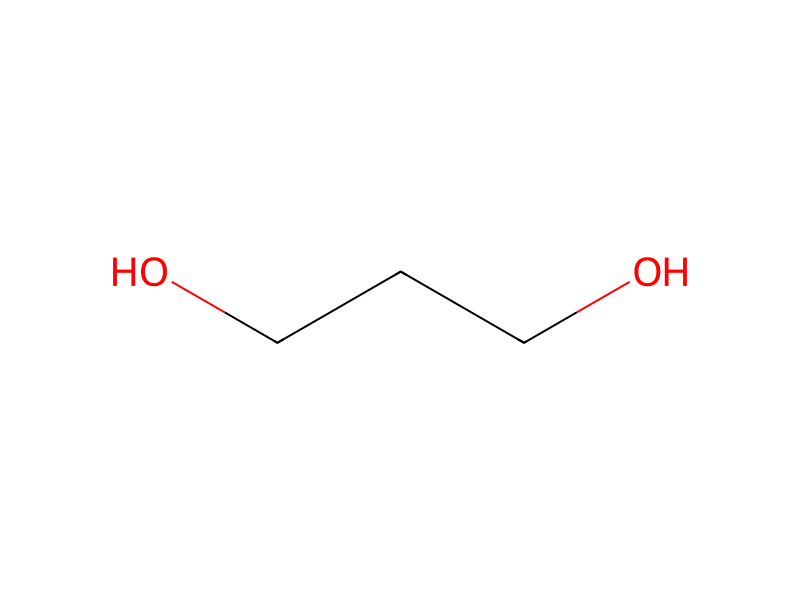
1,3-Propanediol → HCID 54404287, compound
Reaction equation

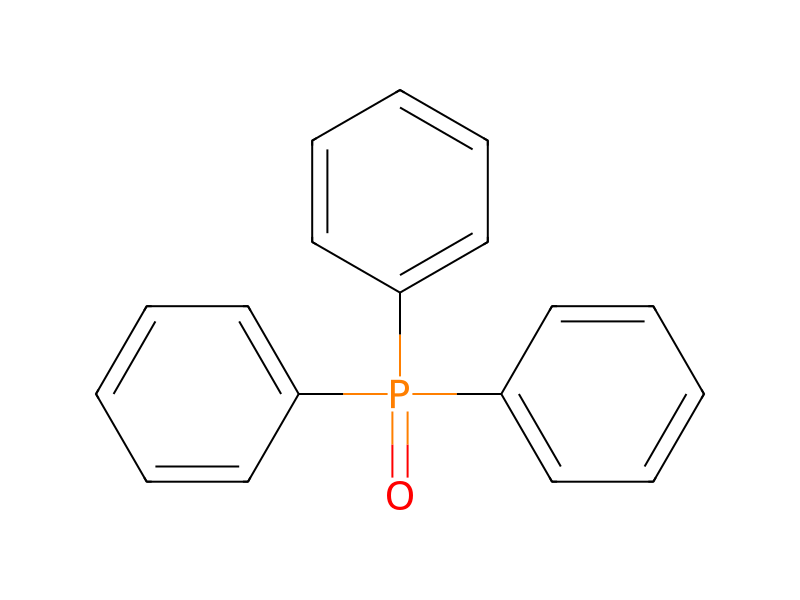
[CH3:1][O:2][C:3]1[CH:8]=[CH:7][C:6]([O:9][CH3:10])=[CH:5][C:4]=1[S:11]([O:14][C:15]1[CH:16]=[C:17]([OH:22])[CH:18]=[C:19]([CH3:21])[CH:20]=1)(=[O:13])=[O:12].[CH2:23](O)[CH2:24][CH2:25][OH:26].C1(P(C2C=CC=CC=2)C2C=CC=CC=2)C=CC=CC=1.N(C(OCC)=O)=NC(OCC)=O.C1(P(=O)(C2C=CC=CC=2)C2C=CC=CC=2)C=CC=CC=1>O1CCCC1>[CH3:1][O:2][C:3]1[CH:8]=[CH:7][C:6]([O:9][CH3:10])=[CH:5][C:4]=1[S:11]([O:14][C:15]1[CH:16]=[C:17]([CH:18]=[C:19]([CH3:21])[CH:20]=1)[O:22][CH2:23][CH2:24][CH2:25][OH:26])(=[O:12])=[O:13]Participants





Procedure
To 500 mg (1.54 mmol) of 3-(2,5-dimethoxyphenylsulfonyloxy)-5-methylphenol, as prepared in the preceding step, 1.1 mL (15 mmol) of 1,3-propanediol and 808 mg (3.08 mmol) of triphenylphosphine in 12 mL of anhydrous tetrahydrofuran was added 485 mg (3.08 mmol) of diethyl azodicarboxylate dropwise over 15 min. After stirring at ambient temperature for 1 h, the reaction mixture was concentrated to a yellow syrup. The resulting mixture was flash chromatographed on 40 g of silica gel with 50-75% ethyl acetate-hexane to afford a mixture of the desired product and triphenylphosphine oxide. Chromatography on 35 g of silica gel with 4% acetone-dichloromethane afforded 483 mg (82% yield) of the title compound as a colorless resin: 1H-NMR (300 MHz; CDCl3) δ 7.34 (d, 1 H, J=3.1 Hz), 7.15 (dd, 1 H, J=9.1, 3.1 Hz), 7.03 (d, 1 H, J=9.1 Hz), 6.59 (m, 1 H), 6.53 (m, 1 H), 6.48 (t, 1 H, J=2.1 Hz), 4.01 (t, 2 H, J=6.0 Hz), 3.97 (s, 3 H), 3.81 (dd, 2 H, J=11.2, 5.8 Hz), 3.76 (s, 3 H), 2.25 (s, 3 H) and 1.98 (pentet, 2 H, J=6.0 Hz).
Workup
- concentrationthe reaction mixture was concentrated to a yellow syrup
- customchromatographed on 40 g of silica gel with 50-75% ethyl acetate-hexane
- customto afford
Sources & evidence
- ORD record
- ord-6caa99aaba684ff5b3fa0c598ebc3ca1
- Source dataset
- uspto-grants-1999_04
- Patent number
- US05891909
Reaction notes
Loading…