Citric Acid → HCID 58508619, compound
Reaction equation

P([O-])([O-])([O-])=O.[K+].[K+].[K+].C(OC([N:16]1[CH:20]=[CH:19][CH:18]=[C:17]1B(O)O)=O)(C)(C)C.Br[C:25]1[CH:37]=[CH:36][C:28]([C:29]([O:31]C(C)(C)C)=[O:30])=[C:27]([NH:38][C:39]([C:41]2[CH:42]=[N:43][CH:44]=[C:45]([C:47]3[CH:52]=[CH:51][CH:50]=[CH:49][CH:48]=3)[CH:46]=2)=[O:40])[CH:26]=1.C(O)(=O)CC(CC(O)=O)(C(O)=O)O>C([O-])(=O)C.[Pd+2].C([O-])(=O)C.C1(P(C2CCCCC2)C2C=CC=CC=2C2C(OC)=CC=CC=2OC)CCCCC1.C(OCC)(=O)C.C1(C)C=CC=CC=1>[C:47]1([C:45]2[CH:46]=[C:41]([C:39]([NH:38][C:27]3[CH:26]=[C:25]([C:17]4[NH:16][CH:20]=[CH:19][CH:18]=4)[CH:37]=[CH:36][C:28]=3[C:29]([OH:31])=[O:30])=[O:40])[CH:42]=[N:43][CH:44]=2)[CH:48]=[CH:49][CH:50]=[CH:51][CH:52]=1Participants
Reactant 4




Product 1

Reagents, catalysts & solvents 4



Procedure
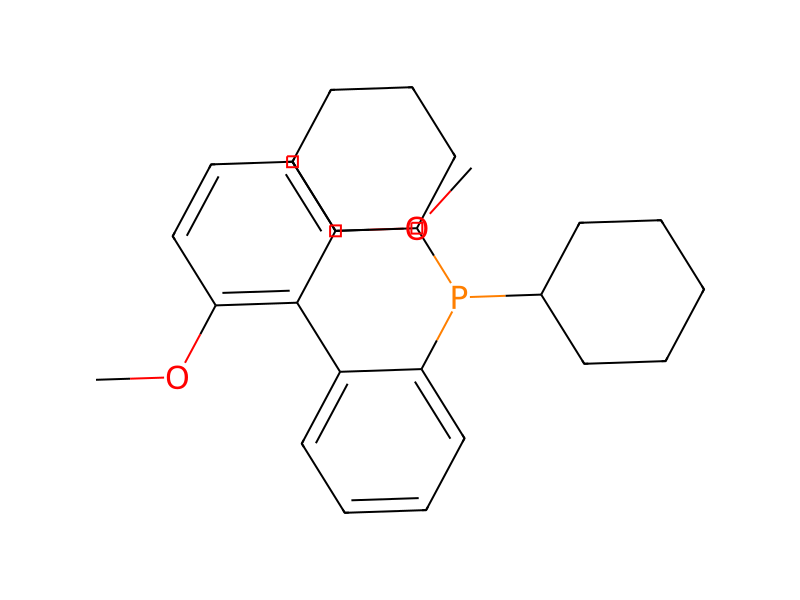
Tripotassium phosphate (0.12 g), 1-(tert-butoxycarbonyl)-1H-pyrrole-2-boronic acid (56 mg), 2-dicyclohexylphosphino-2′,6′-dimethoxybiphenyl (1 mg), and palladium(II) acetate (1 mg) were added to a toluene (3.0 mL) solution of tert-butyl 4-bromo-2-(5-phenylpyridine-3-carboxamido)benzoate (0.10 g), followed by heating to reflux under a nitrogen atmosphere for 3 hours. The reaction mixture was cooled to room temperature, and tripotassium phosphate (47 mg), 1-(tert-butoxycarbonyl)-1H-pyrrole-2-boronic acid (47 mg), 2-dicyclohexylphosphino-2′,6′-dimethoxybiphenyl (1 mg), and palladium(II) acetate (1 mg) were added thereto, followed by heating to reflux under a nitrogen atmosphere for 1 hour and 30 minutes. The reaction mixture was cooled to room temperature, and ethyl acetate and a 10% aqueous solution of citric acid were added thereto. The organic layer was separated, washed with a saturated aqueous solution of sodium chloride, and dried over anhydrous magnesium sulfate, and the solvent was evaporated under reduced pressure. Dioxane (1.5 mL), methanol (1.5 mL), and a 2 mol/L aqueous solution of sodium hydroxide (0.29 mL) were sequentially added to the obtained residue, followed by stiffing at 50° C. for 1 hour and 30 minutes. The reaction mixture was cooled to room temperature, and then a 10% aqueous solution of citric acid and ethyl acetate were sequentially added thereto. The solid substance was collected by filtration to obtain 39 mg of 2-(5-phenylpyridine-3-carboxamido)-4-(1H-pyrrol-2-yl)benzoic acid as a white solid.
Workup
- temperatureby heating
- temperatureto reflux under a nitrogen atmosphere for 3 hours
- temperatureby heating
- temperatureto reflux under a nitrogen atmosphere for 1 hour and 30 minutes
- temperatureThe reaction mixture was cooled to room temperature
- customThe organic layer was separated
- washwashed with a saturated aqueous solution of sodium chloride
- dry with materialdried over anhydrous magnesium sulfate
- customthe solvent was evaporated under reduced pressure
- additionDioxane (1.5 mL), methanol (1.5 mL), and a 2 mol/L aqueous solution of sodium hydroxide (0.29 mL) were sequentially added to the obtained residue
- temperatureThe reaction mixture was cooled to room temperature
- additiona 10% aqueous solution of citric acid and ethyl acetate were sequentially added
- filtrationThe solid substance was collected by filtration
Sources & evidence
- ORD record
- ord-810c5e371da54d5982a1ee98dd46dcd5
- Source dataset
- uspto-grants-2013_07
- Patent number
- US08492582B2
Reaction notes
Loading…