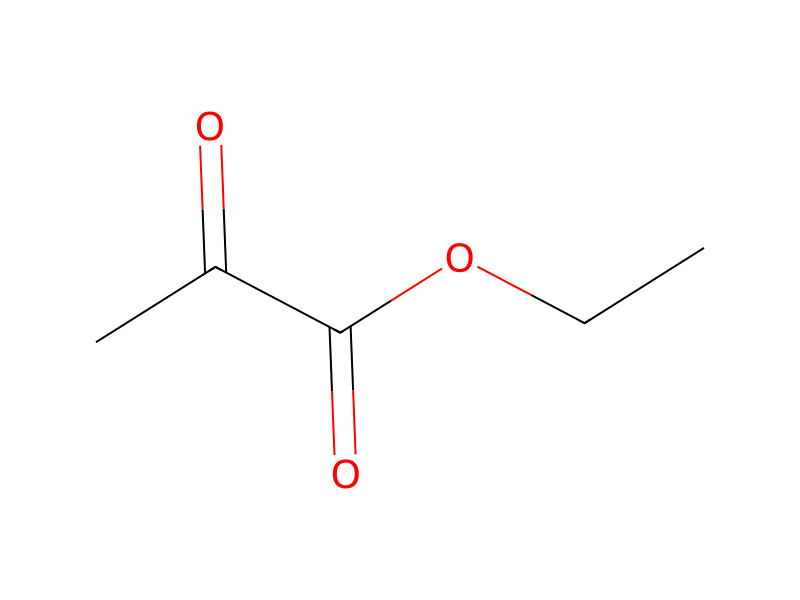
Ethyl pyruvate → 2-Trimethylsilanyloxy-acrylic acid ethyl ester
Reaction equation

FC(S([O:8][Si:9]([CH3:12])([CH3:11])[CH3:10])(=O)=O)(F)F.[C:13]([O:18][CH2:19][CH3:20])(=[O:17])[C:14]([CH3:16])=O.C(N(C(C)C)CC)(C)C>C(Cl)Cl>[CH2:19]([O:18][C:13](=[O:17])[C:14]([O:8][Si:9]([CH3:12])([CH3:11])[CH3:10])=[CH2:16])[CH3:20]Participants
Reactant 3


Product 1

Reagents, catalysts & solvents 1

Procedure
A solution of trimethylsilyl trifluoromethylsulfonate (9.52 mL, 52.5 mmol) in anhydrous methylene chloride (10 mL) was added to a stirred ice-cooled solution of ethyl pyruvate (5.56 mL, 50 mmol) and diisopropylethyl amine (9.6 mL, 55 mmol) in anhydrous methylene chloride (100 mL) over a period of 15 minutes. The reaction was stirred on ice for 1.5 hours and then at room temperature for 3 hours. The solvent was evaporated at room temperature and the residue treated with anhydrous pentane (200 mL) and cooled in ice. The precipitated solid was filtered off. The filtrate was collected and the pentane evaporated to give 2-trimethylsilanyloxyacrylic acid ethyl ester as a light brown liquid (90% yield). The crude product was used for the next reaction without further purification.
Workup
- waitat room temperature for 3 hours
- customThe solvent was evaporated at room temperature
- additionthe residue treated with anhydrous pentane (200 mL)
- temperaturecooled in ice
- filtrationThe precipitated solid was filtered off
- customThe filtrate was collected
- customthe pentane evaporated
Sources & evidence
- ORD record
- ord-3ebed0d7dec645bb9aba4332e112f22f
- Source dataset
- uspto-grants-2007_03
- Patent number
- US07189758B2
Reaction notes
Loading…