Sodium Sulfite → Tert-butyl 2-(methylsulfonyl)-5H-pyrrolo[3,4-D]pyrimidine-6(7H)-carboxylate
Reaction equation

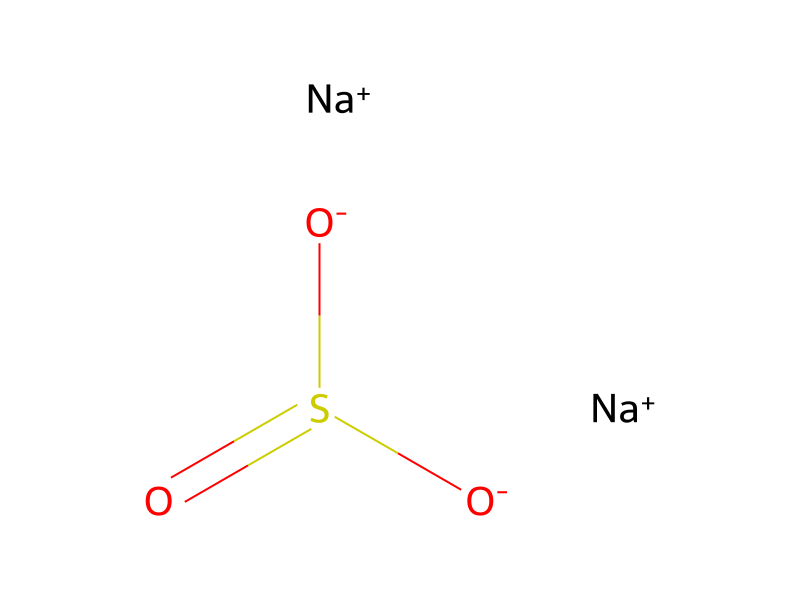
Cl[C:2]1C=CC=C(C(OO)=O)C=1.[C:12]([O:16][C:17]([N:19]1[CH2:27][C:26]2[CH:25]=[N:24][C:23](SC)=[N:22][C:21]=2[CH2:20]1)=[O:18])([CH3:15])([CH3:14])[CH3:13].[S:30]([O-:33])([O-])=[O:31].[Na+].[Na+].C(=O)([O-])O.[Na+]>ClCCl>[C:12]([O:16][C:17]([N:19]1[CH2:27][C:26]2[CH:25]=[N:24][C:23]([S:30]([CH3:2])(=[O:33])=[O:31])=[N:22][C:21]=2[CH2:20]1)=[O:18])([CH3:15])([CH3:13])[CH3:14]Participants
6
Reactant 4



Product 1

Reagents, catalysts & solvents 1

Procedure
m-Chloroperbenzoic acid (1.99 g) was added to a dichloromethane solution (20 ml) of 6-(tert-butoxy-carbonyl)-5,7-dihydro-2-methylthiopyrrolo[3,4-d]-pyrimidine (1.08 g) under ice cooling, and the mixture was stirred for 5 hours. A saturated aqueous solution of sodium sulfite, a saturated aqueous solution of sodium hydrogen carbonate and dichloromethane were added to separate an organic layer. The organic layer was then dried over anhydrous sodium sulfate. The solvent was distilled off under reduced pressure, hexane was added to the residue, and powder deposited was collected by filtration to obtain the title compound (1.09 g) as colorless powder.
Workup
- customto separate an organic layer
- dry with materialThe organic layer was then dried over anhydrous sodium sulfate
- distillationThe solvent was distilled off under reduced pressure, hexane
- additionwas added to the residue, and powder
- filtrationdeposited was collected by filtration
Sources & evidence
- ORD record
- ord-818e0be7aab842d1bbbc956bfd221c01
- Source dataset
- uspto-grants-2007_03
- Patent number
- US07192968B2
Reaction notes
Loading…