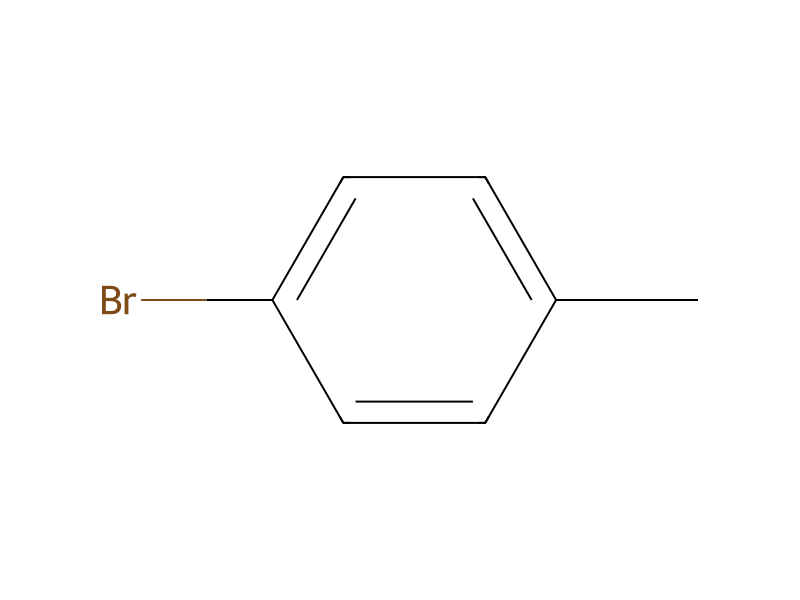
4-Bromotoluene → 2,6-Dicyano-4'-methylbiphenyl
Reaction equation

Br[C:2]1[CH:7]=[CH:6][C:5]([CH3:8])=[CH:4][CH:3]=1.Br[C:10]1[C:15]([C:16]#[N:17])=[CH:14][CH:13]=[CH:12][C:11]=1[C:18]#[N:19]>C1COCC1.[Ni].C(OCC)(=O)C.C1C=CC(P(C2C=CC=CC=2)C2C=CC=CC=2)=CC=1.C1C=CC(P(C2C=CC=CC=2)C2C=CC=CC=2)=CC=1.[Cl-].[Cl-].[Ni+2].[H-].C([Al+]CC(C)C)C(C)C>[C:18]([C:11]1[CH:12]=[CH:13][CH:14]=[C:15]([C:16]#[N:17])[C:10]=1[C:2]1[CH:7]=[CH:6][C:5]([CH3:8])=[CH:4][CH:3]=1)#[N:19]Participants
Reactant 2

Product 1

Reagents, catalysts & solvents 5
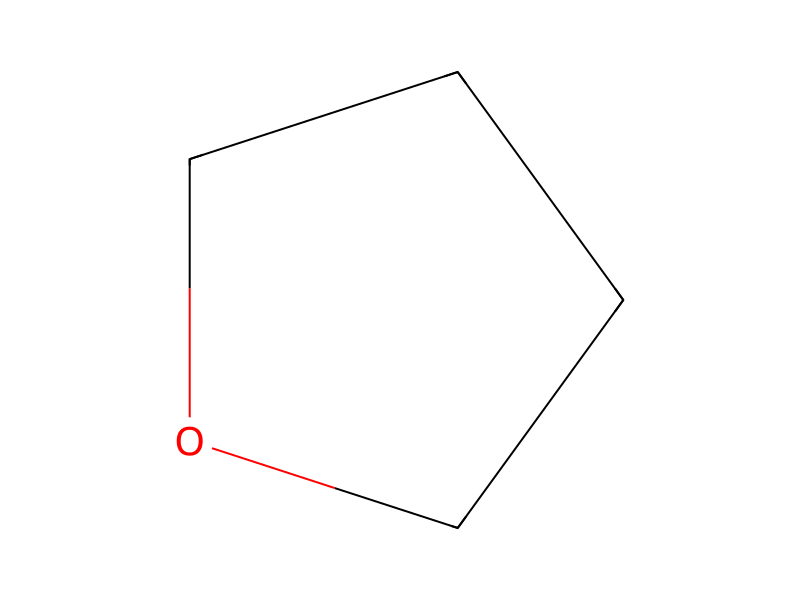
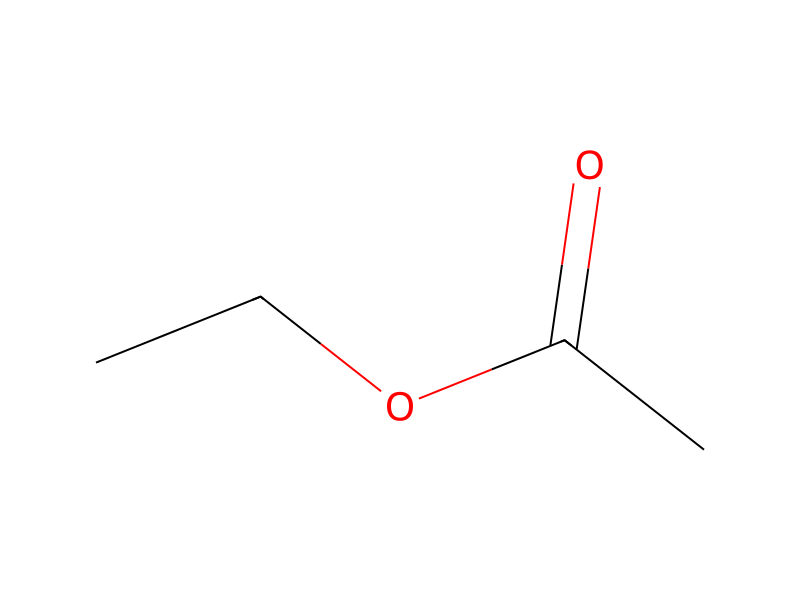
Conditions
- Temperature
- 18 °C
Procedure
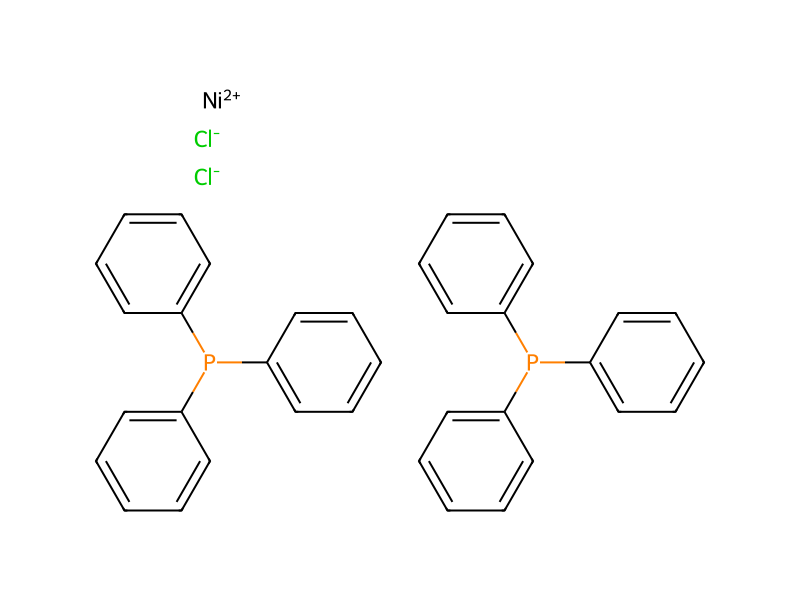
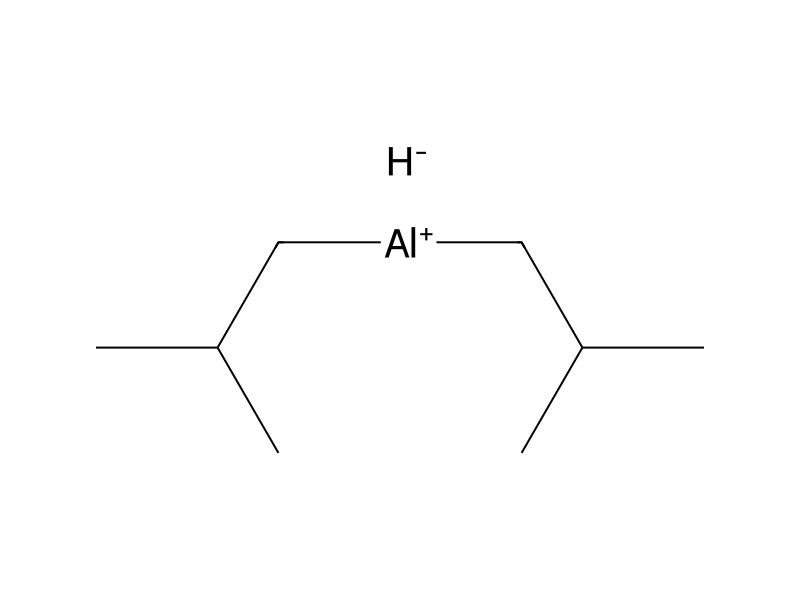
4-Bromotoluene (10.44 mL, 84.9 mmol, 1.2 eq.) was converted to the Grignard reagent (Mg: 3.10 g, 127 mmol, 1.9 eq.) in THF (50 mL) and then added to a stirred mixture of freshly fused zinc (II) chloride (9.34 g, 68.5 mmol, 1 eq.) in THF (50 mL) at such a rate as to maintain the temperature at 18° C. In another flash, bis(triphenylphosphine)nickel(II)-chloride (1.10 g, 1.7 mmol, 0.025 eq.) and THF (5 mL) were mixed and cooled to 0° C. Diisobutylaluminum hydride (1M in THF, 3.37 mL, 3.4 mmol, 0.049 eq.) was added to the black mixture of Ni catalyst and THF. After warming to 20° C., 1-bromo-2,6-dicyanobenzene (T. D. Krizan, J. C. Martin J. Org. Chem., (1982) 47, 2681) (0.95 g or 6.7% of the total amount to be coupled, 4.6 mmol, 0.067 eq.) in a minimum of THF was added to the Ni catalyst and stirred for 15 min. The Grignard solution was cooled to 6° C. and then to it the Ni catalyst mixture was transferred via cannula. The remaining 1-bromo-2,6-dicyanobenzene (13.16 g, 63.9 mmol, 0.933 eq.) in a minimum of THF was finally added to the Grignard+Ni catalyst mixture. After stirring overnight at 25° C., the mixture was diluted with ethyl acetate (400 mL) and washed with water (2×200 mL) and brine (1×200 mL). The ethyl acetate layer was dried (MgSO4) and the solvent removed in vacuo to yield a yellow solid. Chromatography in 75:25 hexane/ethyl acetate to 100% ethyl acetate followed by recrystallization from hexane/ethyl acetate yielded 8.46 g of a white solid; m.p. 184.0°-186.0° C. NMR (CDCl3): δ7.98 (d, 2H, J=9 Hz); 7.58 (t, 1H, J=9 Hz); 7.45 (d, 2H, J=9 Hz); 7.37 (d, 2H, J=9 Hz); 2.44 (s, 3H). Anal. calcd. for C15H10N2 : C, 82.55; H, 4.62; N, 12.84. Found: C, 82.34; H, 4.78; N, 12.87.
Workup
- temperaturecooled to 0° C
- temperatureAfter warming to 20° C.
- temperatureThe Grignard solution was cooled to 6° C.
- stirringAfter stirring overnight at 25° C.
- washwashed with water (2×200 mL) and brine (1×200 mL)
- dry with materialThe ethyl acetate layer was dried (MgSO4)
- customthe solvent removed in vacuo
- customto yield a yellow solid
- customChromatography in 75:25 hexane/ethyl acetate to 100% ethyl acetate followed by recrystallization from hexane/ethyl acetate
Sources & evidence
- ORD record
- ord-385909c45b1a474fa302921f34129252
- Source dataset
- uspto-grants-1992_10
- Patent number
- US05153197
Reaction notes
Loading…